
KontraS at the Constitutional Court: As Long as TNI Are Tried in Military Courts, Impunity is Eternal
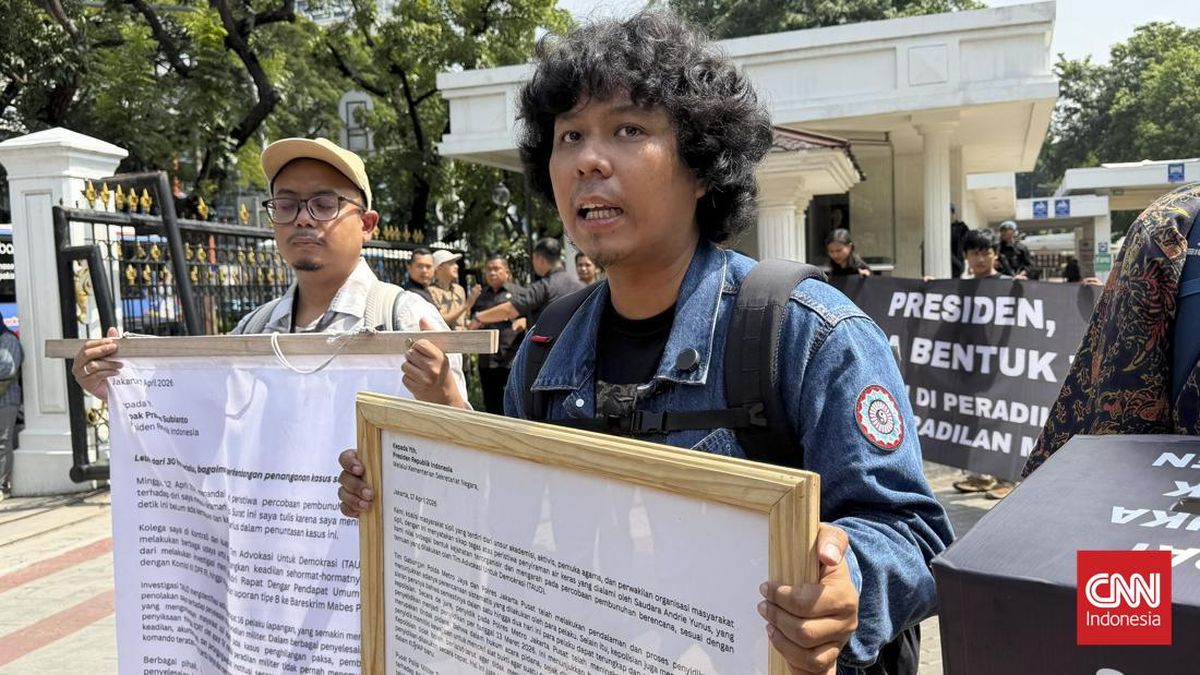
KontraS Coordinator Dimas Bagus Arya stated that impunity will continue to recur if members of the Indonesian National Armed Forces (TNI) who commit general criminal offences are tried in military courts.
This was conveyed by Dimas when he appeared as a witness for the Applicants in case number 260/PUU-XXIII/2025 regarding the material review of the Military Court Law at the Constitutional Court (MK) on Tuesday (28/4).
“Since the establishment of the KontraS organisation, monitoring and advocacy of military court practices have been one of our main focuses because we see that as long as the military who commit crimes are tried in their own court or forum internum, impunity will continue to recur,” Dimas said before the constitutional judges.
He stated that the input or notes provided by KontraS on military court practices mean dismantling one of the main roots of the impunity chain in Indonesia.
“This is not based on intuition or mere speculation, but on facts that we have found so far, and allow me to present several cases as examples,” he added.
In his statement, Dimas revealed several past human rights violation cases such as the 1997-1998 kidnappings and forced disappearances, the murder of Theys Eluay, the murder of civilians Apinus and Luther Zanambani, and the murder of Reverend Yeremia Zanambani.
These cases involved active TNI soldiers with average sentences handed down by military courts being very light. Not commensurate with the criminal acts committed.
Reading Andrie Yunus’s letter
On that occasion, amid the limited time given by the constitutional judges, Dimas took the time to read a letter written by his colleague Andrie Yunus—Deputy Coordinator for External Affairs of KontraS—who became a victim of an acid attack by several members of the TNI Strategic Intelligence Agency (BAIS).
In the letter, Andrie demanded that the attempted premeditated murder with acid against him be thoroughly investigated. He said that the state, through its law enforcement apparatus, has a responsibility to ensure non-recurrence of such incidents.
“The most important thing for me is that whoever and whatever background, whether civilian or military, must be tried through the general court,” Andrie said in the letter read by Dimas.
Andrie objected to the acid attack case against him being tried in a military court. He issued a vote of no confidence in the law enforcement process that would proceed through the military court—which has so far been a nest of impunity for military personnel as human rights violators.
“Our Constitution has affirmed the principle of equality before the law. Therefore, in this case, if not tried in the general court, it constitutes a serious violation of the principle of equality before the law,” Dimas said, closing the letter written by Andrie.
The acid attack case against Andrie is set to enter the proof stage in the trial.
Military Court II-08 Jakarta has scheduled the trial for reading the indictment against four perpetrators who are BAIS TNI members on Wednesday, 29 April 2026.
This material review against the Military Court Law was filed by Lenny Damanik and Eva Meliani Br. Pasaribu. The Applicants are challenging Article 9 paragraph 1, Article 43, and Article 127 of the Military Court Law.
In the first hearing at the MK on Thursday (8/1/2025), the Applicants, represented by their attorney Ibnu Syamsu Hidayat, emphasised that impunity for soldiers contradicts the rule of law principle and equality before the law.
The Applicants also highlighted broader consequences, namely the weakening of civil supremacy in the democratic governance system.
The dominance of military court jurisdiction over general courts is deemed contrary to the principle of a constitutional democratic state that places civilian power above military power.
According to the Applicants, this dualism of jurisdiction stems from the provisions of Article 9 paragraph 1 of the Military Court Law, which gives special status to active TNI soldiers to be tried exclusively in military courts, even if they commit general criminal offences.
This regulation is seen as potentially giving rise to impunity and violating the principle of equality before the law.
“The phrase ‘trying criminal acts’ in Article 9 paragraph 1 of Law Number 31 of 1997 opens up opportunities and a broad basis for interpretation of the military court’s authority, which not only can try soldiers or those equated with soldiers who commit military crimes and military discipline violations, but also gives authority to try other criminal cases such as corruption, traffic, domestic violence, narcotics, psychotropics, and child protection,” Ibnu revealed.