
Komodo Leftovers Key to Survival of Flores 'Hobbit' Humans
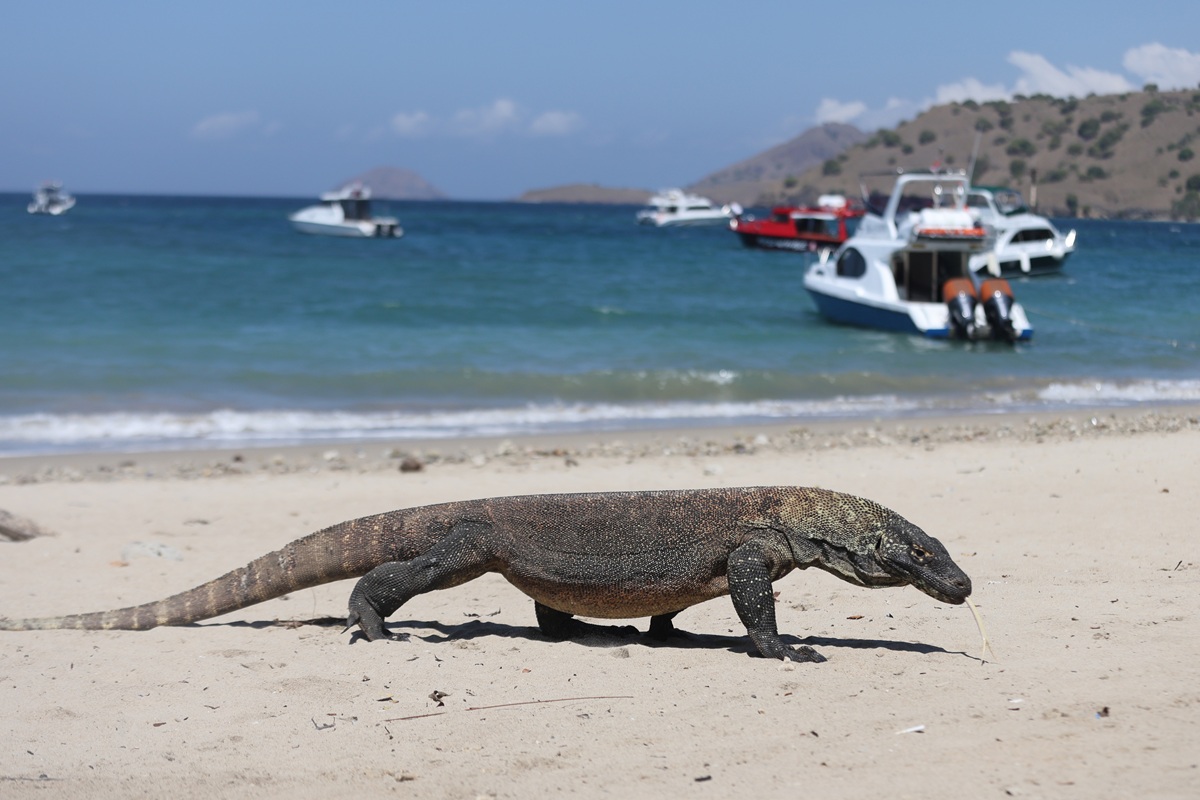
A recent study has debunked previous assumptions about the survival methods of the ancient human species Homo floresiensis, nicknamed the ‘Hobbit’. The dwarf human species, which once lived on the Indonesian island of Flores, apparently never hunted large animals nor cooked their food using fire. Instead, they survived by consuming raw meat from the leftovers of prey abandoned by Komodo dragons.
The findings, published in the journal Science Advances, dismantle the reputation of Homo floresiensis as a behaviourally advanced ancient species. Since its fossils were first discovered in 2004 at Liang Bua Cave in Flores, this ancient human—standing only about one metre tall with a brain volume one-third that of modern humans—has often been considered a skilled hunter. This assumption arose because their fossils were found alongside stone tools and the bones of Stegodon, a type of dwarf ancient elephant, which bore cut marks.
However, E. Grace Veatch, a zooarchaeologist from the Smithsonian National Museum of Natural History (NMNH), and her colleagues decided to re-examine more than 3,000 Stegodon bone fragments. They analysed the frequency and location of predator bite marks and stone tool cut marks to determine who consumed the carcass first.
To differentiate between the marks, the research team observed bite marks from captive Komodo dragons at Zoo Atlanta using high-resolution 3D scanners and microscopes. The results showed that Komodo bites leave shallow, wide marks, while stone tool cuts are narrower and deeper. Using statistical modelling, the researchers successfully identified 100 Komodo tooth marks and 54 stone tool cut marks on the ancient elephant fossils.
Interestingly, no single bone exhibited both types of marks simultaneously. Strong evidence indicates that Komodo bites were clustered on the meatiest parts of the bones, such as the thighs, shoulders, and sternum. Meanwhile, stone tool cut marks from the Hobbit humans were only found on parts with very little meat, such as toe bones, skull fragments, and throat bones. This separation proves that the Hobbit humans merely scavenged the remaining scraps of flesh that had been stripped clean by the Komodo dragons.
Furthermore, claims that the Hobbit humans had used fire for cooking were also refuted. The research team examined thousands of rodent bones in the sediment layers of Liang Bua where the Hobbit fossils were found and discovered no charred bones. Black stains initially thought to be burn marks turned out to be manganese stains from the soil.
Scavenging leftovers is considered a much safer option for the Hobbit humans. Confronting a live Komodo dragon, which possesses blood-paralysing venom, would have been extremely risky and potentially fatal. On the other hand, Komodo venom is safe for human digestion if the meat is consumed, due to its large protein structure. Compared to hunting ancient elephants, which would have been highly energy-intensive and inefficient, utilising the remains of Komodo prey was their best strategy for survival.
Source: jawawa.id (https://jawawa.id/newsitem/komodo-leftovers-key-to-survival-of-flores-hobbit-humans-1783579818)
Originally published by Media Indonesia (https://mediaindonesia.com/humaniora/909054/sisa-makanan-komodo-jadi-kunci-bertahan-hidup-manusia-hobbit-flores), translated from Indonesian