
Komnas HAM: Recovery for Past Gross Human Rights Violations Must Be Systematic and Sustainable
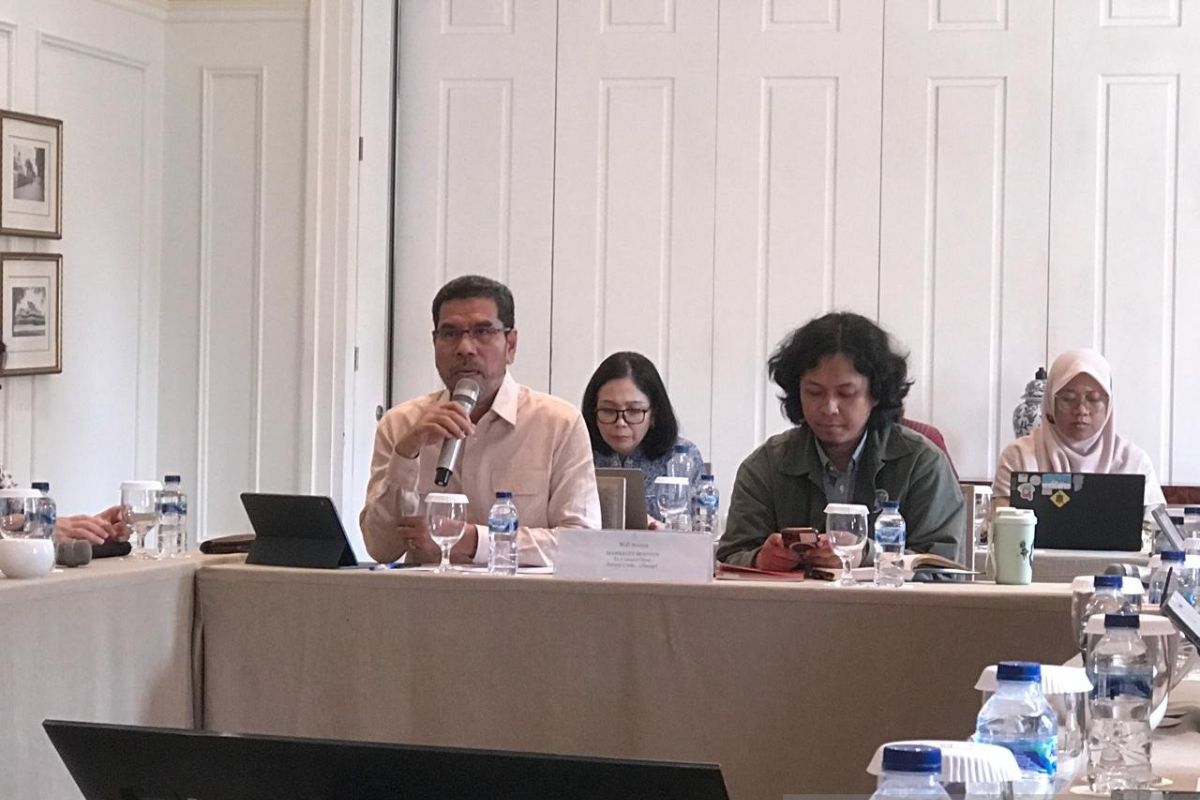
The National Commission on Human Rights (Komnas HAM) has affirmed that recovery for victims of past gross human rights violations must be carried out systematically and sustainably.
Komnas HAM member Amiruddin Al Rahab said in Jakarta on Thursday that the victim recovery policy is grounded in the mandate of Law Number 26 of 2000 on Human Rights Courts, which regulates the state’s responsibility towards victims of gross human rights violations.
According to Amiruddin, recovery must be directed at restoring the rights, dignity and honour of victims and their families, and must not be viewed as a form of social assistance.
“This is a form of unconditional, absolute fulfilment of rights for victims, because of that responsibility,” he said.
He stressed that the implementation of victim recovery programmes must remain oriented towards the fulfilment of rights so as not to create the perception that the state is merely providing temporary assistance without resolving its responsibilities.
Amiruddin also reminded that non-judicial mechanisms in victim recovery must not become a reason to eliminate the possibility of resolution through legal channels if such mechanisms are pursued at a later date.
“So the recovery programme is not a tunnel to silence justice. If the programme already exists, it does not mean the victim is forced to remain silent or told to be quiet,” he said.
According to him, strengthening the legal foundation is necessary to ensure that recovery programmes have a clear direction, run sustainably and provide certainty for victims of gross human rights violations.
In addition, Amiruddin affirmed the importance of the Certificate of Victim of Human Rights Violations (SKKP-HAM) as an instrument of recognition of victim status as well as part of the protection of their rights.
“The essence is the Victim Certificate, that a person is declared a victim, and they are part of the investigation process conducted by Komnas HAM,” he said.
He explained that holders of SKKP-HAM are part of Komnas HAM’s investigation process and have the potential to become witnesses if the resolution of gross human rights violations is again pursued through judicial mechanisms.
Meanwhile, Dimas Bagus Arya Saputra, Coordinator of the Commission for the Disappeared and Victims of Violence (KontraS), urged the resolution of gross human rights violations through a transitional justice approach that encompasses victim recovery while ensuring similar events do not recur.
“We must resolve it thoroughly, justly, and in favour of the victims, to guarantee non-recurrence,” said Dimas.
According to Dimas, resolution mechanisms through judicial and non-judicial channels need not be pitted against each other because both can operate in a complementary manner in fulfilling victims’ rights.
“This resolution process cannot be viewed through a binary lens. Judicial-non-judicial. It is a unity, complementary in nature, mutually reinforcing,” he said.