
Komnas HAM Issues 8,599 Certificates, Victims of Gross Human Rights Violations Eligible for Assistance
The National Commission on Human Rights (Komnas HAM) has revealed that it has issued a total of 8,599 Certificates of Human Rights Violation Victims (SKKPHAM) for victims or families of victims from past gross human rights violation incidents.
Deputy Chairman of the Internal Division and Commissioner for Complaints of Komnas HAM, Prabianto Mukti Wibowo, explained that the SKKPHAM is one of the important requirements in applying for assistance for victims.
“The SKKPHAM serves as one of the databases in the restoration of rights for victims of gross human rights violations and is a requirement for submitting assistance requests to the LPSK,” said Prabianto in Jakarta on Thursday (2/4).
He detailed that from the total, thousands of SKKPHAM were issued for various incidents, including 7,928 related to the 1965-1966 events. In addition, there are 35 SKKPHAM for the 1984 Tanjung Priok incident, 17 for the May 1998 riots, and two for the Trisakti, Semanggi I, and Semanggi II incidents.
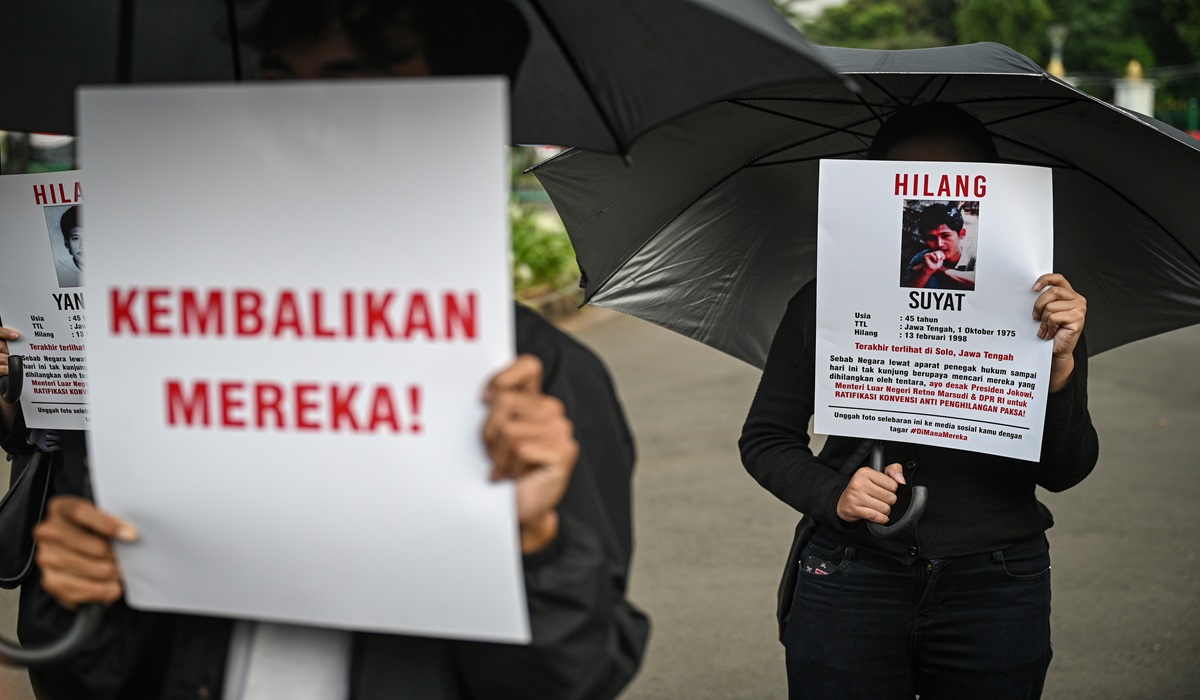
Komnas HAM also recorded the issuance of 121 SKKPHAM for the 1989 Talangsari incident, 47 for the mystery shootings of 1982-1985, and 14 for enforced disappearances in 1997-1998.
“The 2003 Jambo Keupok incident in Aceh has 17; the 1998 Simpang KKA incident in Aceh has 76; the Rumah Gedong incident of 1989-1998 in Aceh has 342 SKKPHAM. Thus, the total is 8,599 SKKPHAM,” he explained.
On that occasion, Komnas HAM emphasised that fulfilling the rights of victims of gross human rights violations is a state obligation that cannot be ignored.
“In principle, the state is obliged to provide protection, restoration, and reparations for victims of gross human rights violations,” Prabianto stressed.
He added that the victims have the right to know the truth, obtain justice, and receive restoration in various forms.
“Victims are entitled to rehabilitation, compensation or restitution, and guarantees of non-recurrence so that human rights violations do not happen again,” he concluded.
The government’s roadmap includes schemes and judicial steps that can be pursued in accordance with regulations.
Indonesia has so far pursued judicial channels for four gross human rights violation cases, namely East Timor, Abepura, Tanjung Priok, and Paniai.