
Komnas HAM Audits National Police Performance, Highlighting Law Enforcement and Protest Handling Mechanisms
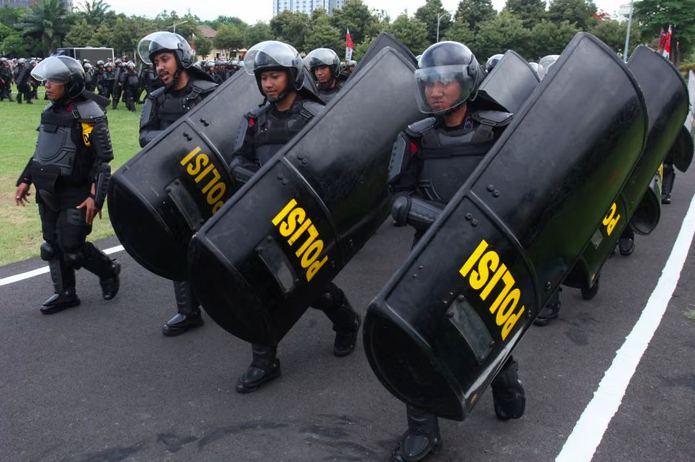
The National Commission on Human Rights (Komnas HAM) is conducting a human rights assessment or audit of the Indonesian National Police (Polri), specifically regarding the fulfilment of the right to justice within the law enforcement process.
The Chairperson of Komnas HAM, Anis Hidayah, stated that the assessment is being carried out to ensure that all legal processes conducted by the police are in line with human rights principles. The assessment covers everything from the investigation and inquiry stages to the protection of individuals facing legal proceedings.
“It is very detailed, as we mentioned, ranging from the arrest process, access to information, to restorative justice,” said Anis at the Polri Criminal Investigation Agency (Bareskrim) Building, Jakarta, on Monday (31/8).
According to Anis, the National Police are part of the criminal justice system and possess the authority to conduct investigations and inquiries. Therefore, this authority must be exercised while respecting human rights.
“All legal procedures carried out by the police must comply with human rights. We are in the process of conducting this this year. This is not only for the National Police, but also for the Attorney General’s Office and the Supreme Court,” she added.
Anis explained that there are 15 elements serving as the foundation for the human rights assessment of the National Police. These elements include equality before the law, protection for witnesses, reported parties, suspects, and victims, access to legal aid, access to information, and restorative justice mechanisms.
The assessment also includes the protection of vulnerable groups, women, children, and persons with disabilities. Komnas HAM will evaluate arrest mechanisms and ensure that law enforcement processes are free from torture or violence.
“There are approximately 15 elements; the documents can be provided to our colleagues at Komnas HAM to serve as a basis. However, this will look more holistically at how the investigation and inquiry processes are not only procedurally sound but also guided by respect for human rights,” said Anis.
On the same occasion, Komnas HAM Commissioner Saurlin P. Siagian stated that the assessment uses 12 primary indicators and approximately 70 additional indicators. The assessment is conducted across three aspects: structure, process, and the results of human rights fulfilment or violations.
“Do they have policies? We call that structure, policy, and institution. Then process—are there programmes? Is there implementation? And thirdly, results—what is the state of human rights fulfilment and/or what are the human rights violations?” said Saurlin.
Komnas HAM will begin data collection for the assessment in September 2026. The report preparation phase will take place in October-November, and the assessment results, in the form of recommendations and scores, will be announced to the public in December.
In addition to data collection, Komnas HAM will also conduct public surveys to gauge public perception of police performance. This human rights assessment of the National Police is part of a broader human rights evaluation of ministries and agencies conducted by Komnas HAM. In addition to the National Police, assessments will also be conducted for the Attorney General’s Office and the Supreme Court.
Source: jawawa.id (https://jawawa.id/newsitem/komnas-ham-audits-national-police-performance-highlighting-law-enforcement-and-protest-handling-mechanisms-1788170139)
Originally published by Media Indonesia (https://mediaindonesia.com/politik-dan-hukum/927916/komnas-ham-audit-kinerja-polri-soroti-penegakan-hukum-dan-mekanisme-penanganan-demo), translated from Indonesian