
Komdigi Mandates 3T Infrastructure Build for Frequency Auction Winners
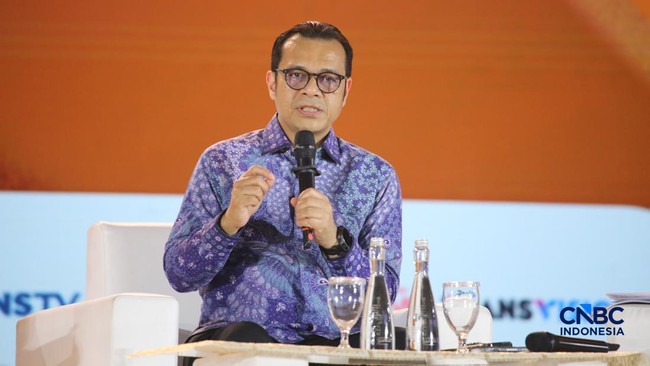
The Ministry of Communication and Digital (Komdigi) has confirmed that winners of the 700 MHz and 2.6 GHz frequency spectrum auction will not only obtain the right to use the frequencies but will also be obliged to build telecommunications infrastructure in various parts of Indonesia, including underdeveloped, frontier, and outermost (3T) areas. This was stated by Deputy Minister of Communication and Digital Nezar Patria during CNBC Indonesia’s Economic Update on Monday (22/6/2026). Nezar explained that the auction of the 700 MHz and 2.6 GHz spectrum is part of the government’s effort to expand internet service coverage while improving the quality of national connectivity. According to him, the 700 MHz spectrum has characteristics that allow it to reach wider areas, making it suitable for expanding telecommunications service coverage. Meanwhile, the 2.6 GHz spectrum is being auctioned to strengthen broadband services so that the public can enjoy internet access with better speeds. “The 700 MHz is to expand coverage. We know the spectrum is quite broad. Then we are auctioning the 2.6 GHz to strengthen our broadband services to provide better speeds for users,” said Nezar. He explained that the public will eventually feel two benefits from the utilisation of this spectrum, namely the expansion of internet service reach and an increase in data access speed. Nezar emphasised that Komdigi continues to collaborate with telecommunications industry players to improve the quality of national digital services. One of the strategies implemented by the government is the obligation to build infrastructure as a condition for operators that win the frequency auction. “Every time we conduct this auction, we provide a policy where the operators that win this spectrum must fulfil a number of conditions,” he said. These conditions include the obligation to build networks in areas that still need improved connectivity, particularly 3T regions. “For example, the winners of the spectrum for 700 or 2.6 GHz must not only build in Java but also build in Eastern Indonesia,” said Nezar. He added that the government has prepared a scheme for dividing the build obligations based on region. Operators that obtain spectrum in certain areas will be required to build networks in other areas that still need telecommunications infrastructure development. “So it is combined; if you win in Java, you must build in Papua. If you win in another area, you must build in Sumatra, for example,” said Nezar. This policy is a form of shared responsibility in accelerating the equitable distribution of digital access throughout Indonesia. “This is part of the shared responsibility in accelerating access and improving service quality for all Indonesian people,” he concluded.