
Komdigi Again Promises to Cut the Burden on Telkomsel, Indosat and XLSmart
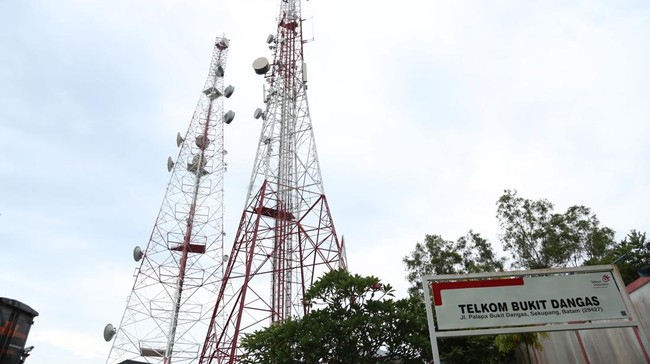
Jakarta, CNBC Indonesia — The government is reviewing deregulation of the telecommunications industry to reduce regulatory costs, which currently account for 13–14% of mobile operators’ revenue.
The review takes into account the sustainability of the industry and the interests of the state, while also seeking to create room for the industry to grow by 5%.
“We are trying to find a middle ground: the state must not be disadvantaged. But, above all, we must do what is best for the people,” Deputy Communications and Digital Affairs Minister Angga Raka Prabowo said in an official statement, quoted on Tuesday (20 October 2026).
The reforms aim to make business activities easier and open up opportunities for investment.
“Deregulation is not merely about making business activities easier; it is about creating an efficient, competitive investment ecosystem that can deliver broader economic benefits to the people,” Angga said.
He added that regulatory reform would cover various layers of the digital ecosystem, from passive infrastructure, connectivity, platforms and computing to applications and services.
“For passive infrastructure, we are promoting the principle of build once, use jointly, through the shared use of towers and poles, the construction of integrated utility routes, affordable open access, and standardised local levy benchmarks,” he said.
The government is also considering partnership arrangements for connectivity. These could provide operators with predictable demand, with the government acting as the main tenant for internet services at schools, community health centres and village offices.
Other considerations include public-private partnerships based on service quality, as well as incentives on spectrum usage fees, to support network development in underserved and frontier regions.
Targeting speeds of 100 Mbps
The government is also reportedly targeting fixed and mobile broadband speeds of up to 100 Mbps by 2029. It aims to ensure that 50% of households in areas served have access to home internet.
Other targets include connecting 90% of sub-districts to fibre-optic networks and achieving 51% 5G coverage within five years of spectrum licences being issued.
Communications and Digital Affairs Ministry Secretary-General Ismail said spectrum usage costs must remain affordable for internet companies.
“Spectrum is not only about how the government generates revenue from its use, but also about ensuring that spectrum usage costs remain affordable. This will enable all operators to build and develop their infrastructure as quickly as possible,” Ismail said.
Spectrum management is considered particularly important given the expanding reach of 4G and 5G networks. 4G now covers more than 98% of the country.
Spectrum policy must balance the sustainability of operators’ businesses with the benefits received by the public. The government must also ensure that infrastructure development has a tangible impact on people’s needs, rather than focusing solely on industry profitability.
“The key word we need to keep in mind is sustainability. Infrastructure development takes a long time and requires substantial capital investment. That is why sustainability is so important,” he said.
Source: jawawa.id (https://jawawa.id/newsitem/komdigi-again-promises-to-cut-the-burden-on-telkomsel-indosat-and-xlsmart-1792493458)
Originally published by CNBC Indonesia (https://www.cnbcindonesia.com/tech/20261020143744-37-777870/komdigi-lagi-lagi-janji-pangkas-beban-telkomsel-indosat-dan-xlsmart), translated from Indonesian