
KNTI states cold chain can help stabilise fish prices for fishermen
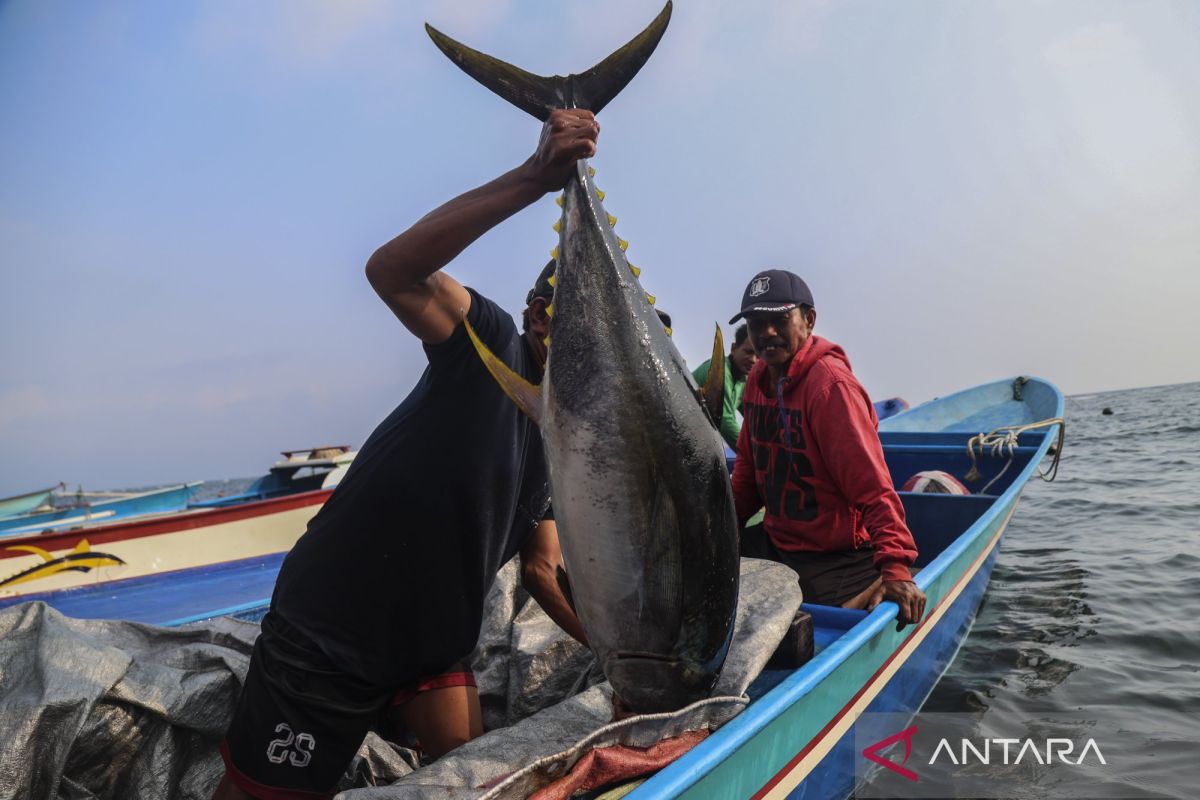
The General Chairman of the Indonesian Traditional Fishermen’s Union (KNTI), Dani Setiawan, believes that strengthening an integrated cold chain can help maintain the quality of catches while supporting fish price stability at the fishermen’s level.
Dani noted that a cold chain is a vital prerequisite for increasing the competitiveness of the national fisheries sector, particularly if such facilities are accessible to small-scale fishermen.
“The existence of an integrated cold chain, from landing points to distribution, impacts the maintenance of fish quality, the stability of prices at the fishermen’s level, and the formation of strategic national fishery food reserves,” Dani told ANTARA in Jakarta on Monday.
According to Dani, these benefits could be further maximised if the strengthening of the cold chain goes hand-in-hand with increasing the added value of fishery products through downstreaming, quality standardisation, and support for logistics costs.
However, strengthening the cold chain still faces challenges in the form of unequal distribution of facilities and limited access for small-scale fishermen. Dani stated that based on data from the Ministry of Marine Affairs and Fisheries (KKP), Indonesia currently possesses 2,28able 87 units of cold storage with a total capacity of 899,178 tonnes.
This capacity needs to be accompanied by an even distribution of facility locations. This is because most frozen warehouses are still concentrated on Java, while regions in Sumatra and Eastern Indonesia, which serve as major fishing centres, still face limitations in cold chain facilities.
This condition means that the presence of cold storage in fishing ports does not automatically provide optimal benefits for small-scale fishermen.
Dani noted that some small-scale fishermen do not land their catches at large-scale fishing ports; consequently, available facilities are more frequently utilised by large vessels, industries, or traders and collectors with larger business capacities.
Therefore, KNTI emphasises that cold chain development needs to consider fishermen’s access to the entire ecosystem, rather than merely increasing storage capacity.
“The biggest problem faced by small-scale fishermen is the cold chain infrastructure itself, regarding both availability and affordability. The development of this infrastructure cannot stand alone. It must be accompanied by the availability of electricity and energy, fuel supplies, and adequate fishing port infrastructure,” said Dani.
He stated that this ecosystem encompasses the availability of ice, electricity and energy, fuel, transport, port infrastructure, and market access. Strengthening the economic institutions of fishermen, such as cooperatives, is also considered vital so that the built facilities can be utilised optimally.
He assessed that an integrated cold chain could ultimately support the improvement of fishermen’s welfare, particularly for small-scale fishermen, through maintained catch quality, better distribution, and the strengthening of the economic value of fishery products.
Strengthening cold chain infrastructure is also a crucial part of increasing the competitiveness of Indonesia’s fishery production, which is estimated to reach 12.66 million tonnes, and expanding the economic benefits of the sector for coastal communities.