
KNPK 2026 Expert Meeting: Family Resilience Challenges Amid Demographic Shifts
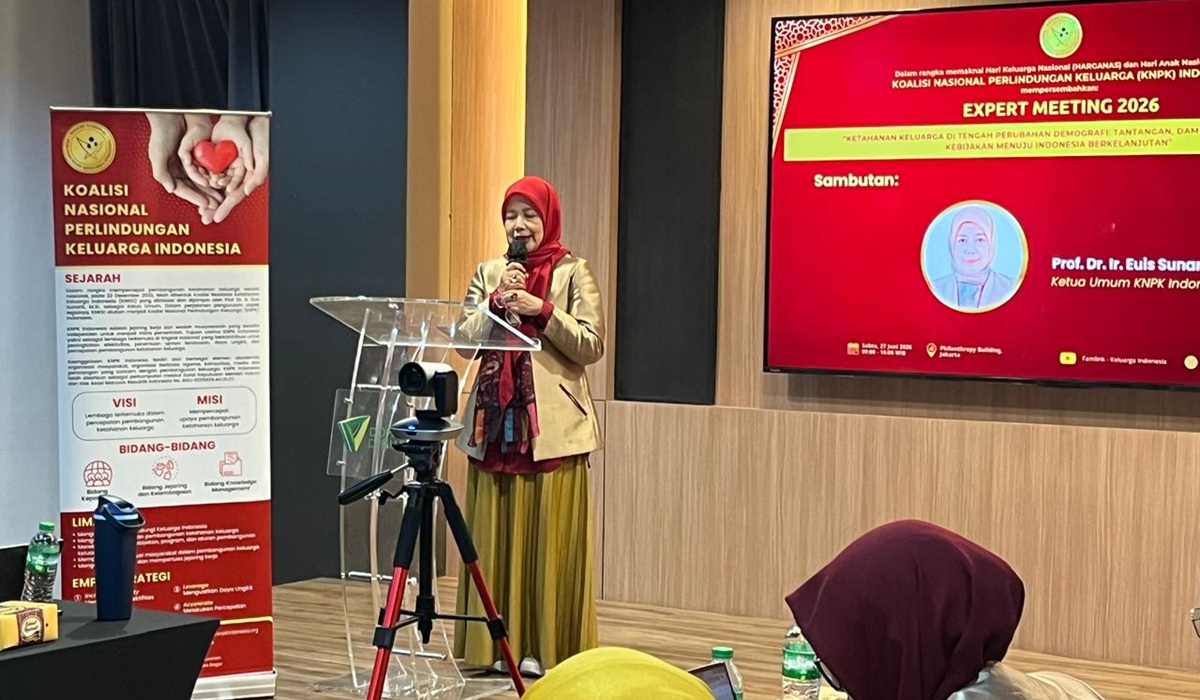
The ongoing demographic changes in Indonesia are not merely a population issue, but a major challenge for family resilience, the quality of future generations, and the sustainability of national development. This crucial message was the main focus of the KNPK Indonesia 2026 Expert Meeting organised by the National Coalition for Family Protection (KNPK) Indonesia. The event, held to commemorate the 33rd National Family Day (Harganas) and National Children’s Day (HAN) 2026, adopted the theme ‘Family Resilience Amid Demographic Change: Challenges, Impacts, and Policy Strategies Towards a Sustainable Indonesia’. The forum took place on Saturday, 27 June 2026, at Sasana Budaya Rumah Kita Dompet Dhuafa, Jakarta. The General Chairperson of KNPK Indonesia and Professor of Family Resilience and Empowerment at IPB University, Prof. Dr. Ir. Euis Sunarti, M.Si., presented material entitled ‘Families Amid the Megatrend of Demographic Change’. She highlighted contemporary social phenomena such as ‘marry is scary’, childfree lifestyles, and financial concerns about raising children through the lens of the Theory of Planned Behaviour (TPB). According to Prof. Euis, a global megatrend shift is currently underway from a marriage society towards an individual choice society. Marriage, once considered a norm (normative marriage), is now shifting to a choice that is continuously evaluated (reflective marriage). This has weakened the urgency to marry, even though family values are still generally respected. The discussion was further sharpened by the presence of cross-disciplinary commentators, including Dr. Dinar Dewi Kania, Prof. Heru Susetyo, Muhammad Iqbal, Ph.D., and Prof. Dr. Cecep Darmawan, who provided critical perspectives on each topic. As a tangible contribution, KNPK Indonesia produced an Expert Meeting Report containing policy recommendations. The drafting team, consisting of Feizal Syahmenan, Dr. Viena Rusmiati Hasanah, Nina Marliyani, and Fikri Maulana, hopes the document will serve as a guide for the government and stakeholders in responding comprehensively to demographic changes. In addition to the recommendations, the forum also marked the launch of the Indonesian Family Journal. This national journal, managed by KNPK Indonesia, published its first edition in June 2026 as a platform for literacy and in-depth research on family issues in the country. Cicih Kurniasih, M.Pd, Deputy Director II of the Dompet Dhuafa Education Programme, stated in her remarks that civil society collaboration is essential to building public awareness. She emphasised that strengthening the ecosystem through ‘Family-Friendly Development’ must be an anchor to prevent family decisions from becoming fragile and individualistic, which could ultimately trigger a deeper demographic crisis.