
Knowledge serves as the foundation for Jakarta's transformation into a global city
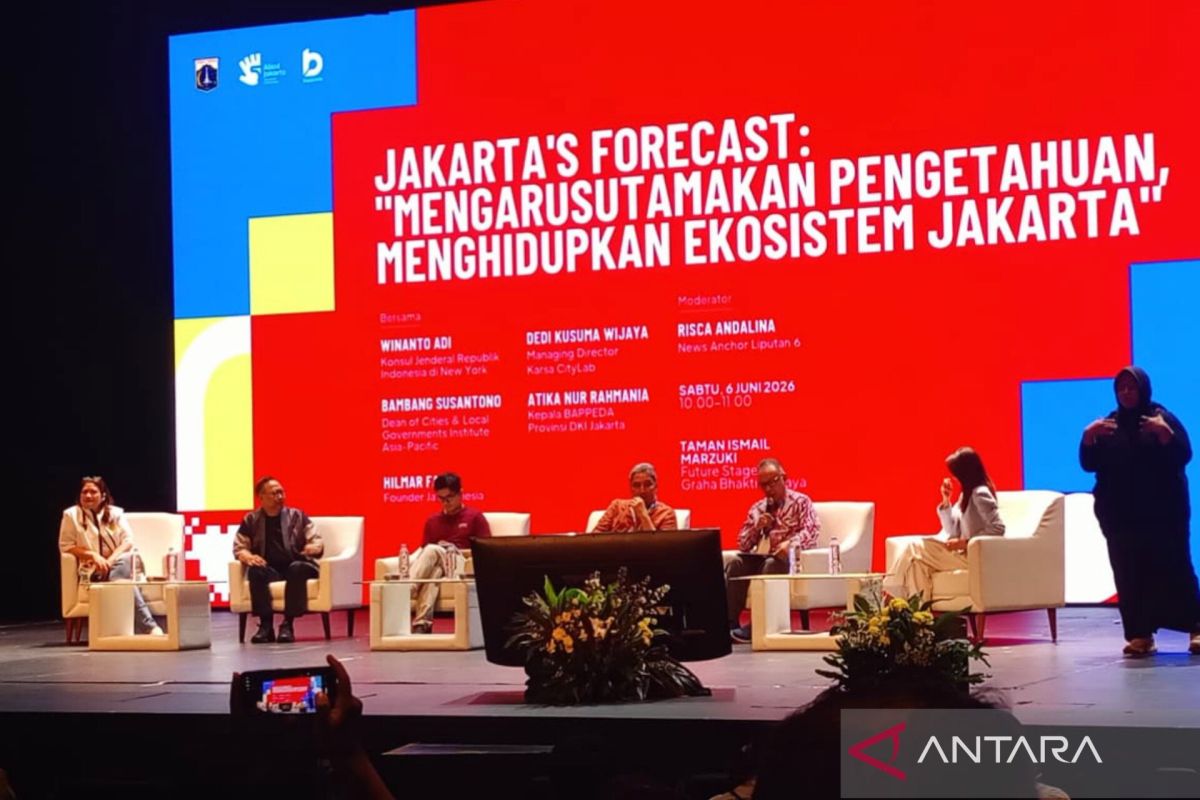
Jakarta’s efforts to transform into a global city require not only infrastructure development and investment but also a strong foundation of knowledge to serve as the basis for policymaking and development planning, stated the Consul General of the Republic of Indonesia in New York, Winanto Adi.
“Knowledge cannot be built alone. Therefore, collaboration is required. The development of a city cannot be separated from the ability of various parties to collaborate and share experiences,” Winanto said during a discussion at the Jakarta Future Festival in Taman Ismail Marzuki (TIM), Central Jakarta, on Saturday. Knowledge is considered a vital element in ensuring that urban transformation is sustainable, inclusive, and capable of addressing future challenges.
According to him, a global city is not built solely through physical projects, but through the ability to manage knowledge, learn from past experiences, and build extensive collaborations. Collaboration in knowledge development must occur both vertically and horizontally. Vertically, knowledge needs to be passed down across generations so that acquired experiences and lessons are not lost, while horizontally, collaboration must involve various disciplines and development sectors. Furthermore, the ability to build wide knowledge networks will be essential capital for Jakarta to increase its competitiveness and capacity as a global city.
Meanwhile, the founder of Jalindonesia, Hilmar Farid, reminded that urban transformation must stem from a deep understanding of a region’s history and characteristics. He assessed that knowledge is a crucial instrument to avoid development errors that could have long-lasting impacts. “It is simple; if a city is built on the basis of ignorance, the risk is enormous,” said Hilmar.
He cited that Jakarta grew atop 13 river flows and swampland. In his view, many urban issues faced today are inseparable from past developments that failed to consider the natural conditions and character of the area. He emphasised that a global city must be built based on a strong understanding of social, historical, cultural, and environmental conditions. Without adequate knowledge, development risks creating new problems that actually hinder the city’s progress.
On the same occasion, the Managing Director of Karsa CityLab, Dedi Wijaya, highlighted the importance of maintaining institutional memory as part of urban knowledge management. He noted that one of the main challenges of urban development in Indonesia is the loss of learning and experience due to changes in leadership.
Dedi explained that every change in regional leadership is often followed by changes in programmes, priorities, and the officials involved in the development process. This condition causes much knowledge and experience to go undocumented, forcing the city to start from scratch. “To me, a city sometimes loses its memory. A city often does not lack ideas, but rather loses its institutional memory,” he remarked.
In fact, the existence of institutional memory is a vital requirement for a city that wishes to develop consistently and sustainably. With a good knowledge management system, every policy and innovation can become part of a long-term learning process. Consequently, Jakarta has a greater opportunity to develop as a global city that is not only economically advanced but also resilient, adaptive, and sustainable in facing various future urban challenges.