
Knowledge, Power and the Crisis of Trust Following Alleged Presidential Bugging
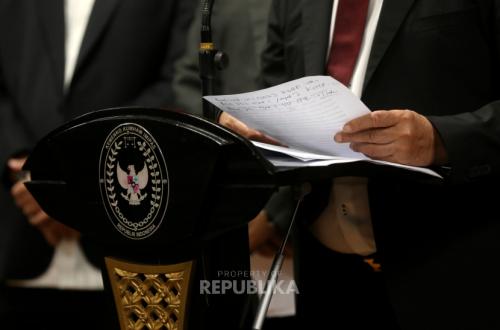
There is a profound irony in public life: a government may possess advanced technology, trained personnel, modern surveillance systems and extensive authority, yet still face the most fundamental crisis of all—a crisis of trust.
On 3 November 2026, when the Criminal Investigation Department of the Indonesian National Police (Bareskrim Polri) announced that three police officers had been named suspects in a case involving the alleged illegal bugging of President Prabowo Subianto and several prominent figures, it should have prompted national introspection. The significance lies not only in the fact that the head of state was reportedly targeted, but also in the serious questions the case raises about the limits of authority, institutional integrity, police oversight and accountability in the exercise of power.
Allegations of surveillance conducted without proper procedures, illegal access to electronic systems and the deletion of data must be examined through an objective legal process, while upholding the presumption of innocence.
But the more fundamental issue must not be ignored: how could state instruments established to protect the public interest allegedly have been used beyond the limits of their authority?
This case is not merely about who bugged whom. It is about how power operates, how information is controlled and how public trust is maintained.
A country’s greatest problem is not when its people lose trust in the government, but when those in power lose sight of the fact that power itself is a trust.
Humanity’s stewardship begins with knowledge, not power
The Qur’an offers a fundamental perspective on the origins of power and humanity’s mandate on Earth. When God announced that He would make humankind a steward, the angels questioned the potential for corruption and bloodshed.
God then demonstrated Adam’s distinction not through physical strength, wealth or political power, but through knowledge. He taught Adam the names of all things (QS Al-Baqarah: 31).
Humanity’s mandate as steward begins with knowledge. Knowledge underpins the ability to understand life, manage resources, build institutions and create civilisation. From knowledge come technology, public administration, education systems, the economy, law and modern governance.
But knowledge is not a licence to exercise unlimited control over other people. It is a means of carrying out God’s mandate responsibly.
Indonesia is not short of intelligent people. It has technology specialists, legal experts, economists, civil servants and highly educated leaders. But intelligence does not automatically produce wisdom; competence does not automatically produce integrity; and command of technology does not automatically bring moral responsibility.
Knowledge and technology unguided by a sense of trust can even become highly sophisticated tools of manipulation. The ability to access information is not permission to access everything. Control of data does not confer the right to trade secrets. Surveillance authority is not freedom to spy without a legal basis.
The Qur’an reminds people that their hearing, sight and hearts will all be held to account (QS Al-Isra’: 36).
A state that is technologically advanced but weak in integrity is digging the grave of its own civilisation.
A trust that must not be betrayed
The Qur’an describes the weight of the trust borne by humankind. It was offered to the heavens, the Earth and the mountains, but they shrank from bearing it, fearing they would be unable to fulfil it. Yet humankind accepted it (QS Al-Ahzab: 72).
Human beings are not the absolute owners of life. They are entrusted with managing it in accordance with God’s guidance.
It follows that power must not be treated as personal property. Public office is not a privilege to act as one pleases. Authority is not a tool for building networks of vested interests or protecting particular groups.
In a modern state, this trust extends to every institution: the executive, legislature, judiciary, security forces, civil service, oversight bodies, media and economic powers. The greater a person’s authority, the greater their responsibility.
The alleged bugging of the President should therefore serve as a starting point for reviewing internal oversight systems, limits on authority, protections for sensitive information and accountability mechanisms.
In a state governed by the rule of law, no power should operate without limits or oversight. Not even the President is above the law. The same applies to officials with security and law-enforcement powers.
Islam prohibits tajassus—unlawfully seeking out or spying on another person’s private life (QS Al-Hujurat: 12). Lawful surveillance carried out under legal authority for law-enforcement purposes must, of course, be distinguished from the abuse of access. Precisely because these powers are sensitive, their use must have a legal basis and a legitimate purpose, follow strict procedures and be subject to effective oversight.
The fundamental question is: who watches the watchers? A healthy state is not one that never experiences misconduct, but one that has the courage to expose, correct and punish it without favour.
Source: jawawa.id (https://jawawa.id/newsitem/knowledge-power-and-the-crisis-of-trust-following-alleged-presidential-bugging-1793962301)
Originally published by Republika (https://opini.republika.co.id/berita/to2oy0451/ilmu-kekuasaan-dan-krisis-amanah-pasca-dugaan-penyadapan-presiden), translated from Indonesian