
Knock! 3 Countries Officially Declare Desire for Independence from England, the UK Could Dissolve
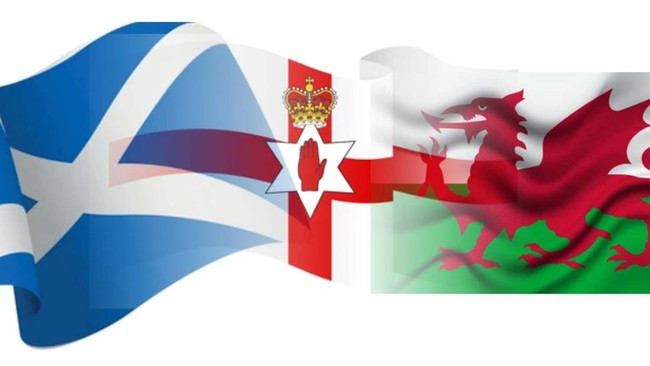
The governments of Scotland, Wales, and Northern Ireland are growing increasingly serious about independence from England. This threatens the dissolution of the United Kingdom (UK), which comprises four constituent countries: England, Wales, Scotland, and Northern Ireland.
Quoting Al-Jazeera on Tuesday (15/9/2026), the leaders of the main political parties in Scotland, Wales, and Northern Ireland declared unity for the “right to self-determination” and stated that “England has no right to obstruct democracy” on Monday. It is worth noting that the ruling parties in these three countries are currently pro-independence groups.
The agreement was signed by Scotland’s First Minister John Swinney of the Scottish National Party (SNP), Wales’s First Minister Rhun ap Iorwerth of Plaid Cymru, and Northern Ireland’s First Minister Michelle O’Neill of Sinn Fein in the Welsh capital, Cardiff. However, all three were said to have attended in their capacity as party leaders rather than as officials in their respective governments.
“Our nations have the right to self-determination. No Westminster government has the right to obstruct democracy or undermine the principle that it is our people who will decide their own future,” the group declared, referring to the UK Parliament based in London.
“For the first time, communities across these islands have first ministers in Scotland, Wales, and Northern Ireland who are all committed to independence from the United Kingdom,” the memorandum of understanding continued.
“The future of our nations lies in the European Union… For communities watching across these islands — and for people around the world — there could be no clearer sign that Westminster’s days are numbered,” it added.
“Momentum is on our side: we believe that constitutional change will happen,” the agreement stated.
The gathering took place after United States President Donald Trump spoke about the potential breakup of the United Kingdom. During a visit to Ireland on Saturday, he told journalists that the unification of Ireland would be “tremendous”.
“Of course the British will have their own view on this… but in my opinion, it would be a very good thing,” he added.
British Prime Minister Andy Burnham subsequently commented, stating that his position on Irish unification remained unchanged.
Earlier, in August, the new British Prime Minister also stated that a referendum on Northern Ireland leaving the UK “is not on the agenda, and not being considered”. Burnham also dashed the hopes of some for a vote on Scottish independence, calling it “impossible to hold”.
The history of the United Kingdom
The United Kingdom indeed comprises four constituent countries: England, Wales, Scotland, and Northern Ireland. Within these four jurisdictions, there are three legal systems.
England and Wales share a combined legal system. Meanwhile, Scotland operates its own separate legal system based on Scots law.
Northern Ireland also has its own independent legal system. However, this is grounded in English common law, although it has its own legislation.
Power is divided through a system known as devolution. This means some powers are delegated from the central government to regional or territorial governments, allowing those territories to govern a number of their own affairs.
Elected bodies hold certain powers with their own legislatures and governments. Nevertheless, defence and foreign affairs, among other matters, remain controlled by London.
None of the constituent countries has the right to leave the United Kingdom unilaterally.
Have there been referendums before?
In fact, this effort is not the first by Scotland, Wales, and Northern Ireland. Scotland, for instance, held an independence referendum in 2014.
At the time, Westminster gave the green light. Independence was rejected by 55% to 45%.
Wales presents a different case. The country has no legal mechanism allowing its parliament, the Senedd, to hold an independence referendum on its own initiative.
For Northern Ireland, the rules differ. Under the provisions of the 1998 Good Friday Agreement, the British government is obliged to hold a referendum if the British Secretary of State for Northern Ireland believes there is a “strong likelihood” that a majority would vote for a united Ireland.
Meanwhile, a Survation poll found that 47% of respondents supported Scottish independence, while a survey by the University of Liverpool found that 36% of respondents in Northern Ireland would vote for Irish reunification. In Wales, a Survation poll recorded support for independence at 32%.