
KNMP and efforts to increase fishermen’s incomes
Jakarta (ANTARA) — Before the Kampung Nelayan Merah Putih (KNMP) was established, the fish-landing area in Tongke-Tongke village, Sinjai regency, South Sulawesi, lacked adequate facilities to support fishermen’s activities.
The site that is now the centre of the fishing village was previously vacant land, with access roads that became muddy when it rained.
There was only one fish-landing facility, and it was in poor condition. Fishermen also lacked adequate support facilities to prepare for going to sea, from fuel to ice blocks to keep their catches fresh.
This made fishing activities less practical. Fishermen had to carry various supplies to their boats along roads that had not been properly laid out.
Yet ice and other equipment are essential to maintaining fish quality from the moment they are caught until they are marketed.
The situation began to change after the Tongke-Tongke KNMP was built in 2025 and started operating in May 2026.
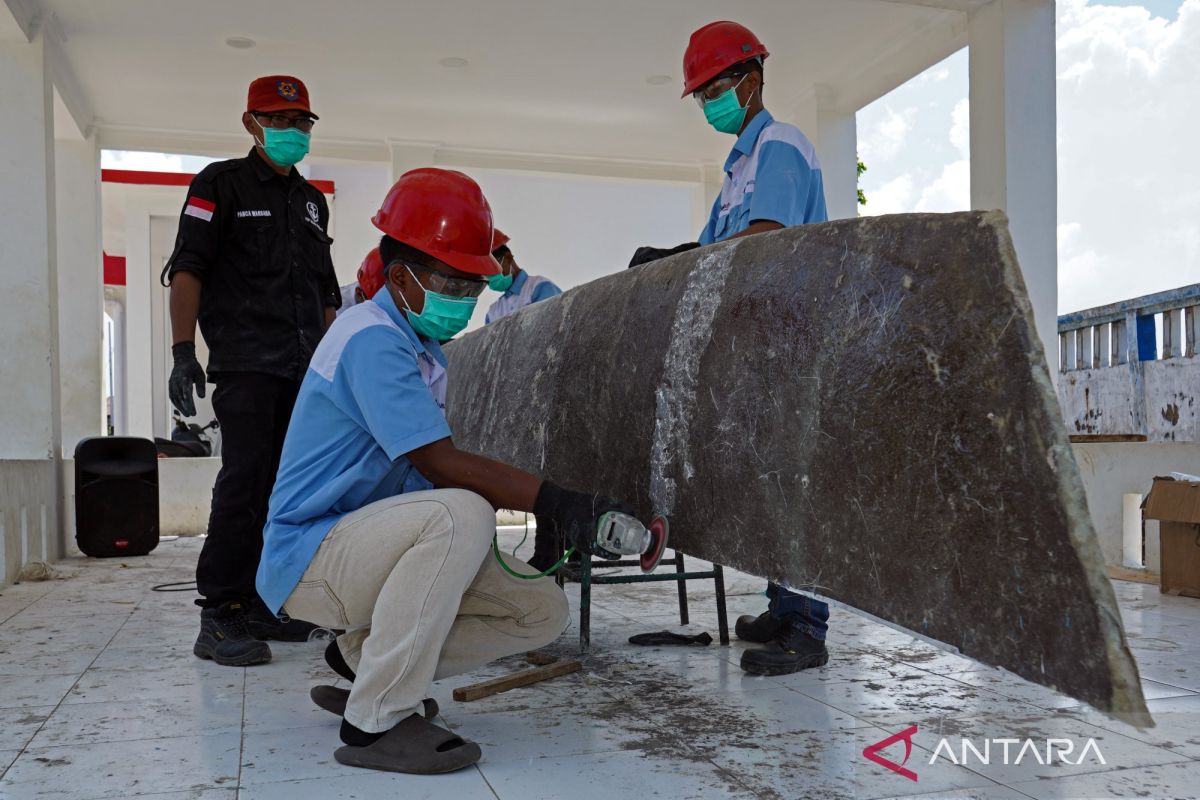
The site is now equipped with facilities including cold storage, an air blast freezer (ABF), an ice factory, a food centre, a supplies centre, a fishermen’s workshop and a fish-landing facility. The facilities are managed by a cooperative.
“The KNMP programme is not just about building fisheries infrastructure; it is about bringing economic transformation to coastal villages to strengthen food self-sufficiency, the competitiveness of fishery products and, of course, fishermen’s welfare,” Maritime Affairs and Fisheries Minister Sakti Wahyu Trenggono said.
For local fishermen, the facilities have not only made fishing activities easier, but have also helped preserve the quality of catches and secure more reasonable prices.
The impact is beginning to show in the market for tuna, Tongke-Tongke fishermen’s main commodity.
An estimated 500 fishermen live in Tongke-Tongke village. According to data collected by the KNMP’s management, around 218–220 boats of 25–30 gross tonnes operate in the area.
Muh Aidil Putra, head of the KNMP management and chair of the Tongke-Tongke Merah Putih Village Cooperative (KDMP), said tuna prices, previously around Rp30,000–Rp35,000 per kilogram, had risen to about Rp45,000–Rp47,000. At certain times, prices can reach Rp50,000 per kilogram.
He said the increase was linked to the growing number of buyers coming to the fishing village.
The Ministry of Maritime Affairs and Fisheries (KKP) reported that fishermen’s average income had risen by 76.2 per cent, from around Rp2.6 million to Rp4.6 million per fisherman per month.
Aidil explained that, before the KNMP began operating, buyers were already taking fishermen’s catches.
However, the capacity of the existing buyers was not sufficient to absorb the entire catch.
The Tongke-Tongke KNMP has so far shipped tuna on five occasions, totalling 65 tonnes and worth around Rp2.54 billion.
With the KNMP’s storage and processing facilities in operation, a number of buyers have begun coming to source fish from Tongke-Tongke.
One partner that operates the KNMP’s cold storage and ABF also processes tuna into other products for sale outside the region, including in Jakarta. The increase in buyers gives fishermen alternative markets and creates competition among purchasers seeking supplies.
As a result, fishermen have more choice over whom to sell their catch to. Competition has also affected the prices offered to them.
The cooperative’s role
To widen access to markets, the local Merah Putih Village Cooperative (KDMP) connects fishermen with buyers and coordinates transactions.
Buyers can come directly to the KNMP to propose partnerships or state their supply requirements. The management then connects them with fishermen and helps match the prices offered.
If a price is agreed, the buyer transfers payment through the cooperative, which then forwards it to the fishermen.
The cooperative also uses its vehicles and support facilities to collect and ship fish.
Aidil said that before the KNMP began operating, some fishermen would even market their catches in Bali and Lombok when prices there were more attractive.
Now, with more buyers coming to Tongke-Tongke and offering more competitive prices, most fishermen choose to market their fish locally.
However, the cooperative has not yet been able to play a greater role as a direct buyer. Aidil said a lack of capital was one of the main obstacles.
The cooperative estimates it would need around Rp200 million to Rp250 million to buy the catch from a single boat, which can amount to about four to five tonnes.
The cooperative also does not yet manage all the KNMP facilities.
It operates the ice factory, food centre and supplies centre, while the cold-storage facility remains under a partner’s management because the cooperative does not have sufficient capital.
Another challenge is operations: the cooperative still needs stronger human resources, particularly for business development, administration and secretarial work.
Improving record-keeping, business documentation and site management, including cleanliness, also remains necessary to ensure operations run more smoothly.
Development needs extend beyond institutional management and capital.
The Tongke-Tongke KNMP management has also requested additional facilities, including a four-tonne-capacity ABF and cold storage with a capacity of around 50–60 tonnes.
The additions are expected to increase the capacity to store and handle catches, in line with the area’s potential fish production.
Sustainability
The Tongke-Tongke experience shows that building facilities can improve fishing operations and attract more buyers.
However, buildings and equipment alone are not enough to ensure fishermen benefit economically on a sustainable basis.
Agung Sudjatmoko, a cooperative expert and business management lecturer at Bina Nusantara University, said higher selling prices and incomes were positive developments if coastal communities were genuinely benefiting.
Nevertheless, the mechanisms behind the increases need to be made clear and sustained.
He said cooperatives should not stop at acting as intermediaries between fishermen and buyers. They need to be strengthened so they can manage businesses professionally, aggregate catches, build market networks and partner with buyers or offtakers able to absorb fishermen’s products on a sustainable basis.
Supply chains also need strengthening so that the uptake of catches does not depend solely on demand for fresh fish.
Storage and processing facilities therefore need to be backed by clear market access, giving catches alternative outlets when demand for fresh fish weakens.
Cooperatives should also be encouraged to establish their own processing businesses to add value to fishery products. This could include producing fishmeal, sardines or canned fish, provided there is sufficient raw material, capital, technology and market access.
The Tongke-Tongke KNMP is one of 65 Kampung Nelayan Merah Putih sites operating in 2026.
The Ministry of Maritime Affairs and Fisheries aims to build 1,369 KNMP sites by 2027, as part of a long-term plan to develop 5,000 fishing villages across Indonesia.
In parallel, the government is promoting community economic development through the Merah Putih Village/Ward Cooperative (KDKMP) programme. Of the 30,000 KDKMPs established, the government aims for 10,000 to be operating effectively by the end of 2026.
The progress at the Tongke-Tongke KNMP shows that improved facilities can give fishermen access to wider markets and encourage competition among buyers.
But better facilities need to be accompanied by stronger economic institutions for fishermen.
The next challenge is to ensure cooperatives do more than connect fishermen and buyers: they must also develop productive businesses that add value and deliver greater economic benefits to their members.
Source: jawawa.id (https://jawawa.id/newsitem/knmp-and-efforts-to-increase-fishermens-incomes-1795837923)
Originally published by Antara (Indonesian) (https://www.antaranews.com/berita/5884395/knmp-dan-upaya-meningkatkan-penghasilan-nelayan), translated from Indonesian