
KNKT States Shipping Safety Regulations Need Evaluation and Revision
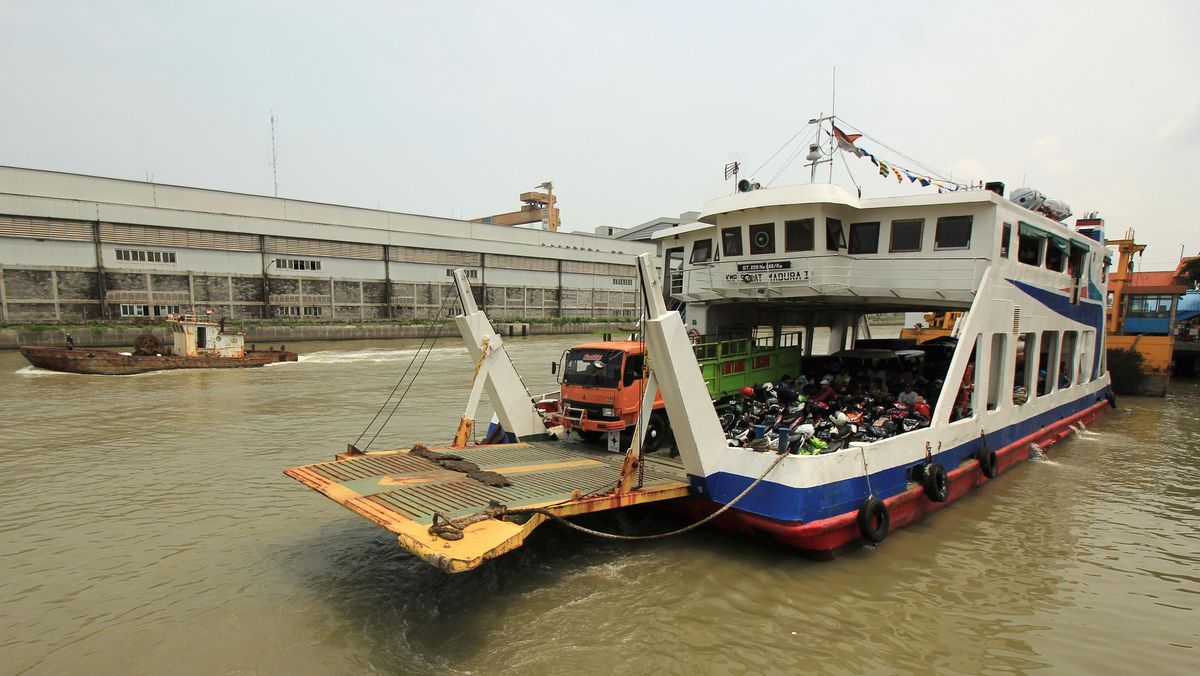
The National Transportation Safety Committee (KNKT) has stated that regulations regarding shipping safety in Indonesia need to be reviewed to ensure better safety guarantees.
“If the regulations are ineffective or fail to provide safety assurances, then those regulations must be immediately evaluated and revised to guarantee maritime safety,” said KNKT Chairman Soerlampto Tjahjono during an Indonesian Transport Society (MTI) webinar on Friday night, as reported by Antara on Saturday.
Lashing Regulations
Soerjanto mentioned that several rules require evaluation, including the Ministry of Transportation Regulation (Permenhub) Number PM 115 of 2016 concerning the Procedures for Transporting Vehicles on Ships.
He cited lashing rules (the securing of objects to prevent shifting) as an example; according to Soerjanto, the regulation states that every vehicle must be lashed, yet the same regulation also implies that not every vehicle requires lashing. He noted that this deficiency must be revised immediately to ensure the safe lashing of vehicles on ships.
“We also found that regarding lashing on ships, the lashing ropes must have a strength of 10 tonnes, but many lashing ropes have a strength far below 10 tonnes,” he said.
Lashing for trucks is also not being fully complied with, such as alternating lashing patterns, particularly for vehicles weighing 30 to 40 tonnes which must be secured on four sides on the left and four sides on the right, according to Soerjanto.
“However, we see many ships that do not have enough lashing points for trucks weighing 30 or 40 tonnes and above. We observe that many cannot meet these requirements; this is one issue where, in implementation, there are many obstacles in the field,” he said.
Article 19 of PM 115 mandates that every vehicle must be lashed during the voyage, but lashing is performed on vehicles in the front, middle, and rear rows, while unlashed vehicles must have their wheels chocked. Article 18 requires vehicles weighing 30 to 40 tonnes to use at least four fastening devices on each side, and the provision regarding the number of fastening devices in that article ends at 40-tonne vehicles.
Regarding strength, Article 10 states that fastening devices without permanent deformation must not be less than 120 kilonewtons (kN). The 10-tonne figure appears in the appendix as the safe working load for examples of fastening equipment.
Ship Inspections
Soerjanto stated that on 13 January 2025, the KNKT recommended that the Ministry of Transportation Regulation PM 28 of 2022, concerning the procedures for issuing sailing permits and approval of ship activities in ports, be reviewed.
The reason is that ship inspections should not only focus on the completeness of administrative documents but must also include physical inspections, even if conducted randomly.
According to Soerjanto, this is vital to ensure that ships meet maritime standards, which include construction stability, machinery condition, safety equipment, and crew competence before sailing.
“This includes weather-related issues and the potential for accidents,” he added.