
KNKT states emergency handling on ships remains suboptimal
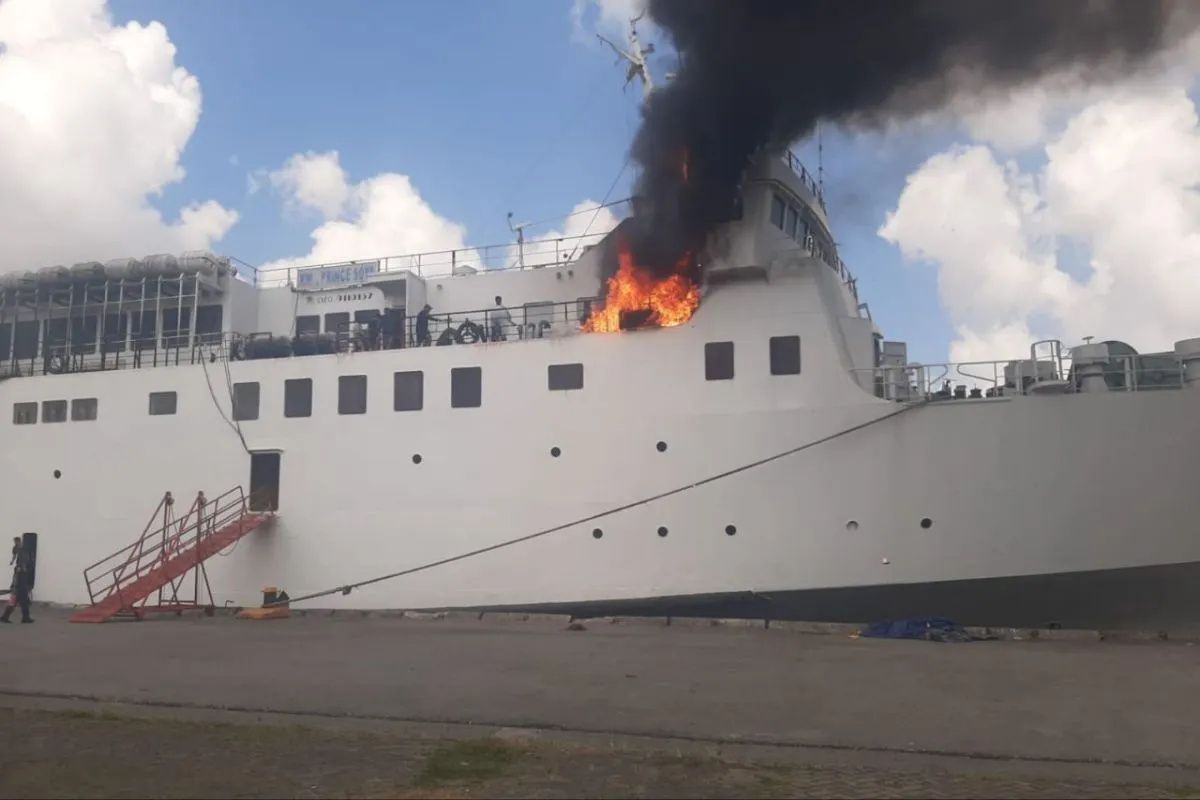
The National Transportation Safety Committee (KNKT) has stated that emergency handling on Ro-Ro ships is not yet optimal, leading to high casualty rates when accidents occur.
“Emergency response drills on ships are still limited to formalities and have not yet become a necessity,” said KNKT Chairman Soerjanto Tjahjono during a webinar organised by the Indonesian Transport Society (MTI) in Jakarta on Friday night.
According to him, investigations and field practices indicate that emergency handling on ships remains inadequate, resulting in ineffective responses during actual accidents.
“Therefore, emergency response drills are not intended to demonstrate success, but to identify weaknesses or deficiencies so that improvements can be made,” he stated.
Soerjanto noted that the KNKT has conducted emergency response simulations on ships, but encountered numerous obstacles, including issues with fire simulations, the use of life jackets, and a lack of rescue vessels.
During fire simulations, he noted that crew members faced difficulties using hydrant hoses, as they could not function properly due to various obstructions, particularly when the ship was at full capacity.
“The reason for many failures during fire drills is that hydrants do not function well because we found many obstacles when we put them into practice,” he said.
He added that the deployment of life jackets also takes a significant amount of time, typically requiring between three to six minutes.
“We observed that after conducting briefings, we requested both crew and non-crew members to don life jackets; on average, it took them between three to six minutes,” he added.