
KNKT Report: Scratches on Locomotive Windshield One of the Factors in Anggrek Train Collision with KRL
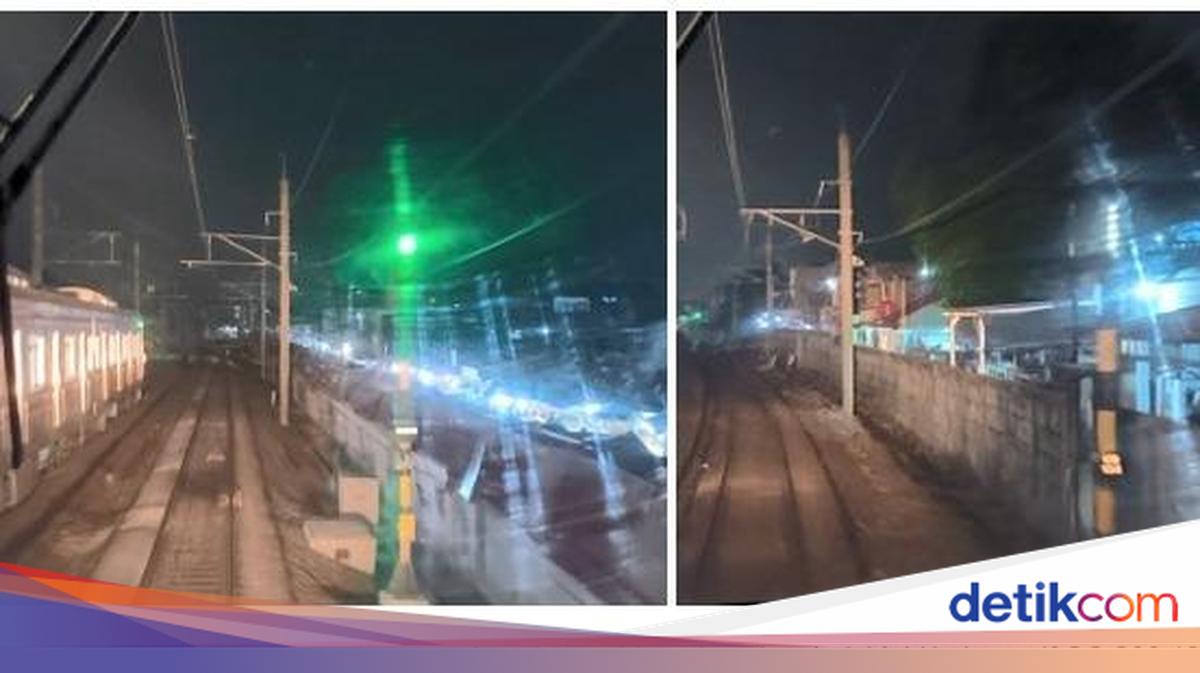
The investigation by the National Transportation Safety Committee (KNKT) has revealed that scratches on the glass of the Anggrek train locomotive (formerly KA Argo Bromo Anggrek) were a contributing factor in the collision with a Commuter Line train (KRL) at Bekasi Timur Station. The KNKT stated that the condition of the glass affected the driver’s ability to understand auxiliary signals.
According to the report released on Tuesday (29/09/2026), the investigation outlines the chronology of the accident between train 4B Argo Bromo Anggrek (KA 4B) and Commuter Line train 5568A on Track 1 of Bekasi Timur Station on 27 April 2026, at 20:52 WIB. The KNKT noted that there were 123 victims in the accident, consisting of 107 injured and 16 fatalities.
The brief chronology outlined by the KNKT is as follows:
27 April 2026
At 20:48:24 WIB, a collision occurred between Commuter Line train 5181B from the direction of Tambun Station to Bekasi Timur Station and an electric battery-based vehicle (taxi) at JPL 86 Ampera Road (down track).
At 20:48:55 WIB, train 5568A (KRL) stopped at Track 1 (upstream) of Bekasi Timur Station for passenger boarding and alighting.
At 20:49:19 WIB, train 5568A (KRL) moved approximately 1.69 metres towards Tambun Station.
At 20:49:24 WIB, train 5568A (KRL) stopped again because the driver observed a crowd of people on the upstream track towards Tambun Station.
At 20:50:43 WIB, train 4B (KA Anggrek) proceeded directly on Track III of Bekasi Station.
At 20:52:12 WIB, a collision occurred between train 4B and train 5568A on Track I (upstream) of Bekasi Timur Station.
In its conclusion, the KNKT found numerous wiper scratches and fine circular scratches (swirl marks) on the surface of the polycarbonate windshield of the Anggrek train locomotive. According to the KNKT, the use of polycarbonate for all locomotive cabin windows was implemented based on an official memorandum from the Director of KAI Rolling Stock Management issued in 2015.
“Locomotive 4B uses a windshield made of polycarbonate material, which currently shows many wiper scratches and swirl marks on the locomotive’s windshield surface,” stated the KNKT.
This condition was said to affect the driver’s vision. The KNKT noted that light sources appeared more blurred due to the scratches on the glass.
“At night, light sources appear more blurred with significant light scattering from the locomotive cabin using a polycarbonate windshield that has many wiper scratches and swirl marks,” the KNKT explained.
The KNKT report also included images demonstrating the effect of the scratches on the Anggrek train’s locomotive windshield on the driver’s vision at night. The committee compared this with images showing the view from inside a KRL train, which uses laminated safety glass, passing through the same location.
The KNKT noted that light visible from inside the CC206 locomotive cabin at Km 28+440, in front of the main signal block B104 and 475 metres from the collision point, appeared more blurred compared to the view from the KRL TM6000 cabin. The KNKT also detailed the perception of the train crew regarding the signals.
The KNKT stated that the driver of train 4B received a green aspect when passing the exit signal at J12 Bekasi Station, indicating they should proceed at the planned or operational speed, with no information that the next signal (B104) would show a red aspect. In the understanding of the driver and assistant driver of the Anggrek train, a green signal aspect is sequentially followed by a green aspect or, at worst, a yellow aspect.
Conversely, a red aspect, which indicates a stop, is always preceded by a yellow aspect as an indication to proceed with caution. Based on interviews, this understanding of signalling behaviour is acquired through education, training, and experience as a driver.
The KNKT also noted that the location of signal block B104, situated after curve number IP.MC22D and only visible from a distance of 410 metres before the signal, did not meet the minimum visibility distance of 600 metres as regulated by the Minister of Transportation Regulation Number 44 of 2018. To increase this visibility, an auxiliary signal UB104 had been installed to indicate the aspect of the main signal, B104.
From the investigation, the KNKT found that the UB104 auxiliary signal used five white LED bulbs arranged vertically, diagonally, and horizontally. At night, the KNKT noted that the light from UB104 was difficult to distinguish from the lighting in the surrounding residential area due to the high number of lights with similar colours and intensities in the vicinity.
“Furthermore, the condition of the locomotive’s front windshield, which contains wiper scratches and swirl marks, caused excessive light scattering, which also reduced the visibility of the UB104 auxiliary signal, making its aspect more difficult to identify from an adequate distance,” the KNKT stated.
The KNKT stated that the driver and assistant driver of the Anggrek train understood that after the green signal at Bekasi Station, they were expected to proceed without stopping until Cirebon Station. This condition meant that the aspect shown by the UB104 auxiliary signal potentially failed to capture the driver’s attention.
The combination of the understanding of signal sequences, the lack of visibility of the UB104 auxiliary signal at night, and the excessive light scattering on the scratched windshield of the Anggrek train locomotive reduced the effectiveness of the UB104 signal in extending the visibility of signal block B104. The KNKT stated that this potentially reduced the alertness of the Anggrek train crew towards the position and aspect of the signals and increased the risk of failing to identify the aspect displayed by the UB104 auxiliary signal.
Source: jawawa.id (https://jawawa.id/newsitem/knkt-report-scratches-on-locomotive-windshield-one-of-the-factors-in-anggrek-train-collision-with-krl-1790665210)
Originally published by detikcom (https://news.detik.com/berita/d-8684073/laporan-knkt-goresan-di-kaca-lokomotif-salah-satu-faktor-ka-anggrek-tabrak-krl), translated from Indonesian