
KNKT proposes regulated cargo inspection agents to strengthen dangerous goods oversight
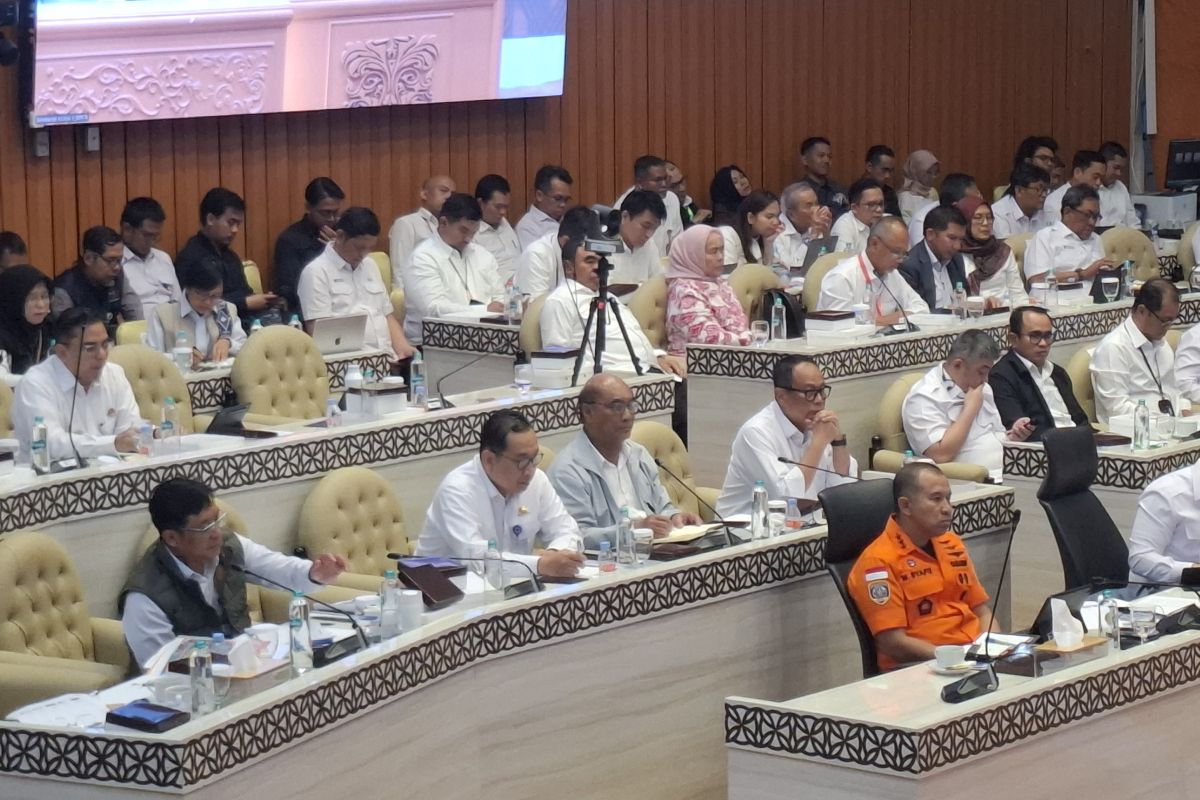
The National Transportation Safety Committee (KNKT) has proposed the introduction of regulated agents for sea transport to strengthen oversight of dangerous goods carried by vehicles onto roll-on/roll-off (Ro-Ro) vessels.
KNKT Chairman Soerjanto Tjahjono said the scheme could adapt the mechanism used in air transport, whereby cargo inspection and sorting are carried out before vehicles enter the port area.
“So regulated agents or freight forwarders operating outside the port environment receive packages from individuals or companies and carry out inspection and sorting,” Soerjanto said during a working meeting with Commission V of the House of Representatives in Jakarta on Wednesday.
According to him, personnel under the scheme would need to possess competence and certification in handling dangerous goods, so that the type of cargo and its handling requirements can be identified before vehicles proceed to the port.
Once the cargo has been inspected, vehicles can be sealed and undergo checks at the port, including X-ray screening.
If dangerous goods are present, the information is conveyed to the ship operator and port authority so that crew members are aware of the type and handling requirements.
“If the truck is not handled by a regulated agent, it must be inspected at the port, which will take considerable time and cause stagnation at the port,” Soerjanto said.
The proposal is based in part on KNKT records of 46 accidents involving Ro-Ro passenger vessels between 2009 and 2026.
Of these, 44 per cent were fires, 35 per cent capsized or sank, 12 per cent were collisions, and nine per cent ran aground.
Among the fire incidents, KNKT recorded that 64 per cent originated on the vehicle deck, while 18 per cent each originated in the engine room and accommodation areas.
“So we have found that most fires on Ro-Ro vessels start on the car deck,” Soerjanto said.
KNKT is also still examining vehicle cargo in its investigations into the fires aboard KM Mutiara Sentosa II and KMP Putri Yasmin.
On KM Mutiara Sentosa II, smoke was first observed coming from one of the trucks, but KNKT has not yet obtained certainty regarding the identity of the truck or its cargo.
Meanwhile, on KMP Putri Yasmin, KNKT recorded that the box truck manifest listed 105 items, including motorcycles, mobile phones, air rifles, documents, clothing, and concentrate. However, a number of packages were recorded without adequate descriptions of the type of goods.
Soerjanto stressed that the investigation process is still being updated based on data and interviews with passengers and crew until the final report is completed.
In addition to the introduction of regulated agents, KNKT recommends a review of regulations and oversight systems for dangerous and toxic goods carried by vehicles onto Ro-Ro vessels, as well as supervision of freight forwarding companies regarding loading safety and cargo securing.
KNKT also recommends firefighting training that takes into account the condition of vehicles packed closely together on deck, as well as the provision of fire patrols on vehicle decks.
According to the committee, the scheme is not intended to replace existing shipping regulations, but rather to assist in the oversight and control of dangerous goods.
“If the ship is not competent to carry that type of dangerous goods, the ship operator can refuse because there is a report from the regulated agent stating that the truck is carrying dangerous goods,” Soerjanto said.
With clearer cargo information, operators can determine appropriate handling or refuse a vehicle if the ship does not have the capability to carry that type of dangerous goods.