
KNKT Highlights Communication Signal Issues in KRL vs Anggrek Train Collision; Transport Minister Responds
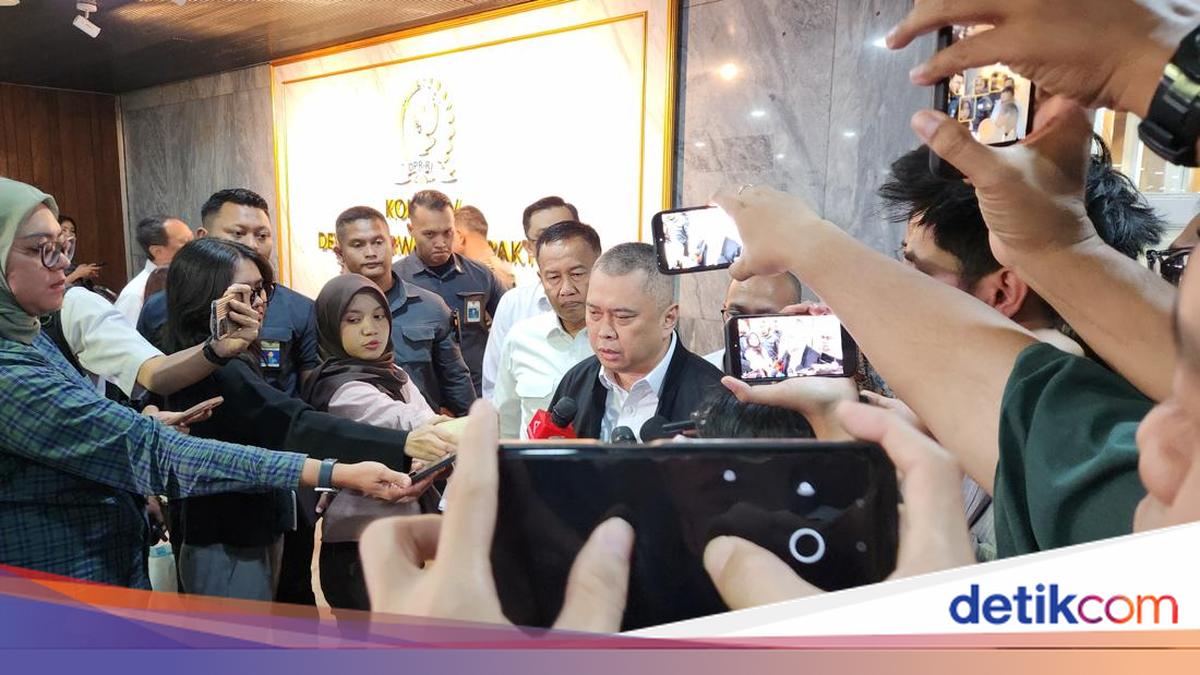
The National Transportation Safety Committee (KNKT) has revealed that communication chaos was one of the primary causes of the accident involving the Anggrek train (formerly Argo Bromo Anggrek) and a KRL commuter train at Bekasi Timur Station. Minister of Transport Dudy Purwagandhi has ensured that the findings and recommendations from the KNKT will be implemented to facilitate improvements.
“Whatever the KNKT’s recommendations may be, they will certainly be carried out, both by the ministry and by the operator, in this case, KAI,” said Dudy at the parliamentary complex in Senayan, Jakarta, on Wednesday (30/09/2026).
The Minister of Transport stated that any recommendation from the KNKT, including the need for human resource upgrades, will be followed up. According to him, the input from the KNKT must be executed.
Previously, the KNKT released the investigation results of the fatal accident between the Anggrek train and the KRL at Bekasi Timur Station, which resulted in 16 fatalities. The KNKT outlined several findings and contributing factors, ranging from microphone issues to scratches on the locomotive windshield, that contributed to the accident.
In this report, the KNKT also detailed conclusions divided into two main points: findings and contributing factors. There were 60 specific findings by the KNKT regarding this accident.
These findings include discrepancies between actual train movements and the Train Journey Schedule (Gapeka). The KNKT found that KRL KA 5568A departed from Bekasi Station 8 minutes and 32 seconds late, while the Anggrek train (KA 4B) departed 3 minutes and 17 seconds earlier than scheduled in the Gapeka.
There were also discrepancies in the time references used across various communication radio types at the Daop 1 Jakarta Train Control Centre, locomotive loggers, signalling system loggers, train CCTV, and the Daop 1 Jakarta Train Control Centre CCTV.
Furthermore, the KNKT highlighted issues within the communication channels. The KNKT stated that information regarding KRL KA 5568A being held at Bekasi Timur Station—due to a crowd of residents following a previous collision between a KRL and an electric taxi—was not conveyed to the South PPKP officers. This occurred because the South PPKP officers were preoccupied with handling the aftermath of the KRL and electric taxi accident.
The KNKT noted that the driver of KRL KA 5568A contacted the South PPKP via individual calls rather than through emergency calls. The KNKT also stated that the presence of several operating systems and communication equipment at the South PPKP caused noise pollution.
Additionally, the KNKT stated that the Anggrek locomotive (KA 4B) utilised a polycarbonate windshield which was found to have numerous wiper scratches and swirl marks on its surface. The KNKT noted that this condition caused light sources from the headlights to appear more diffused, with significant light scattering into the locomotive cabin.
The KNKT also discovered that the driver of the Anggrek train had never received training for emergency braking scenarios. Furthermore, the committee noted the absence of procedures for emergency braking at high speeds on curved tracks.
Source: jawawa.id (https://jawawa.id/newsitem/knkt-highlights-communication-signal-issues-in-krl-vs-anggrek-train-collision-transport-minister-responds-1790751828)
Originally published by detikcom (https://news.detik.com/berita/d-8685804/knkt-soroti-sinyal-komunikasi-soal-krl-vs-ka-anggrek-ini-kata-menhub), translated from Indonesian