
KNEKS: Sharia Finance Begins to Attract Non-Muslims
REPUBLIKA.CO.ID, JAKARTA – Sharia finance is considered not only popular among Muslim communities. Several non-Muslim groups are beginning to take an interest in sharia financial services because they are seen as closer to ethical principles, transparent, and with clear fund usage.
Director of Sharia Ecosystem Infrastructure at the National Committee for Sharia Economy and Finance (KNEKS), Sutan Emir Hidayat, stated that sharia economics should be understood as an open and universal system. According to him, the sharia concept does not solely address religion but also utility and responsible financial management.
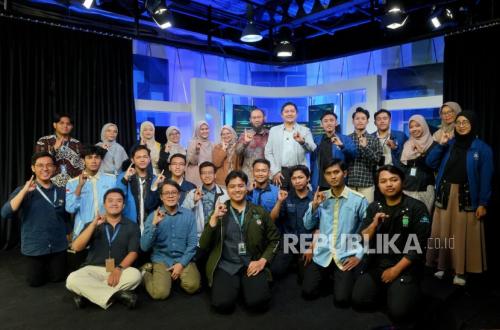
“If we want to promote sharia, for example, there are Chinese communities using sharia financial services,” said Sutan Emir during the Focus Group Discussion (FGD) Road to ISF 2026 titled “Beyond Awareness: From Lifestyle to Inclusion” organised by Republika together with FoSSEI, on Wednesday (13/5/2026).
He explained that some non-Muslim customers choose sharia financial services not because of religious factors, but because they want to ensure their funds are used for business activities deemed good and not harmful to society.
“I want my money to be used for good things,” said Sutan Emir, quoting a statement from a non-Muslim customer using sharia services.
According to him, this principle aligns with sharia economics that only supports halal, productive business sectors, and is oriented towards sustainability. He assessed that sharia economics shares similarities with global trends such as sustainable investment and social impact finance.
“If we talk about maqashid syariah, the concept even surpasses the goals of sustainable development or SDGs,” he said.
Data from the Financial Services Authority (OJK) shows that Indonesia has great potential in the development of sharia economy and finance. The number of Muslims in Indonesia reaches around 244.7 million people or 86.9 percent of the total national population.
OJK also recorded that the sharia financial literacy index among the public in 2025 reached 43.42 percent, while the inclusion rate is still at 13.41 percent.
Assistant Director of the Sharia Financial Literacy and Inclusion Group at OJK, Asadulloh Sefnado, said that the development of sharia finance in Indonesia is fundamentally aimed at all society, not just Muslims.
“Sharia finance is universal and can be utilised by anyone,” said Sefnado.
According to him, principles of justice, transparency, and utility are the main values that make sharia finance increasingly accepted by various segments of society.