
KM Virgo Transport 8 Accident: Legislator Points to Modified Old Vessels
Passengers were jolted awake by the sounds of commotion.
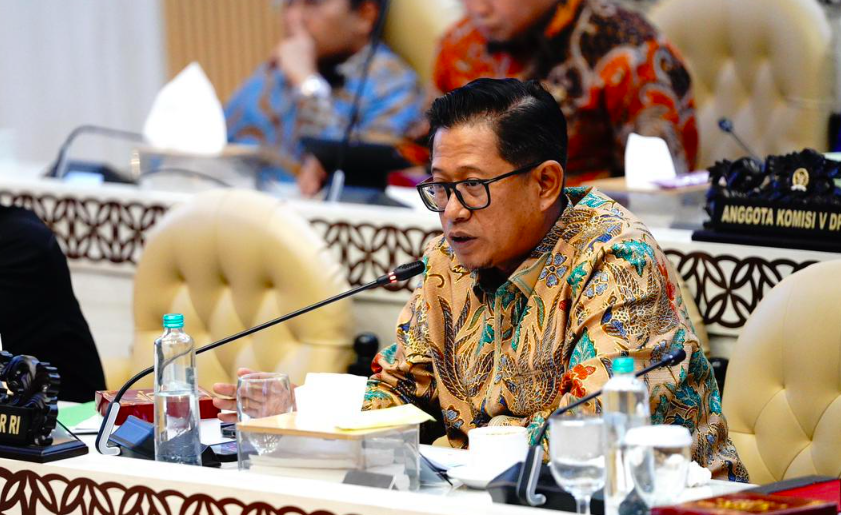
The accident involving KM Virgo Transport 8 in the Java Sea has drawn the attention of Sudjatmiko, a member of Commission V of the Indonesian House of Representatives (DPR RI) from the National Awakening Party (PKB) faction. He has requested the Ministry of Transportation (Kemenhub) to conduct a thorough evaluation and audit of maritime transport safety, specifically regarding the existence of old vessels that continue to operate after undergoing modifications or refurbishments.
Sudjantly, Sudjatmiko believes that the issue of modified old vessels requires serious government attention. He argued that the process of modification or refurbishment should not be viewed merely from an administrative perspective, but must ensure that technical seaworthiness and safety standards are genuinely met.
“We must ensure that old ships that have been modified or refurbished are not simply treated as if they were new vessels. What must be ensured is their comprehensive technical feasibility and safety,” Sudjatmiko stated via a press release on Monday (14/9).
He emphasised that his scrutiny of these old vessels is not intended to preempt the results of the investigation into the KM Virgo Transport 8 accident. However, he noted that the incident should serve as a momentum for the government to strengthen the oversight system for vessels and shipping companies.
According to Sudjatmiko, monitoring vessels is not enough by simply ensuring that documents and certificates are valid. The Ministry of Transportation must ensure that the physical condition of the vessel, safety systems, engines, stability, carrying capacity, safety equipment, crew competence, and maintenance systems all strictly comply with regulations.
“Do not just look at whether the documents are complete. The government must look at the actual condition of the ship. Especially if the vessel is old and has undergone various modifications. The inspection must be more thorough,” he said.
He also highlighted the potential for vessels that have undergone changes in construction, function, capacity, or configuration where oversight has not been optimal. Such changes can impact stability, load distribution, manoeuvrability, and other safety aspects.
“This is what we must ensure. If a vessel undergoes changes or modifications, there must be a technical inspection to ensure the vessel remains safe to operate. We must not allow modifications to proceed without adequate supervision,” he asserted.
Consequently, Sudjatmiko requested that the Ministry of Transportation immediately conduct an audit of all ship owners and operators in Indonesia, covering both passenger and cargo vessels. The audit is deemed essential to determine the actual condition of the national shipping fleet and to identify high-risk vessels and operators.
“The audit should not be limited to passenger ships. Cargo ships must also be inspected. All ship owners and operators must be ensured to meet safety standards,” he added.
He further noted that the audit should target the shipping companies and operators themselves. The government needs to examine how companies perform vessel maintenance, implement safety management systems, ensure crew competence, and determine whether a vessel is truly fit for departure.
“It is not just the ships that should be audited, but the companies as well. How maintenance is conducted, how safety management systems are run, crew competence, and how companies ensure a vessel is seaworthy,” said Sudjatmiko.
He assessed that oversight should not be merely administrative or periodic without considering the risk profile of each vessel and company. The Ministry of Transportation, he said, needs to develop a risk-based oversight system using data on vessel age, maintenance history, modifications, ownership, operators, inspection results, and accident records.
“The government must have a clear database. Which ships are old, who the owners and operators are, when they were last inspected, what modifications were made, and their safety track record. From there, the government can determine which vessels require stricter supervision,” he explained.
Sudjatmiko also urged the Ministry of Transportation not to hesitate in imposing sanctions on shipping companies proven to have ignored safety regulations. He argued that safety rules are meaningless without strict oversight and enforcement.
“If a vessel is unseaworthy, it should not be allowed to depart. If a company is proven to be defiant and repeatedly violates safety regulations, do not hesitate to impose firm sanctions,” he said.
He emphasised that sanctions should be proportionate to the level of violation, ranging from temporary suspension of operations to the revocation of relevant documents or permits in cases of serious breaches.
“Human safety must not be sacrificed for business interests. We must not compromise safety aspects just to chase operational targets, departure schedules, or corporate profits,” he asserted.
He expressed hope that the KM Virgo Transport 8 accident would not merely end with the search and investigation of a single vessel. He believes the government must use this event as a momentum to overhaul the national maritime safety system comprehensively.
“The most important thing right now is to ensure that the search, rescue, and evacuation of victims are carried out to the maximum extent. Following that, the investigation must be thorough and transparent. If weaknesses in the oversight system are found, they must be repaired immediately,” he said.
Sudjatmiko added that maritime transport is a backbone of connectivity for Indonesia as an archipelagic nation. Therefore, the government must ensure that the public receives maritime transport services that are safe, not just available.
“We need maritime transport that is strong and efficient, but safety is non-negotiable. We must not wait for another accident.”