
KM Virgo 8 Capsizes in Java Sea, Alleged Modifications Under Scrutiny
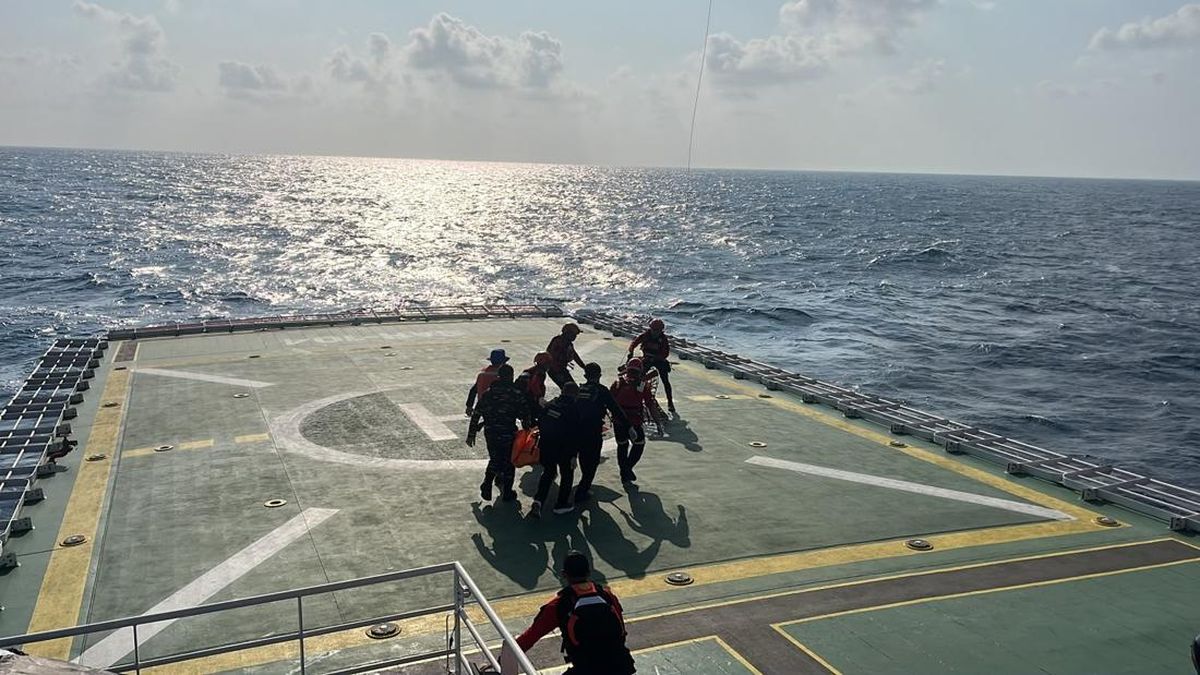
Allegations of modifications, specifically the addition of a ramp door on KM Virgo Transport 8, have come under scrutiny following the vessel’s capsizing in the Masalembo waters, Java Sea.
The Vice Chairman of the Indonesian Maritime Transportation Forum (MTI), Rakhmatika Ardianto, stated that modifications or changes to ship designs are subject to specific approval and supervision mechanisms. This refers to PM Number 5lar of 2021 concerning the Approval of Ship Design Drawings, Implementation, and Supervision of Ship Construction and Work, which mandates that ship alterations must be accompanied by technical drawings and calculations before work commences.
“Ship owners are not permitted to alter construction at their own discretion. There are design drawings, technical calculations, an approval process, and work supervision conducted by the Directorate of Shipping and Seafaring of the Directorate General of Sea Transportation, as well as the Indonesian Classification Bureau (BKI),” said Rakhmatika in a statement on Monday (21/9).
“Once the work is completed, a recalculation of the ship’s stability is performed through an inclining test by BKI,” he added.
Rakhmatika noted that modifying or changing ship designs is a common practice in the shipping industry. He mentioned that several currently operating vessels have undergone design or functional changes during their service lives.
For instance, the Doulos Phos, built in 1914 in the United States as the SS Medina, transitioned from a cargo ship to a pilgrim and passenger vessel named SS Roma. It later became the cruise ship MS Franca, operated as the floating library MV Doulos from 1977 to 2009, and was eventually revitalised as the Doulos Phos Ship Hotel in Bintan from 2019 to the present.
Similarly, the Shinka Maru was converted from a cargo Ro-Ro vessel to a passenger Ro-Ro vessel named Our Lady of Medjugorje, while the Shinsei Maru was modified and renamed Our Lady of Sacred Heart.
“This demonstrates that changes in ship design or function are standard in the shipping industry, provided they are carried out through technical processes and meet safety and classification requirements,” he said.
Regarding KM Virgo Transport 8, it is alleged that the vessel underwent modifications involving the addition of a side ramp door. The vessel is known to be a 39-year-old second-hand ship from Japan.
According to Rakhmatika, if the vessel did not meet stability calculations, it should not have obtained a class certificate. He explained that if construction changes result in negative stability, the ship would experience a list even when empty or before being loaded, let alone when fully loaded and operational.
“The evidence is that the ship had operated for more than a month with over 30 trips. At the time of the accident, the ship had travelled approximately 190 nautical miles of a total 240 nautical mile voyage,” he noted.
Rakhmatika also highlighted the route of KM Virgo Transport 8 in Indonesia compared to its operation in Japan. He stated that the suitability of operating the vessel in Indonesia must refer to the class notation issued by BKI.
He explained that based on the design and construction strength, BKI issues several navigation area notations. Notation P has a maximum limit of 200 nautical miles from the coast or the nearest sheltered port; notation L is a maximum of 50 nautical miles from the coast or nearest sheltered port; while notation T is intended for calm waters.
“For the Surabaya-Banjarmasin route, although the distance is approximately 240 nautical miles, consideration must be given to the proximity of islands passed that can serve as shelter. The average distance is below 50 nautical miles, so a ship with class notation L can still operate on that route,” he said.
Rakhmatika also addressed the use of water depth as a reason to assess construction suitability. He stated that hydrostatically, the pressure at a point on the hull is determined by the depth of that point from the water surface, not by the total depth of the waters.
“In Indonesia, many small vessels operate in waters deeper than the Java Sea. For example, on the Ketapang-Gilimanuk route, which features trenches thousands of metres deep,” he said.
On that basis, Rakhmatika argued that the cause of maritime accidents cannot be viewed from a single aspect. In addition to technical aspects, operational aspects must also be considered in the investigation of accident causes.
“There are operational aspects that have contributed significantly. In fact, the human factor is the largest cause, contributing more than 80 per cent. Therefore, the cause of the accident must be studied comprehensively, rather than being concluded from a single aspect,” he concluded.