
Klungkung Government Checks Alleged Circulation of Thai Shallots at Galiran Market
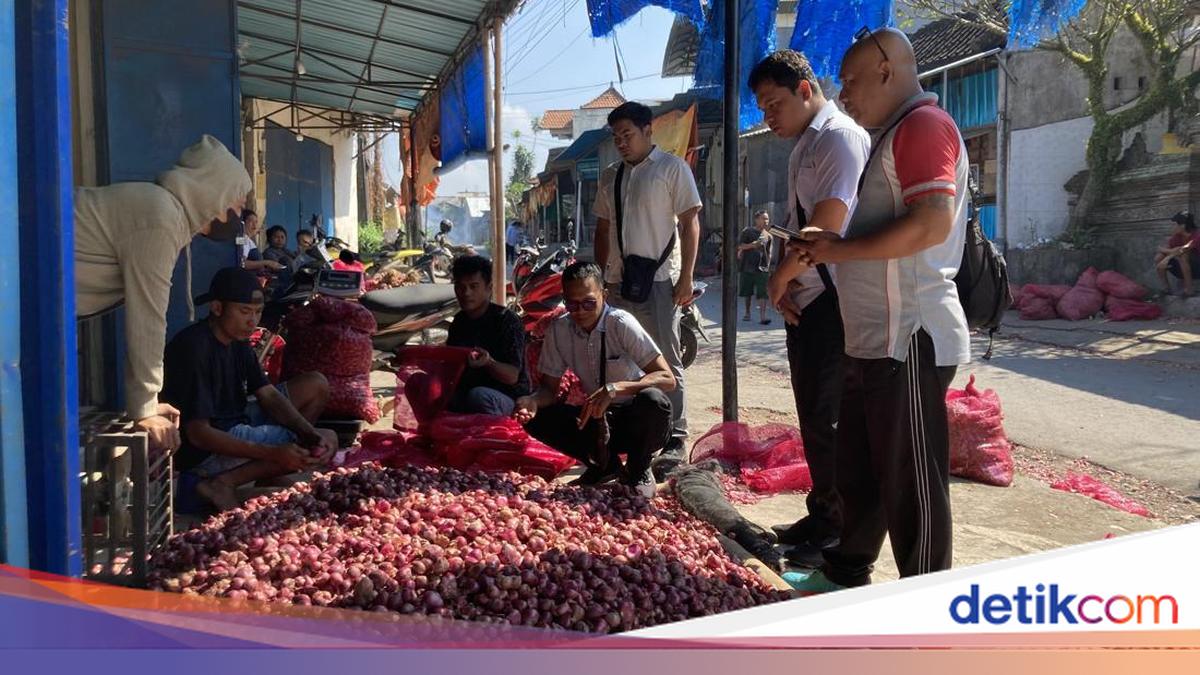
The Klungkung Regency Government, together with the Economic Unit of the Klungkung Police Intelligence Division, has checked allegations of imported shallots circulating at Pasar Umum Galiran, Klungkung, Bali. The move follows public reports regarding the suspected circulation of Thai shallots at the traditional market.
Head of the Klungkung Food Security and Fisheries Agency (DKPP), Ni Luh Made Ariyati, said the results of direct tracing and monitoring in the field showed that all shallot supplies circulating at Pasar Galiran came from local and domestic commodities. Ariyati confirmed that no imported shallots were circulating there.
“No imported shallots from Thailand were found. The results of the market availability survey showed that stock was dominated by Bali karet shallots at a market price of Rp 20,000 per kilogram, as well as Bima shallots sold in the price range of Rp 25,000 to Rp 28,000 per kilogram,” said Ariyati on Tuesday (18/8/2026).
Ariyati explained that monitoring of price stability and food supply availability at Pasar Galiran continues to be carried out. Routine monitoring twice a week aims to ensure price stability and the validity of commodities sold by traders.
Regarding the emerging issue of new shallot supplies entering the market, Ariyati confirmed that the commodity was not imported. Rather, it was shallots from Kupang, East Nusa Tenggara (NTT).
“Regarding information about a new type of shallot entering the field, after checking it turned out to be a commodity from Kupang, NTT. These shallots from NTT have indeed only entered Pasar Galiran in the last few weeks,” added Ariyati.
According to detikBali’s observations, the joint team checked a number of shallot warehouses at Pasar Galiran today. Officers also asked traders about the origin of the shallots suspected of being imported.
“These shallots come from Kupang, NTT. The price is also Rp 25,000 to Rp 26,000 per kilogram. We brought them in because they are larger than this year’s Bima shallot harvest,” said Habibi, one of the shallot entrepreneurs at Pasar Galiran.
Habibi confirmed that shallots from Kupang had not previously entered Bali. According to him, the Kupang shallots were only brought in due to market demand.
“These shallots are large. That is what people in Bali are looking for. The seeds are Bima shallots, planted in Kupang. This year the results are good and sought after by people in Bali,” added Habibi.
Previously, a shallot entrepreneur at Pasar Galiran Klungkung, Mujakir Ilyas, complained about the circulation of shallots he claimed were imported from Thailand. As a result, the price of shallots on the market, which was originally Rp 28,500 per kilogram, plummeted to Rp 24,000 per kilogram.
“We traders are clearly very worried, especially as this coincides with the main harvest season. Local stock is abundant, but consumers are instead looking for the cheap ones,” said Ilyas.