
KLH Reveals PROPER Assessment Process, Not Taken Lightly
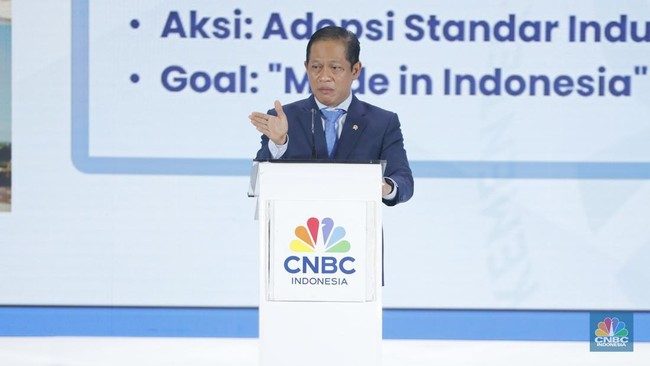
The Ministry of Environment and Forestry (KLH) has affirmed that the assessment under the Programme for Assessing Company Performance in Environmental Management (PROPER) is not granted arbitrarily. The government applies a series of strict criteria as the basis for evaluating companies’ compliance with environmental regulations in areas such as waste management, energy efficiency, and corporate social responsibility (CSR). Environment Minister/Head of the Environmental Control Agency Hanif Faisol Nurofiq stated that PROPER serves as an instrument for supervision as well as transparency to the public regarding companies’ environmental performance. The assessment forms part of the government’s obligation to monitor issued environmental permits. He emphasised that supervision is not merely a formality. Local and central governments bear legal responsibility for the permits they issue. Even if supervision is neglected and results in loss of life, authorised officials could face criminal sanctions. “So there are actually two aspects related to PROPER. The first is that it is one of our obligations—mine, the Governor’s, Regents’, and Mayors’—to monitor the permits we grant,” Hanif said during the CNBC Indonesia Nation Hub broadcast on Friday (24/04/2026). “Furthermore, under Article 112 and related provisions, if we fail to conduct supervision within our authority and it causes loss of life, there is a threat of one year’s imprisonment,” he added. In addition to serving as a government supervision tool, PROPER also provides a means of transparency for society. The public has the right to know the level of companies’ compliance with environmental requirements as stipulated in Law No. 32 of 2009 on Environmental Protection and Management, as well as Government Regulation No. 22 of 2021. On the other hand, KLH faces significant challenges in conducting supervision. Based on the Amdal.net system, there are approximately 1.759 million business units across Indonesia. Meanwhile, the number of supervisory personnel from district/city to central levels is less than 3,000. “The most serious issue is that we are trying to address it through an electronic reporting system,” he said. To bridge this limitation, the government has implemented an electronic reporting system. Through this mechanism, companies with AMDAL or UKL-UPL documents are required to submit periodic environmental performance reports. Of the total business units, around 94,000 companies are mandated to enter the electronic reporting system. They must submit reports every six months as part of environmental compliance monitoring. “If they fail to report, there is Minister of Environment and Forestry Regulation No. 14 of 2024 that imposes sanctions,” he concluded.