
Klaten Farmer Finds 16kg of Gold in a Rice Field: What Happened to It?
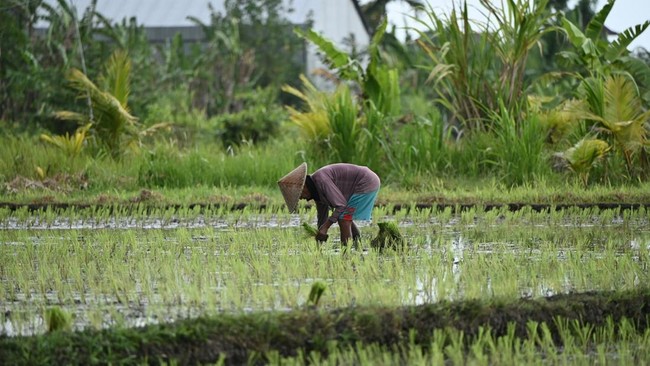
Jakarta, CNBC Indonesia — Residents of Wonoboyo Village, Klaten, Central Java, were once astonished by the discovery of a treasure trove of 16kg of pure gold by a farmer named Cipto Suwarno. The remarkable find, made in October 1990, is recorded as one of Indonesia’s largest archaeological gold discoveries.
The story began when Suwarno was working in his rice field to repair an irrigation channel damaged by a project near the land. For more than a week, he dug from morning until sunset without realising that a valuable treasure lay beneath his feet.
But on Wednesday, 17 October 1990, while digging at a depth of 2.5 metres, Suwarno’s hoe struck a hard object. At first, he thought it was just an ordinary stone. When he lifted it to the surface, however, he was astonished to find a ceramic jar wrapped in gold.
“Gold, gold, gold!” Suwarno shouted at the time.
The discovery immediately drew a crowd of villagers. In the presence of village officials, the excavation continued, eventually bringing up a total of 16kg of ancient gold artefacts.
According to an archive of a Tempo report dated 3 November 1990, the treasure comprised a bulbous bowl, six bowl covers, three dippers, a tray, 97 bracelets, 22 bowls, a pipe, one large jar, two small jars, 11 rings, seven plates, eight earrings, a handbag, a kris, beads and coins.
Archaeologists concluded that the artefacts dated from the late ninth to the mid-tenth century, based on Ramayana relief carvings on a gold bowl and the inscription “Saragi Diah Bunga” on a gold coin. The Wonoboyo Treasure is now preserved at the National Museum in Jakarta.
Evidence of Ancient Javanese Affluence and Enthusiasm for Gold
The Wonoboyo discovery is tangible evidence of how deeply gold was woven into daily life in Java during the ancient kingdoms, among both the nobility and ordinary people.
In the past, gold was relatively accessible and used not only for jewellery, but also as a status symbol and a means of payment. Historical records point to the extensive use of gold in Java:
The splendour of Majapahit and Daha: During the Majapahit Kingdom (1293–1527), nobles commonly covered everyday objects in gold, from royal carriages to fans. In Mpu Prapanca’s Desawarnana, translated by Stuart Robson (1995), the daughter of the King of Daha is also said to have travelled regularly in a gold-plated carriage. In Nagarakertagama, as discussed by archaeologist Slamet Mulyana (2012), the accumulation of gold and money is described as a prestigious aspiration of the people of the time.
A means of payment for large transactions: According to Erwin Kusuma’s 2021 book Uang Indonesia: Sejarah dan Perkembangannya (Indonesian Money: Its History and Development), ancient Javanese society used gold as an official means of payment, particularly for high-value transactions such as land sales, rather than for everyday market purchases.
Accounts by foreign travellers: The splendour of Javanese kings also impressed visitors from abroad. In Nusantara dalam Catatan Tionghoa (The Indonesian Archipelago in Chinese Records, 2009), a Chinese traveller wrote that Javanese kings used dining utensils made entirely of gold. Similarly, European traveller Tome Pires wrote in Suma Oriental (1944) about his visit to Java in 1513, describing a king adorned in gold from head to toe, as well as gold necklaces and bracelets worn by guards and even the king’s pet dogs.
Interestingly, Java itself was not a major gold-producing region. To meet the high demand for the precious metal, ancient Javanese people imported gold from India and Sumatra, which had long been known as a “Golden Paradise”.
With the decline of the ancient kingdoms and the arrival of the colonial era, lifestyles and the circulation of wealth changed dramatically. Many royal jewels and other precious-metal assets were deliberately buried for safekeeping, remaining underground for centuries and eventually becoming targets for modern-day treasure hunters.
Source: jawawa.id (https://jawawa.id/newsitem/klaten-farmer-finds-16kg-of-gold-in-a-rice-field-what-happened-to-it-1795913421)
Originally published by CNBC Indonesia (https://www.cnbcindonesia.com/market/20261128215126-17-789386/petani-di-klaten-temukan-emas-16-kilogram-di-sawah-begini-nasibnya), translated from Indonesian