
Klaten disability community undergoes AI-powered TB screening
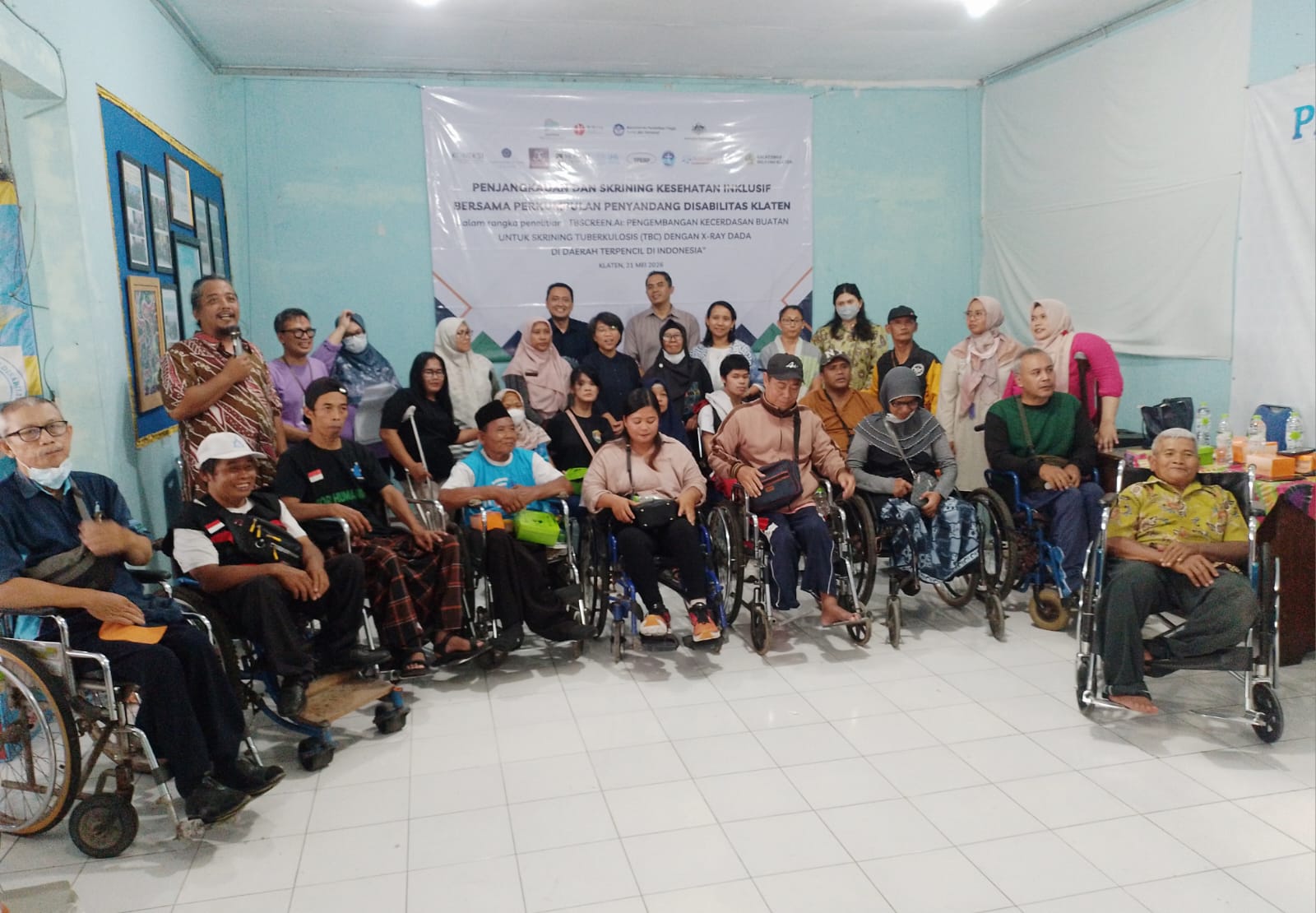
A tuberculosis (TB) control programme in Indonesia has moved into a new phase with the development of AI-based technology for TB screening using chest X-rays. The innovation is a computer-aided detection (CAD) software, TBScreen.AI, designed with inclusivity at its core, particularly for people with disabilities. Unlike similar technologies developed globally, TBScreen.AI focuses on Indonesia’s population diversity, including gender, age, race, geographic location and disability status. Lead researcher and lecturer Antonia Morita Iswari Saktiawati of the Department of Internal Medicine, Faculty of Medicine, Public Health and Nursing at Universitas Gadjah Mada (UGM) stated that the aim of the AI-based technology is to facilitate easier access to TB screening, especially for people with disabilities. Moreover, Morita said the AI technology is accessible via a digital platform, allowing users to upload X-ray results and immediately see the probability of TB. The research is specifically designed to assist groups that have traditionally lacked access to health services, such as women, people with disabilities, the elderly, and communities in remote areas. It is hoped that the resulting technology will enable earlier TB detection. “The results will also broaden access to screening for communities that have therefore been hard to reach, and help curb transmission and deaths from TB,” Morita said during a TB awareness event at the Klaten Disabled Community Association (PPDK) on Thursday 21 May. The study is a collaboration among UGM, the University of Melbourne, Universitas Sebelas Maret, and Monash University, together with civil society partners such as Yakkum Rehabilitation Centre, Centre for Advocacy for Women, Disability and Children (SAPDA), and the Papua Health and Community Development Foundation (YPKMP). The initiative is supported by Koneksi as part of the Indonesia–Australia knowledge partnership. As part of the research and community outreach activities at PPDK, the project aims to recruit participants from the disabled community, conduct X-ray-based TB screening, and collect key data on barriers to accessing health services. Around 50 participants from the disability community, including individuals with scoliosis, spinal cord injuries, and cerebral palsy, have been involved in the activity. The data collected will form a crucial foundation for training the AI system to be more accurate and inclusive. In addition to Morita, Ari Natalia Probandari, a professor from UNS, spoke about the features and symptoms of TB, the social stigma associated with its transmission, and the urgency of early detection. “The social outreach is designed to raise public knowledge about tuberculosis, from transmission to detection and treatment, while encouraging earlier case finding to reduce stigma against TB patients,” she said. Indonesia currently ranks second globally in TB burden, with a significant gap between estimated cases and those diagnosed. The WHO has urged the use of CAD to assist interpretation of chest X-rays, particularly in areas with limited radiology personnel. By combining cutting-edge technology with an inclusivity-based approach, TBScreen.AI is anticipated to be a strategic move to strengthen Indonesia’s health system and achieve TB elimination more evenly. Meanwhile, Qoriek Asamarawati, chair of PPDK, said that as a district-level disability organisation, outreach and inclusive health screening activities open space for the disability community to contribute to research. “This activity has a direct impact on the disability community, while promoting more inclusive health services and strengthening TB education and inclusion principles at the local level,” he said.