
KKP: Seaweed Farming Model in Karimunjawa is Environmentally Friendly
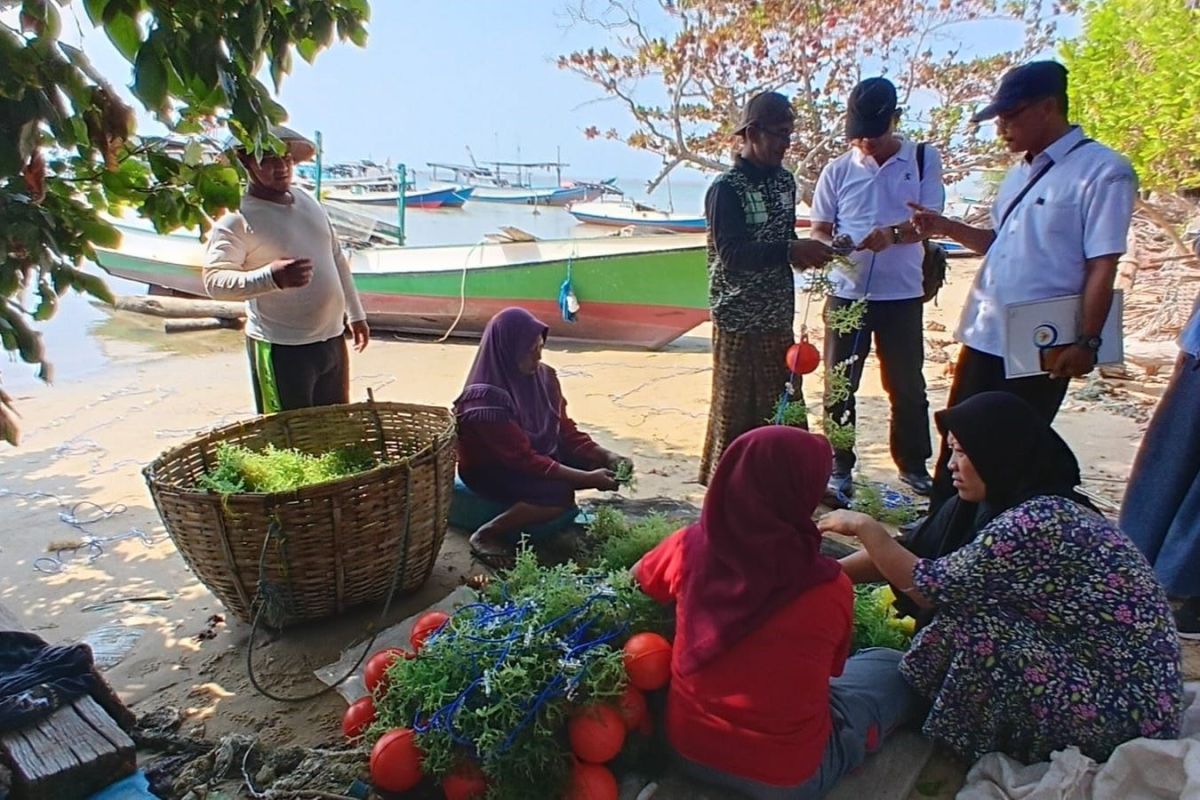
The Ministry of Marine Affairs and Fisheries (KKP) is committed to establishing the Karimunjawa Islands in Jepara Regency, Central Java, as a production centre for seaweed farming, while simultaneously reviving the commodity as a pillar of the coastal community’s economy.
Nono Hartanto, Director of Seaweed at the Directorate General of Aquaculture, KKP, stated in a written statement that the ministry is ensuring the development of seaweed farming modelling in the Karimunjaya Islands is conducted using facilities and technical standards that are more environmentally friendly. He noted that KKP aims to restore the glory of seaweed production in Karimunjawa, which has served as a primary economic source for Jepara’s coastal residents but has declined sharply since 2009 due to various issues.
He explained that the seaweed farming model prioritises three aspects: environment, social, and economy, while adhering to recommended technical cultivation standards. From an environmental perspective, the model replaces materials that have the potential to pollute waters, such as raffia string and plastic bottle floats, with high-density polyethylene (HDPE) materials, which are considered more eco-friendly. According to Nono, using plastic bottles as floats poses a risk of water pollution, including the potential for microplastics that can impact marine biota.
Regarding social and economic aspects, the development of seaweed farming is expected to stimulate the coastal economy, create business opportunities, and enhance the empowerment of coastal women. To ensure the programme operates according to regulations, the Jepara Brackish Water Aquaculture Centre (BBPBAP) and the Jepara Regency Fisheries Office are conducting regular assistance and supervision.
Monitoring results from the BBPBAP Jepara technical team, fisheries extension officers, and Karimunjawa district officials show that the modelling activities are proceeding well, with efforts underway to resolve emerging issues. Ilyas, a member of the Karya Jaya Bersama seaweed farmer group, reported that seaweed aged approximately 25-30 days is in good condition, with some ready to be developed into new seed stock.
He also noted that the use of cultivation frames in this model does not disturb the coral reef ecosystem, as the installation locations account for water depth during the lowest tides. He added that local residents have traditionally used shallow, coral-rich marine areas for seaweed farming, and the seaweed can adapt and grow well despite seasonal changes.
On the other hand, the technical team found that weather changes have caused an increase in water temperatures. Water quality inspections showed that surface temperatures at several points are at the threshold of standard water quality for aquaculture activities. This condition is suspected to be a factor in the emergence of algae attacking some of the seaweed, a phenomenon also observed in other seaweed farming regions across Indonesia.
To address this, KKP has provided additional seedlings from the Lampung Marine Aquaculture Centre (BBPBL) to replace damaged stock and increase the availability of high-quality varieties. A total of 5,400 kilograms of tissue-cultured seaweed seedlings have been distributed to six fish farming groups (Pokdakan) and are currently reported to be in good condition.
The Head of Karimunjawa District, Nuril Abdillah, stated that based on inspections of approximately 10 farmers, the cultivators have not suffered overall losses because they received assistance and seedlings during the planting preparation process. He noted that while some seaweed was damaged by algae, the amount of assistance received outweighed the losses; for instance, a farmer who lost 100kg of seedlings received between 400kg to 500kg in aid.
The seaweed farming model covers an area of 50 hectares, consisting of five hectares for seed nurseries and 45 hectares for cultivation areas.
Source: jawawa.id (https://jawawa.id/newsitem/kkp-seaweed-farming-model-in-karimunjawa-is-environmentally-friendly-1790348379)
Originally published by Antara (Indonesian) (https://www.antaranews.com/berita/5758880/kkp-modeling-budi-daya-rumput-laut-di-karimunjawa-ramah-lingkungan), translated from Indonesian