
KKP: Salt Self-Sufficiency Is About Quality as Well as Volume
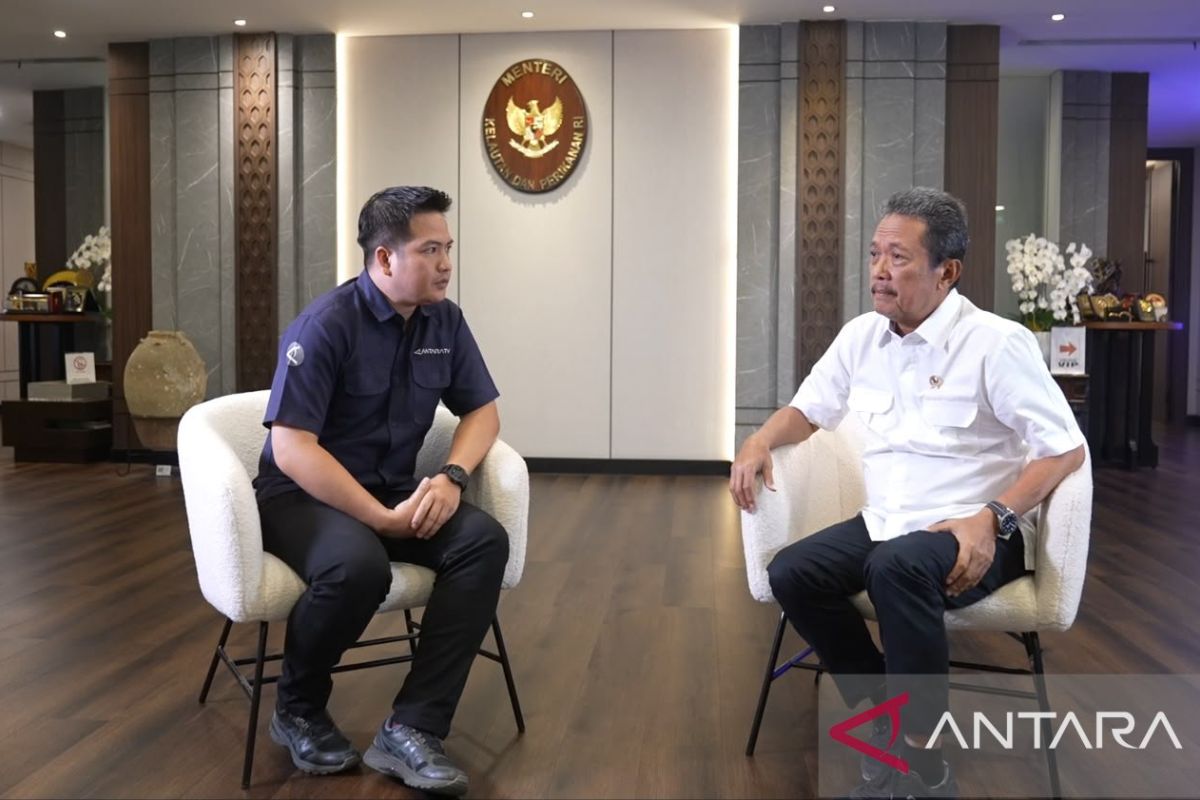
Jakarta (ANTARA) – Marine Affairs and Fisheries Minister Sakti Wahyu Trenggono stressed that efforts to achieve salt self-sufficiency by 2027 are focused not only on increasing production volumes but also on meeting quality standards suited to the needs of domestic industry.
“Many people cultivate or farm salt in several regions. However, its quality is inconsistent and cannot be standardised, while industry needs salt with higher specifications,” Minister Trenggono said in Jakarta on Thursday.
He said national salt demand currently stands at 4.5–5 million tonnes a year, while domestic production averages between 1 million and 2 million tonnes annually.
The gap between demand and production means Indonesia still has to import around 2.5–3 million tonnes of salt each year, mainly to meet the needs of industries requiring high-quality salt.
In terms of quality, most salt produced by local farmers has a sodium chloride (NaCl) content of around 94 per cent. Some industrial sectors, meanwhile, require salt with an NaCl content of at least 97 per cent.
For this reason, Trenggono said, higher production must be accompanied by quality improvements so domestic salt can meet industry specifications.
One of the initiatives being pursued by the Ministry of Marine Affairs and Fisheries is the development of the National Salt Industry Centre (K-SIGN) in Rote Ndao regency, East Nusa Tenggara.
The centre is being developed with technological support to increase productivity and produce salt of more consistent quality. Productivity is projected to reach 200 tonnes per hectare per year.
Trenggono said trial production at the site had yielded salt capable of meeting industrial needs for higher-purity products, including the minimum NaCl standard of 97 per cent.
“The salt quality from our trials is the same as that of salt in Australia,” Trenggono said.
Development of K-SIGN is taking place in stages. The first phase, covering 616 hectares, has been completed and is being prepared for production. The second phase, covering 751 hectares, is still under development.
The centre is expected to strengthen domestic salt supplies in both volume and quality, enabling industry demand to be met more effectively.