
KKP Reveals Indonesia's Fisheries Sector Performance Remains Solid
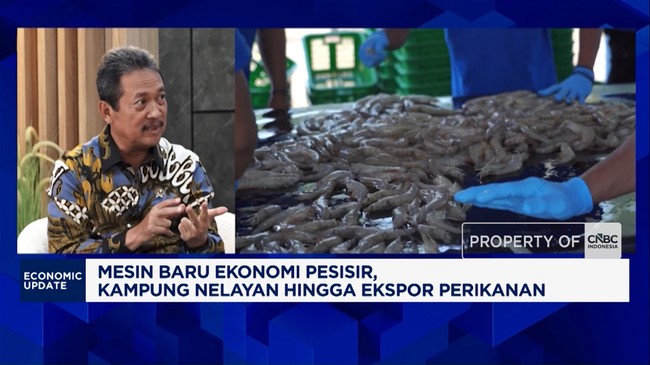
The Ministry of Marine Affairs and Fisheries (KKP) has stated that the national fisheries sector remains solid despite challenging global economic conditions. Indonesia has successfully recorded substantial average annual fisheries production.
Minister of Marine Affairs and Fisheries, Sakti Wahyu Trenggono, noted that the average national capture fisheries production stands at 7.5 million tonnes per year. During the same period, aquaculture production averaged approximately 5.5 million tonnes, while national seaweed production reached 10 million tonnes. Indonesia consistently maintains a surplus, indicating that national fishery exports are significantly higher than imports of the same products.
“Our exports average US$6.5 billion, while our imports do not even reach US$1 billion, being approximately US$600 million,” Trenggono stated during the CNBC Indonesia Economic Update 2026, themed ‘Performance Achievements and Direction for Strengthening Ministry Priority Programmes’, on Wednesday (24/6/2026).
According to the Minister, this condition reflects the maintained competitiveness of Indonesian fishery products in the international market. Furthermore, the supply of protein from fisheries for domestic needs is guaranteed to remain secure.
To strengthen future fisheries production, the KKP is developing thematic aquaculture programmes in every village. Supported by mini RAS (Recirculating Aquaculture System) technology, this programme is designed to reach 40,000 villages across Indonesia.
“This means that if one site produces 30 tonnes annually, even with just one thousand villages, the scale is significant. If we reach 40,000 villages, the volume is immense. We already require seeds for this; the cost for seeds alone is approximately 15 billion IDR annually,” he explained.
In practice, aquaculture commodities in each region will be adjusted to local consumption preferences. In Java, for instance, catfish and tilapia cultivation is the primary focus, while other regions will develop commodities such as carp and gourami.
“We will adjust based on specific demand and simultaneously consider export interests. For example, we can develop commodities like prawns,” he added.
Trenggono continued that amidst global economic uncertainty, he remains optimistic that demand for fishery products will remain stable. He noted that food commodities, particularly protein sources, are relatively resilient to economic slowdowns as they are basic necessities for the population.
This is reflected in the trend of Indonesian fishery exports over the last five years, which has shown continuous growth, although in terms of value and volume, it still lags behind major exporting nations such as China and Vietnam.
Nevertheless, the KKP recognises several challenges that must be addressed to ensure Indonesian fishery products are increasingly accepted in the global market. These include ensuring sustainable supply availability, uniform product quality, and timely delivery.
To this end, the government is developing large-scale modern shrimp ponds in Waingapu, East Nusa Tenggara (NTT). These modern ponds aim to boost national shrimp aquaculture productivity through the application of advanced technology and modern cultivation standards.
“We are first creating a high-quality, modern model scale that adheres to proper cultivation standards. The next stage will involve reviewing and selecting community-based ponds,” he explained.
Furthermore, compliance with international food safety standards is key to the global acceptance of Indonesian fishery products. The recent case of Cesium-137 contamination in shrimp products intended for export to the United States served as a valuable lesson for all relevant stakeholders.
Ultimately, the KKP is committed to continuously strengthening production governance and quality assurance so that Indonesian fishery products are trusted in the global market.
“We are working to ensure and explain our processes until the USFDA (United States Food & Drug Administration) recognises the Ministry of Marine Affairs and Fisheries as the sole authorised agency capable of providing certification, specifically within the fisheries sector,” Trenggono concluded.