
KKP Releases 1,300 Napoleon Fish Seized in Smuggling Case
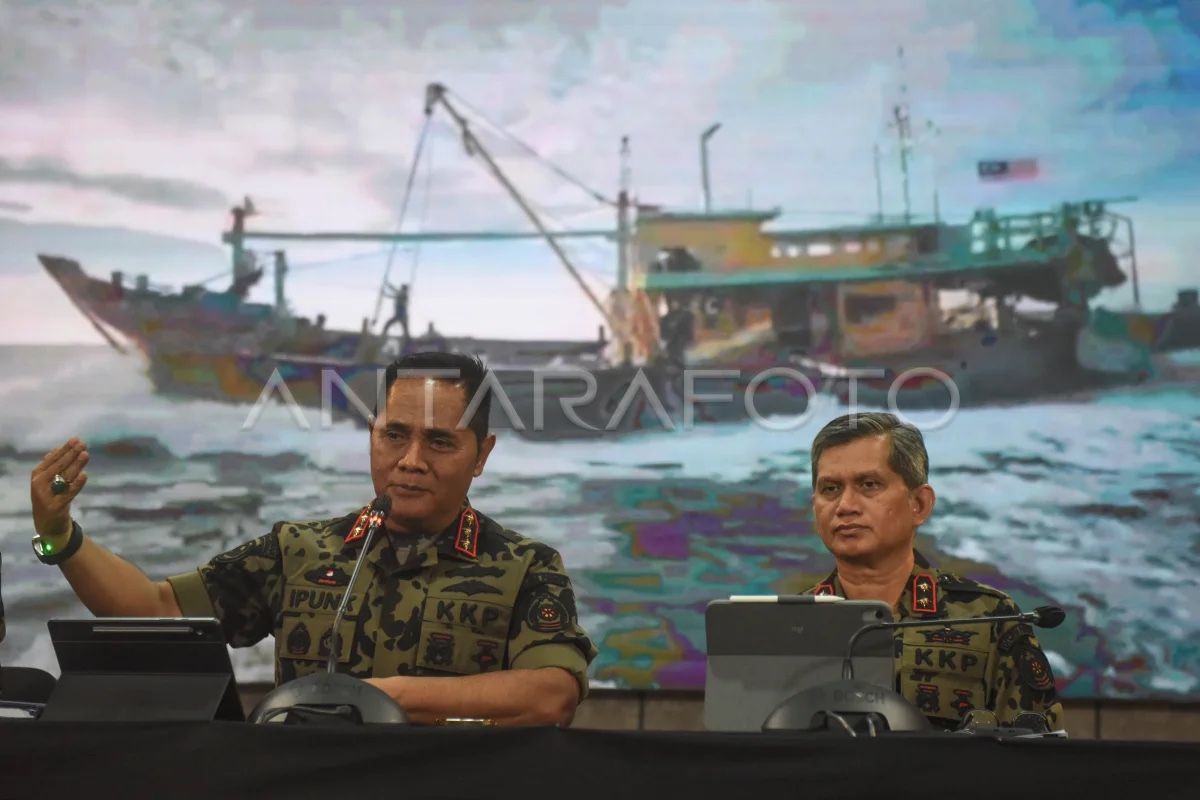
The Ministry of Marine Affairs and Fisheries (KKP) released 1,300 Napoleon wrasse (Cheilinus undulatus) within the North Sulawesi Regional Marine Conservation Area on 5 and 7 June 2026.
The released Napoleon wrasse were part of the cargo from the MV Silver Island (492 GT), a vessel flying the flag of Sao Tome and Principe. The ship was intercepted by the Patrol Vessel (KP) Orca 04 in the Celebes Sea waters on 29 May 2026 while en route to Hong Kong.
In an official statement in Jakarta on Tuesday, the Director General of Marine and Fisheries Resources Surveillance (PSDKP), Pung Nugroho Saksono, stated that the release was carried out as a form of rescuing fishery resources that had been secured alive.
“This release is in line with the spirit of law enforcement, which continues to maintain the sustainability of marine and fishery resources,” said Perdapat Nugroho.
Pung explained that if seized evidence consists of live fish and includes protected species, rescue measures must be taken immediately by returning them to their natural habitat.
According to him, this step aims to preserve Indonesia’s fishery resources while ensuring that the law enforcement process continues to respect conservation aspects.
Meanwhile, the Director of Violation Handling at the KKP PSDKP, Halid K. Jusuf, stated that the release process was conducted in two stages, considering the large number of fish and favourable weather conditions.
“In the context of the investigation by Civil Servant Investigators (PPNS), some of these Napoleon wrasse have been set aside to serve as evidence samples for court proceedings,” said Halid.
Halid noted that the case has now entered the investigation stage to uncover the parties involved in the alleged Napoleon wrasse smuggling.
“Investigators will also soon summon and request statements from the owners, the person in charge of the MV Silver Island, and other parties related to this network,” he added.
The KKP noted that the Napoleon wrasse is a high-value coral reef fish species whose exploitation is strictly regulated to maintain its population sustainability in the wild.