
KKP Minister: Mangrove rehabilitation must support food security
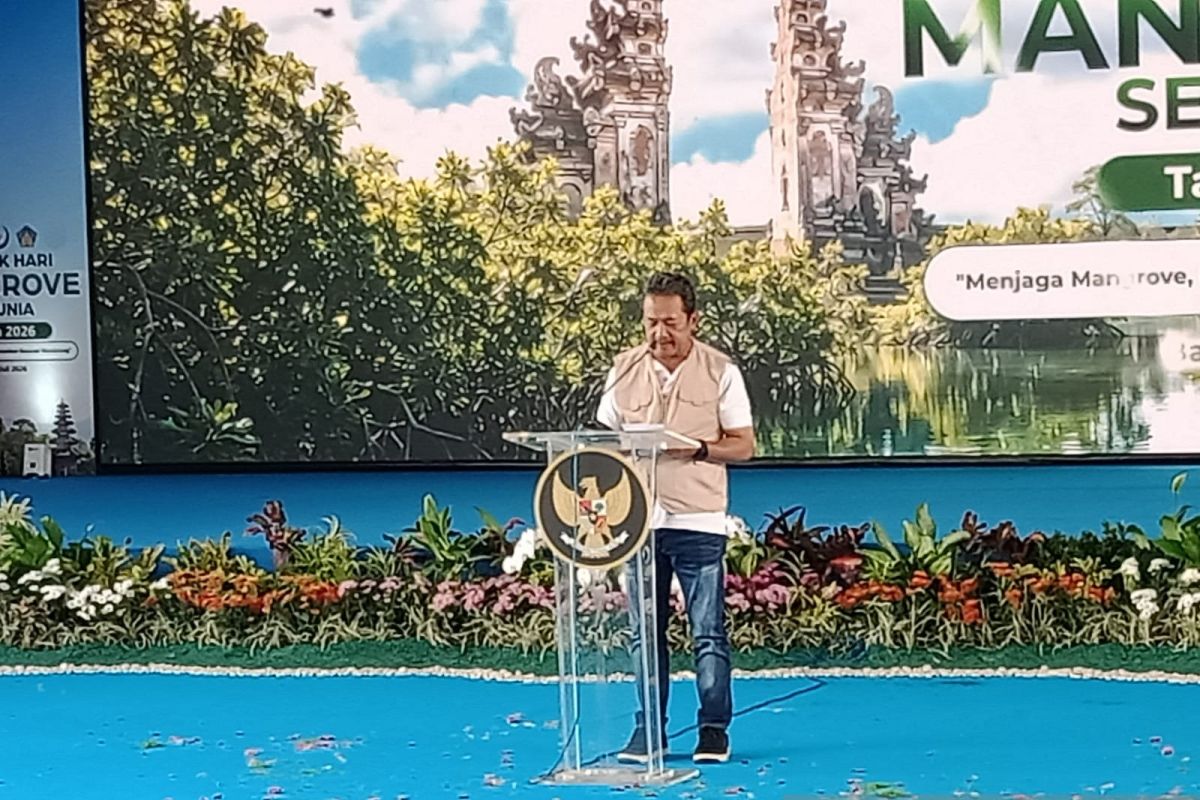
Mangrove rehabilitation must not stop at planting activities alone, but must restore the ecological functions of coastal ecosystems and be able to support food security and the economy of coastal communities, stated Indonesia’s Minister of Maritime Affairs and Fisheries, Sakti Wahyu Trenggono. Speaking at the peak event of World Mangrove Day in Denpasar on Sunday, Wahyu Trenggono stated that mangroves play a strategic role as protectors of coastal areas, nursery habitats for various marine biota, blue carbon sinks, and supporters of coastal community livelihoods. He noted that the increasing global population, estimated to reach nearly 10 billion by 2050, including around 320 million Indonesians, will drive up demand for food and protein, placing Indonesia in a crucial position as a world fisheries producer. However, Trenggono said this potential faces serious threats. ‘Mangrove rehabilitation must not stop at planting activities alone, but must be based on ecological suitability so that ecosystem functions are truly restored,’ he said. He explained that the Ministry of Maritime Affairs and Fisheries is developing a blue economy policy through five main aspects: expanding marine conservation areas to a target of 97.5 million hectares by 2045, implementing quota-based measured fishing, developing sustainable aquaculture, strengthening coastal and small island management, and reducing plastic waste in the sea through community participation. Additionally, the Ministry has established six priority programmes for the maritime and fisheries sector for the 2025-2029 period. These programmes are projected to generate approximately 800,000 tonnes of production per year with an economic value of IDR 20 trillion and create around 83,000 jobs. Trenggono asserted that the success of mangrove rehabilitation is not measured solely by the number of trees planted, but by the recovery of ecological functions and the increase in economic benefits for coastal communities. He also emphasised that successful mangrove conservation requires collaboration among all stakeholders through integrated policies, the application of science, community empowerment, and strengthened funding, supervision, and education. Concluding his remarks at the 2026 World Mangrove Day commemoration, Trenggono invited all parties to strengthen their commitment to protecting and managing mangrove ecosystems to achieve resilient coasts, productive seas, and prosperous coastal communities.