
KKP: Bali has cross-sector action plan to protect fishery workers
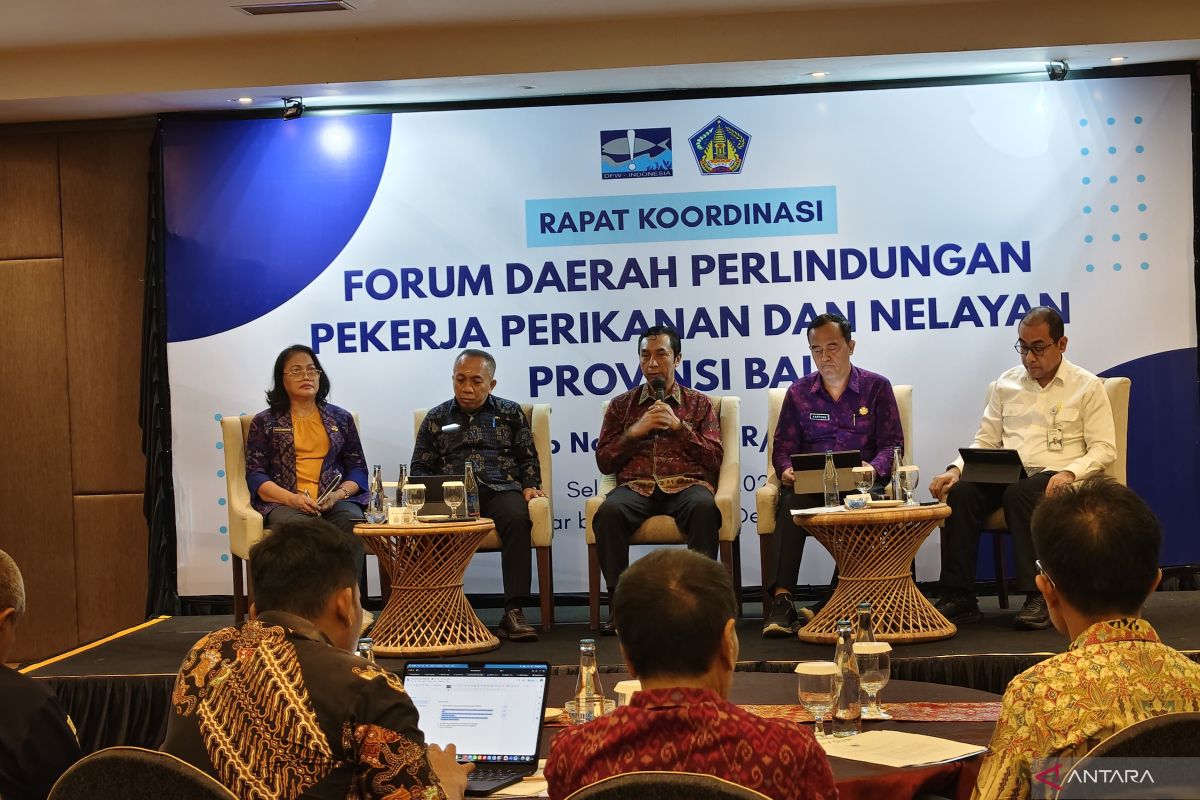
Denpasar (ANTARA) - The Ministry of Marine Affairs and Fisheries (KKP) revealed that Bali is the second province in Indonesia, after North Sulawesi, to establish a cross-sector action plan through a regional forum to monitor and protect fishery workers.
“Inspections cover all aspects from upstream to downstream,” said Moh Abdi Suhufan, Technical Expert for the Ministry of Marine Affairs and Fisheries on Fishery Workers and Crew Protection, during a coordination meeting for the formulation of Bali’s Regional Forum for Fishery Workers and Fishermen Protection in Denpasar on Tuesday.
He explained that the regional forum has set 24 action plans, including cross-agency oversight involving the Marine and Fisheries Service, Labour Department, KKP through Pengambengan National Fisheries Port (PPN), and other relevant agencies.
The joint inspections, he added, target vessel owners to ensure working conditions on fishing vessels, including wages, employment contracts, social security, and workplace safety.
“Following this, efforts will be made to monitor improvements,” he said.
During the oversight process, he continued, Bali’s governor has formed a team to operate according to guidelines established by the regional forum.
The implementation of inspections, he added, will adapt to on-ground dynamics and is targeted to commence within three months.
Meirita, Head of Industrial Relations and Labour Inspection at Bali’s Labour, Energy, and Mineral Resources Department (ESDM), stated during the discussion that her department currently has only 16 labour inspectors.
This staffing level is insufficient to cover the 157,000 onshore companies, not to mention the maritime workforce in the fishing industry.
Meanwhile, Guntur Prabowo, Chair of the Benoa Fishery Workers Solidarity Forum, noted that wages remain a key issue, with actual daily pay often just Rp35,000 despite the provincial minimum wage.