
KKP and YKAN Enhance Sea Turtle Conservation in Berau Using Drones
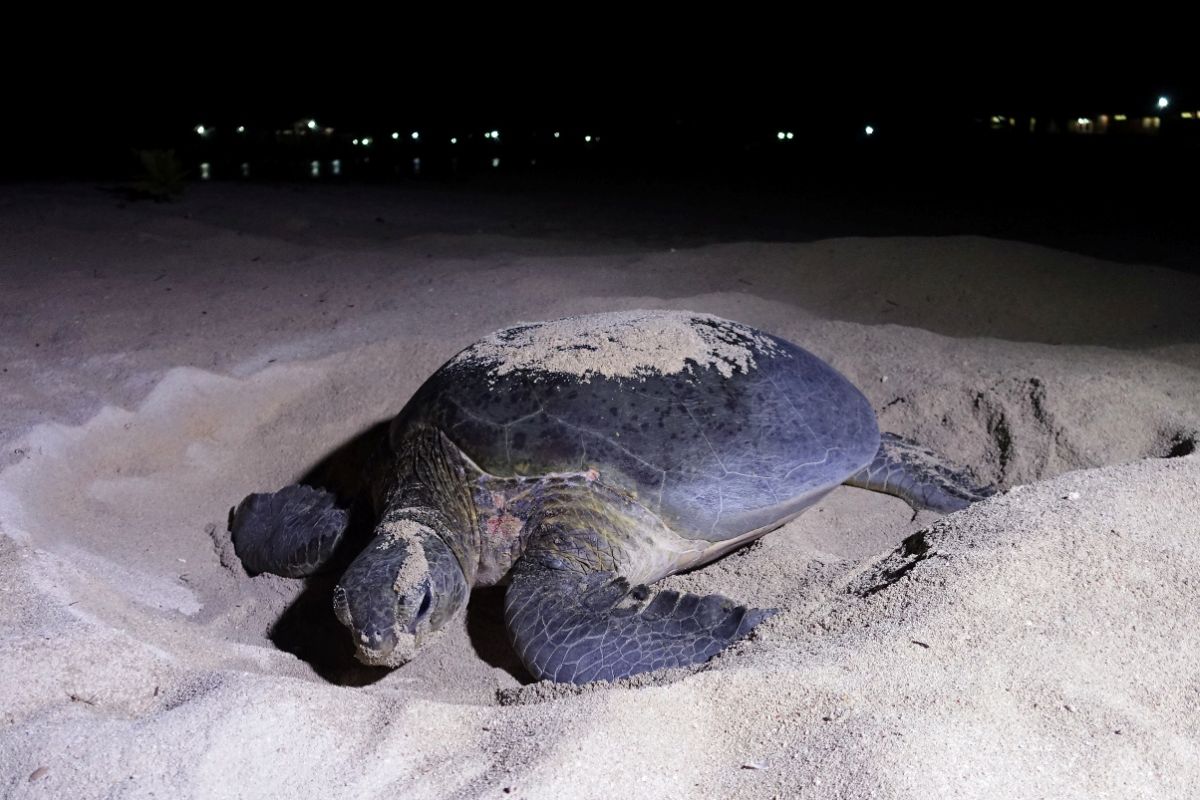
Berau, East Kalimantan – The KKP’s Pontianak Coastal and Marine Resources Management Agency and the Yayasan Konservasi Alam Nusantara (YKAN) have bolstered sea turtle conservation efforts along the coast and small islands of Berau Regency using drones. The initiative involves the East Kalimantan Provincial Marine and Fisheries Office and local conservation groups in monitoring sea turtle populations in the Derawan Islands Coastal and Small Islands Conservation Area and Surrounding Waters (KKP3K KDPS). He stated that with technological support, habitat and population monitoring of sea turtles is conducted more broadly and in detail to obtain accurate data, even in hard-to-reach areas. According to him, the data obtained through this technology is crucial for supporting science-based decisions in conservation area management. Through aerial surveys, the team mapped sea turtle habitats across 12 locations. High-resolution aerial imagery allows researchers to visually identify turtles in shallow waters, seagrass beds, and coral reef areas. ‘In aerial surveys, the team identified up to 913 individual sea turtles in the coastal waters of the KKP3K KDPS area,’ said Syarif Iwan. The generated aerial imagery has a high accuracy level with a spatial resolution of 1.5 to 5 centimetres. This resolution enables the team to accurately distinguish turtles from other marine objects. Meanwhile, YKAN Senior Marine Protection Manager Yusuf Fajariyanto said community involvement and technology use are key to supporting sea turtle conservation in Berau. According to him, sea turtle conservation cannot be handled solely by the government or conservation agencies. Coastal communities play a vital role as they live directly alongside turtle habitats. Conversely, the use of high-resolution drones also aids in rapidly and accurately gathering data on turtle distribution across extensive coastal areas. ‘The discovery of 913 individual sea turtles in the KKP3K KDPS area highlights that this region is a critical habitat requiring collective preservation,’ said Yusuf.