
KKP and Conservation Indonesia Highlight Urgency of Establishing Large-Scale Marine Protected Areas
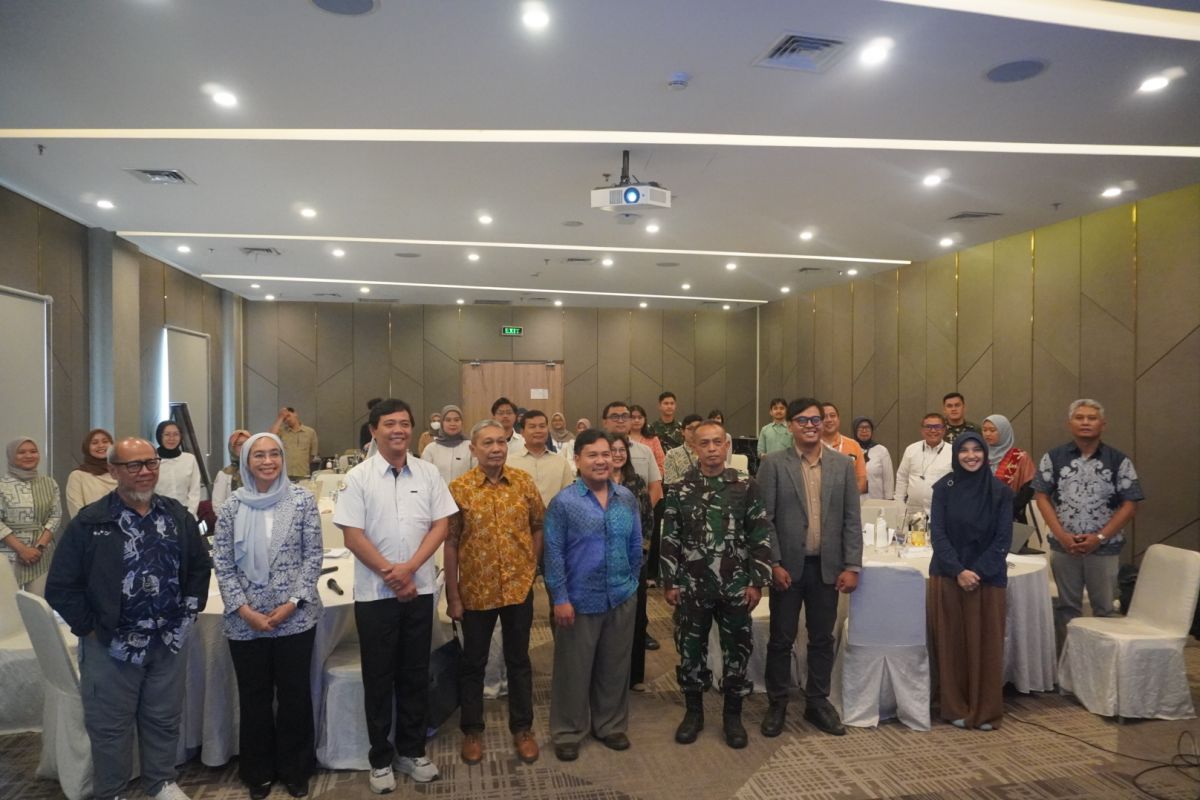
Most marine conservation areas in Indonesia are currently small and focused on coastal regions. Consequently, large-scale marine conservation areas play a strategic role in protecting marine biodiversity, maintaining habitat connectivity, and safeguarding deep-sea ecosystems essential for ecological sustainability, according to Firdaus Agung, Director of Ecosystem Conservation at the Ministry of Marine Affairs and Fisheries (KKP).
Studies indicate that the Banda Sea possesses high deep-sea biodiversity, comprising 397 coral species, over 100 fish species, and 44 types of deep-sea marine animals, including several previously unrecorded species. Meanwhile, the waters west of Sumatra represent one of Indonesia’s most productive fishing grounds, with the highest production levels found in West Sumatra. Both regions face significant fishing pressures, necessitating area-based management.
The LSMPA study serves as a vital foundation to address the gap in marine protection, which is currently dominated by near-shore areas, leaving offshore and deep-sea ecosystems largely unprotected. Meizani Irmadhuliany, Senior Vice President and Executive Chair of Conservation Indonesia, explained that the Banda Sea is unique due to its direct connection to fish migration routes and deep-sea habitats. She noted that developing the Banda LSMPA could support a conservation approach that maintains connectivity between habitats, populations, and ecological processes across a seascape scale.
The Banda Sea is an economic mainstay for coastal communities in Maluku, supporting over 163,000 fishermen and nearly two million residents, while serving as a migration corridor for pygmy blue whales and whale sharks, and a nursery for tuna species such as bigeye and skipjack. However, studies show high fishing pressure on tuna and skipjack, compounded by illegal fishing practices, which threaten the sustainability of these resources.
In the waters west of Sumatra, a 2024 study revealed that eight major fish species are being caught beyond safe limits, making area-based management essential to ensure continued yields for fishermen. The proposed conservation areas encompass approximately 11.3 million hectares in the Banda Sea and 12.9 million hectares west of Sumatra, spanning six provinces: Aceh, North Sumatra, West Sumatra, Bengkulu, Lampung, and Banten, as well as the Sunda Strait.
Beyond ecological and fisheries studies, the proposal is supported by cost-benefit analyses, regulatory framework reviews, and institutional arrangement studies to establish the economic, legal, and governance foundations for both areas. The LSMPA approach allows for fish stock recovery, the benefits of which extend to surrounding waters and support fisherman livelihoods.
The exact boundaries of these two areas remain indicative and will be finalised through data verification and further consultation prior to official designation under the Minister of Marine Affairs and Fisheries Regulation Number 31 of 2020. Cost-benefit analyses indicate that these two areas, totaling approximately 24 million hectares, could generate a Net Present Value of approximately Rp18.5 trillion by 2045. For comparison, the sustainable management of Australia’s Great Barrier Reef, which covers about 35 million hectares, can generate 6.1 billion Australian dollars annually.
Regulatory framework studies conclude that the establishment and management of these areas can operate within existing legal frameworks, while institutional studies provide management models emphasising governance efficiency. “Input from various stakeholders will serve as a strong foundation for finalising the conservation areas in West Sumatra and the Banda Sea through the formation of a multi-stakeholder Working Group (POKJA) as an initial step for cross-sector coordination,” concluded Firdaus.
Source: jawawa.id (https://jawawa.id/newsitem/kkp-and-conservation-indonesia-highlight-urgency-of-establishing-large-scale-marine-protected-areas-1790341247)
Originally published by Antara (Indonesian) (https://www.antaranews.com/berita/5758725/kkp-dan-ki-ungkap-urgensi-pembentukan-kawasan-konservasi-skala-besar), translated from Indonesian