
KKI Highlights Discrimination in Reusable Water Gallon Types, Potential BPA Hazards
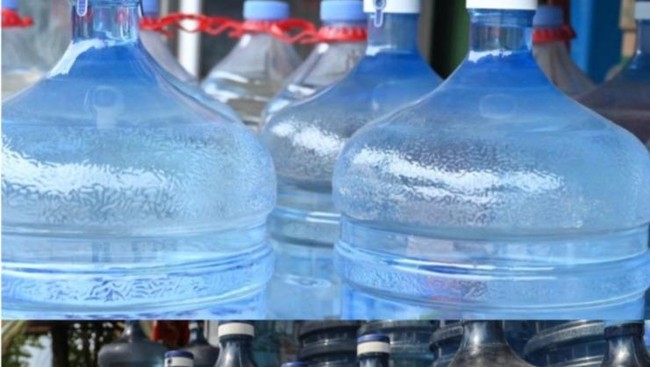
Jakarta, CNBC Indonesia - The Indonesian Consumer Community (KKI) has provided insights into the practices of a market-leading foreign Bottled Drinking Water (AMDK) brand that distributes two types of reusable gallons with different packaging safety standards, even though they are marketed at the same price.
KKI Chairman David Tobing questioned the reasons behind the producer’s decision to distribute two types of reusable gallons with differing packaging safety standards.
“Consumers are questioning this discrimination in the quality and safety of the circulating packaging,” he said some time ago, quoted from detik.com on Tuesday (12/5/2026).
In fact, for decades, the reusable gallons circulating in the Indonesian market were only one type, namely polycarbonate gallons containing Bisphenol A (BPA). It was only since 2019 that the brand began introducing BPA-free Polyethylene Terephthalate (PET) reusable gallons with initial limited distribution in some regions.
The expansion of PET reusable gallon distribution to the Java market only occurred in 2024. Currently, both types of gallons are circulating together in the market and sold to consumers at the same price, despite the different safety standards of their materials.
Referring to reports of complaints from 250 consumers in seven major cities compiled by KKI from March to April 2026, 62% of consumers stated that they were aware of the differences between the two types of gallons. Consumers then questioned why there must be differences in gallon safety standards and felt entitled to receive better quality gallons.
“There is one principle in trade: if the price is the same, the quality should also be the same,” David emphasised.
David opined that this discrimination issue has emerged in consumer reports because consumers today are increasingly aware of the types of plastic used for drinking water gallons. Consumer protection standards require transparency and equality of value between the price paid and the quality of the product received.
In addition, consumers purchasing polycarbonate reusable gallons often receive old gallons. As many as 92% of consumers reported receiving gallons that were more than one year old. Consumers also complained about the poor physical condition of these old gallons, with 30% reported as dull or mossy and 18% cracked.
“The older the age of the gallon, the more varied the complaints. Physical problems, dirty, dull, and cracked. This dominates consumer reports,” David explained.
It should be noted that polycarbonate gallons carry the risk of BPA degradation, especially if exposed to sunlight during distribution, washed in non-standard ways, and used repeatedly.
On the other hand, a polymer expert from the University of Indonesia has recommended a safe usage limit for polycarbonate gallons of a maximum of 1 year or 40 refills to prevent BPA degradation that could trigger obesity, diabetes, and reproductive disorders. “If the price is the same, consumers must receive the same safety, security, and comfort,” David added.
Therefore, KKI urges the government to immediately establish firm regulations to close the gap in these differing standards and protect consumers from the circulation of old reusable gallons.
“The regulatory vacuum on the shelf life for reusables is the root problem that must be addressed. The state needs regulations that protect public health, not just producer profits,” David concluded.