
KJP Plus and Free Private Schools Expand Access to Education in Jakarta
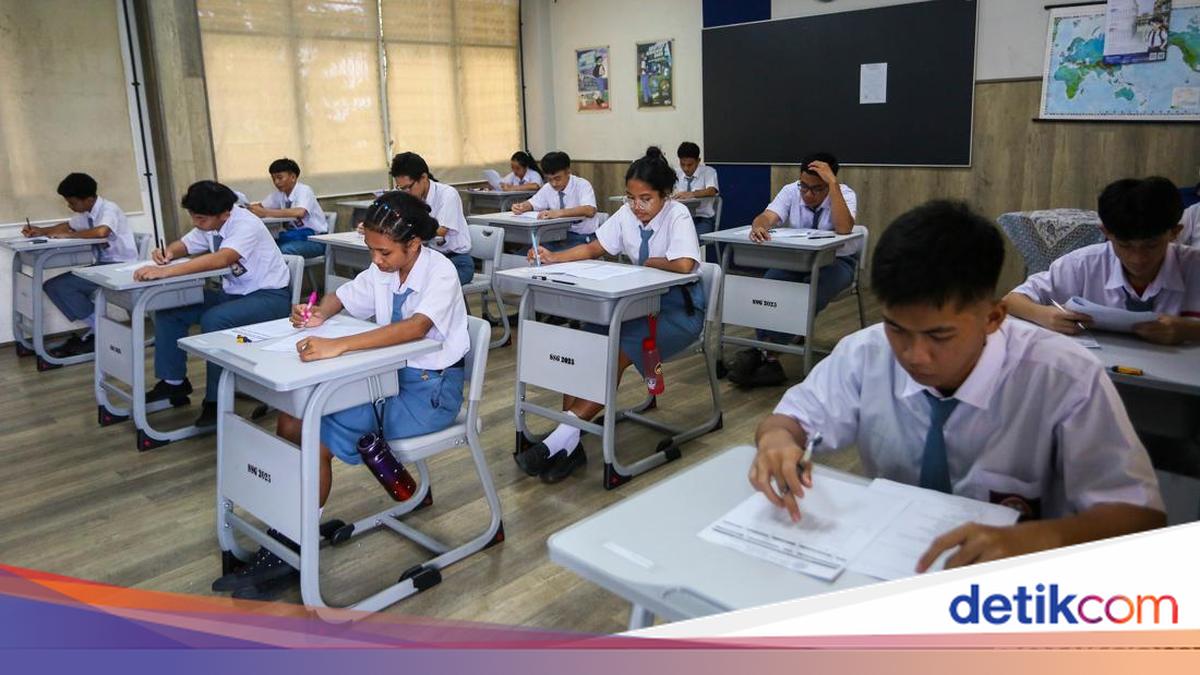
Several assistance programmes have been launched, ranging from the Jakarta Smart Card (KJP) Plus, Jakarta Outstanding Student Card (KJMU), free private schools, to diploma clearance. These programmes help children, especially from low-income families, to continue schooling and pursue higher education, thereby securing a better future.
Governor Pramono Anung emphasised that the education sector is one of the main priorities in the capital’s development. He hopes Jakarta can become a role model for education in Indonesia.
“The DKI Provincial Government is providing free education at 103 private schools in Jakarta. Not only that, KJP, KJMU, diploma clearance, and school infrastructure improvements remain priorities. With this, I am confident that Jakarta can become a role model for education in Indonesia,” said Pramono during the National Education Day (Hardiknas) commemoration ceremony in 2026 at the Jakarta City Hall courtyard on Monday (4/5/2026).
For higher education, the DKI Jakarta Provincial Government has disbursed the Jakarta Outstanding Student Card (KJMU) Phase I for 2026 to 15,825 students with a budget of Rp142.425 billion. Meanwhile, for residents whose diplomas are held due to fee issues, the DKI Provincial Government is implementing a diploma clearance programme.
Jakarta Deputy Governor Rano Karno stated that diploma clearance is not just an administrative matter. The programme is intended to help the community whose diplomas are withheld to become more productive.
“For many people, a single diploma is not just a piece of paper. It is the key to employment, continuing education, supporting the family, and facing the future with confidence,” said Rano Karno.
For KJP Plus Phase I 2026, it has been distributed to 707,477 students in Jakarta with a budget reaching Rp1,620,226,200,366. Recipients of the assistance come from various education levels, starting from primary schools/MI, junior high schools/MTs, senior high schools/MA, vocational schools, Learning Activity Centres (SKB), to Special Needs Schools (SLB).
“Through these programmes, the DKI Jakarta Provincial Government hopes that students remain enthusiastic in learning, improve their achievements, and have equal opportunities to achieve a better future,” said the Head of the DKI Jakarta Provincial Education Office, Nahdiana.
Responses from DPRD and the Public
The DKI Jakarta Provincial Government’s efforts to expand access to education have received positive responses from various parties. The programmes are able to ease the burden on the community in obtaining access to education.
Deputy Chairman of the DKI Jakarta DPRD from the Gerindra Faction, Rani Mauliani, appreciated the Provincial Government’s steps. According to her, the policy is important to prevent children from dropping out of school due to economic factors.
“We in the DKI Jakarta DPRD, especially Commission E, appreciate and support every effort to expand inclusive and equitable access to education, including plans to add free private schools that also target madrasahs. This is a positive step to ensure no Jakarta child is hindered from schooling due to economic factors,” she told detikcom some time ago.
For the free private school programme, Rani urged the DKI Jakarta Provincial Government to pay attention to several aspects to ensure it is on target.
“This policy must be prepared thoroughly and measurably. The addition of free schools should not only focus on quantity, but must be accompanied by guarantees of education quality, curriculum readiness, and transparency in the selection mechanism,” she explained.
“In addition, schools must have a good track record of governance and accountability. Schools must also have decent education quality standards, both in terms of teaching staff and facilities. Finally, this programme must truly target middle to lower-income communities,” Rani concluded.
Meanwhile, an alumnus of SMA Dian Persada and resident of Klender, Fauzan, expressed happiness with the diploma clearance programme. The programme greatly helped him in getting a job and easing his family’s economic burden.
He said the diploma he obtained would be used to apply for jobs, and the earnings from work would be used to build his future.
“Alhamdulillah, I am very happy to receive this diploma. I also feel helped because now I can apply for work and make my parents happy. Thank you to the Governor,” he said.
The same sentiment was expressed by a KJP Plus recipient student, Siti Syahrani. She said the assistance received would be utilised as best as possible to support her education.
“I am grateful and happy because of the KJP Plus assistance to pay for tuition fees, school fees, and buy my educational needs,” she concluded.