
Kimia Farma Strengthens Domestic Drug Raw Material Production to Reduce Import Reliance
Jakarta (ANTARA) - State-owned pharmaceutical company PT Kimia Farma (Persero) Tbk is strengthening the domestic production of drug raw materials to reduce import dependency and support national health security.
Director of Production and Supply Chain at Kimia Farma, Hadi Kardoko, stated that the national pharmaceutical industry’s dependence on imported raw materials remains very high, exceeding 95%. “This places Indonesia’s health resilience in a highly vulnerable position against global shocks,” Hadi said in an official statement received in Jakarta on Thursday. He noted that geopolitical dynamics could disrupt supply chains, increase logistics and energy costs, and potentially lead to shortages of raw materials and finished products in the domestic market.
Hadi explained that Kimia Farma is maximising factory utilisation to reduce import reliance, strengthen the sustainability of the National Health Insurance (JKN) programme, and support national health security. One key step taken by the company is the construction of a raw material production facility in Cikarang through its subsidiary, PT Kimia Farma Sungwun Pharmacopia (KFSP). KFSP currently holds 19 Good Manufacturing Practice (CPOB) certified raw materials from the Food and Drug Supervisory Agency (BPOM), 18 of which are also halal-certified by the Halal Product Assurance Agency (BPJPH).
Kimia Farma has developed and produced local raw materials for several priority therapeutic categories, including cardiovascular, antibiotics, and antiretrovirals for HIV treatment. President Director of Kimia Farma, Djagad Prakasa Dwialam, said the development of local raw materials is part of a change of source strategy. “With this initiative, Kimia Farma will gradually reduce its dependence on imported raw materials,” Djagad stated.
The company is also optimising the use of local raw materials in national priority products, such as TLE 300 mg and 600 mg for the national HIV response, which has a Domestic Component Level (TKDN) of 52.78%. Additionally, Kimia Farma is developing Rosuvastatin for cardiovascular therapy with a TKDN of 59%. In 2025, the company is introducing four new products: Fentakaf/Fentanyl Injection, Sildenafil, Pantokaf/Pantoprazole, and Moxifloxacin. The company recorded a 124% growth in domestic and export sales of drug raw materials in 2025, driven by a strategy to strengthen its upstream line and sharpen its product portfolio.
“We are focused on sustainable long-term growth. Mastery of the upstream line, the launch of innovative products, and achieving a TKDN of up to 59% are the main foundations for Kimia Farma today. With a more efficient cost structure, the company has better resilience in facing global economic dynamics,” Djagad revealed.
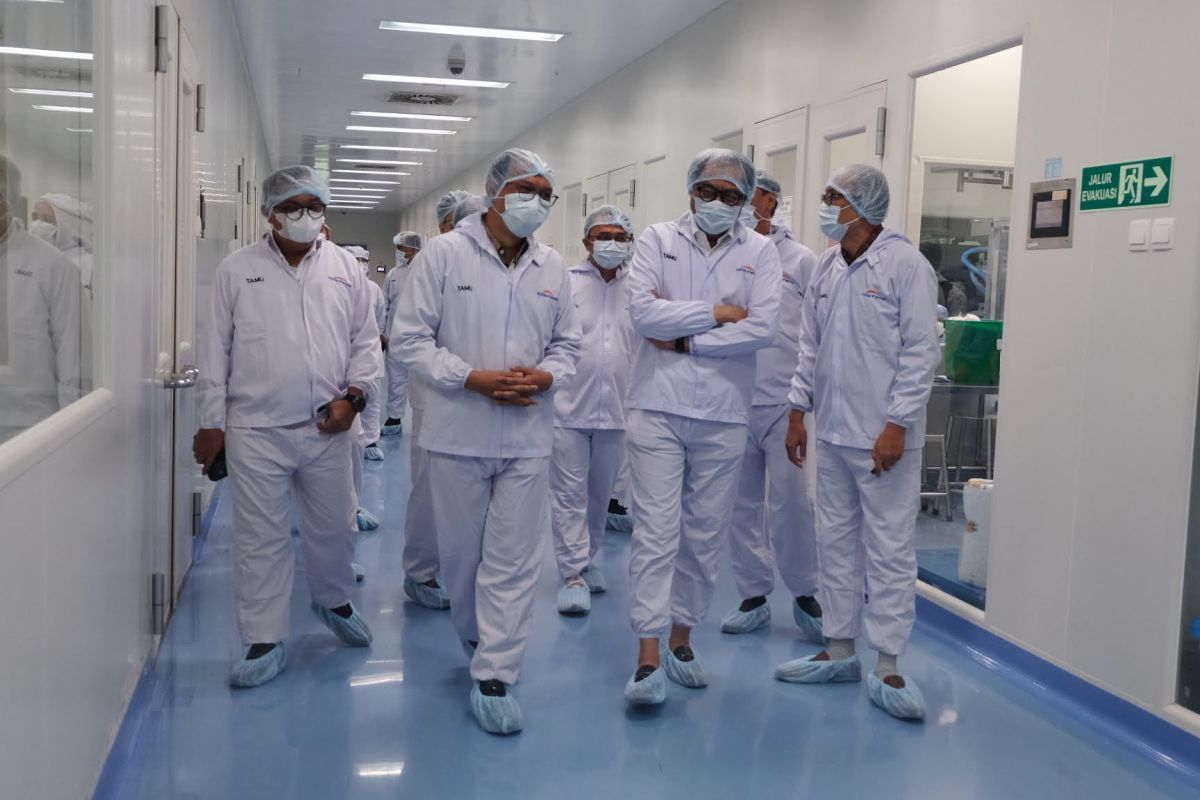
Meanwhile, Deputy Minister of Industry Faisol Riza stated that the government is encouraging industry players to continue developing drugs and raw materials domestically. “Through strong collaboration between the government and industry, we are optimistic about realising an Indonesian pharmaceutical industry that is increasingly independent, globally competitive, and sustainable, in order to support national health security,” Faisol said during a working visit to Kimia Farma’s production facility in Plant Banjaran, Bandung, on Tuesday (23/6). He added that the government will continue to promote the use of domestic products, strengthen TKDN, refine regulations, and provide incentives to boost the competitiveness of the national pharmaceutical industry. Plant Banjaran is the company’s largest production facility, covering an area of 51,000 square metres and producing chemical and natural medicines in tablet, capsule, liquid, and oral powder forms.