
Kim Jong Un Welcomes Xi Jinping to North Korea
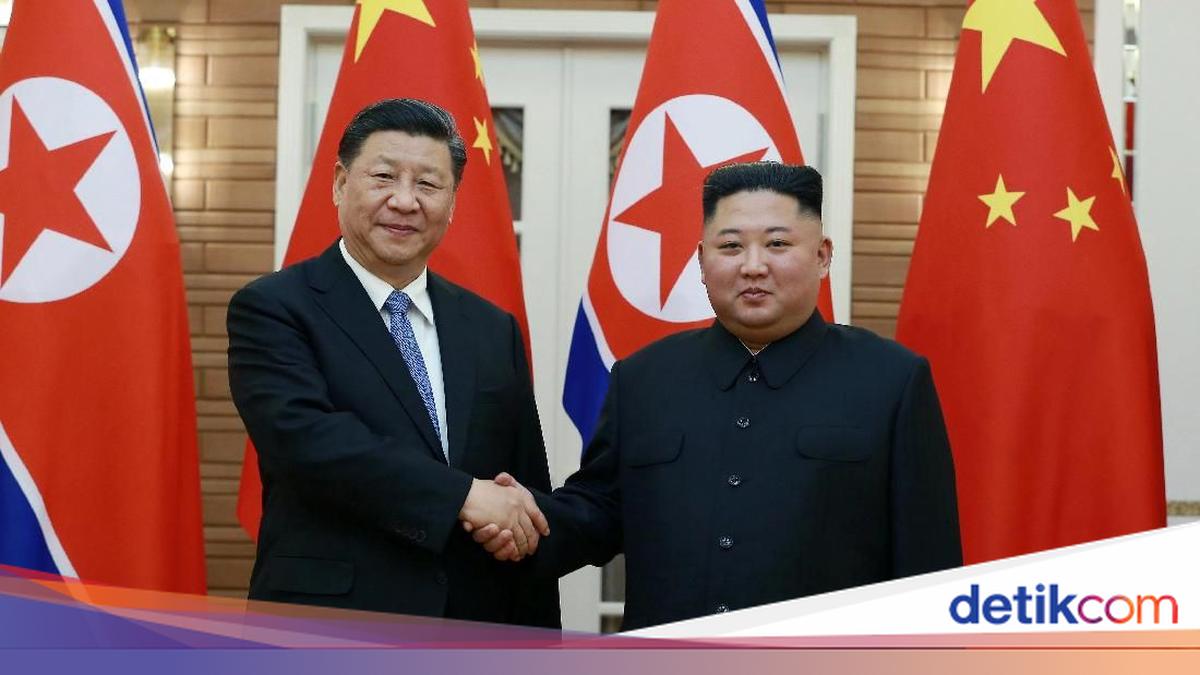
Chinese President Xi Jinping has arrived in North Korea, marking the first country he has visited so far this year. Xi Jinping was personally welcomed by North Korean leader Kim Jong Un and his wife, Ri Sol-ju, upon their arrival in Pyongyang. This visit represents Xi’s first trip to North Korea in seven years.
Xi praised the ‘unshakeable friendship’ with Pyongyang. China, a major geopolitical rival to the United States, has been North Korea’s primary trading partner for decades. China also serves as the main source of diplomatic and economic support for the nation, which faces various international sanctions. North Korean military officers lined the red carpet as the Air China flight carrying Xi arrived for his first visit since 2019.
Footage from the Chinese news agency, Xinhua, showed Kim and his wife welcoming Xi, who was accompanied by his wife, Peng Liyuan. The two leaders shook hands, after which children were seen presenting flowers to the couple. Banners reading ‘We warmly welcome Comrade Xi Jinping’ were displayed alongside the Chinese and North Korean flags.
Xi’s visit follows separate meetings in Beijing where he hosted US President Donald Trump and Russian President Vladimir Putin, occurring while North Korean nuclear talks with Washington remain deadlocked. Last month, the White House stated that Xi and Trump ‘confirmed their shared goal of denuclearising North Korea’ during their summit in Beijing. However, Kim Jong Un’s sister, Kim Yo Jong, has asserted that North Korea’s nuclear programme is a ‘line that cannot be retreated from’.
Observers believe this meeting will have a significant impact on bilateral relations and regional dynamics, particularly as both China and North Korea face tensions with the US. Leif-Eric Easley, a professor at Ewha Womans University in Seoul, noted that the visit is not merely a routine schedule but will have implications for China-North Korea relations. Kwak Gil Sup, head of the One Korea Center, suggested that Xi’s series of meetings with Kim aims to demonstrate China’s significant influence on the Korean Peninsula and to assert leadership in Northeast Asia amidst competition with the US.
China has long been North Korea’s primary economic supporter and most important diplomatic ally. Experts suggest Beijing often avoids enforcing UN sanctions against Pyongyang and discreetly provides aid to ensure its neighbour’s survival. Analysts believe that if Xi successfully restores China’s exclusive influence over North Korea, it could serve as vital leverage in his relationship with Trump, who has repeatedly expressed a desire to revive US-North Korea diplomacy. Relations between the two nations have been questioned in recent years as North Korea has prioritised cooperation with Russia, including supplying troops and weapons to assist Russia in the war in Ukraine. In return, Pyongyang receives economic and military assistance from Moscow. Experts predict Xi may offer various economic aid packages, such as shipments of rice and fertiliser, the reopening of group tours from China, and joint economic cooperation projects.
‘North Korea cannot rely solely on Russia. They must maintain alignment with China,’ said Kwak. The Chinese leader is also expected not to pressure Kim Jong Un regarding denuclearisation, likely focusing instead on general discussions regarding peace and stability on the Korean Peninsula. Minseon Ku, an international relations professor from DePaul University, believes Beijing may have accepted North Korea as a nuclear-armed state, with Xi prioritising regional stability.
China plays an almost exclusive role in North Korea’s limited trade dependence. According to the Washington-based think tank, The National Committee on North Korea, Pyongyang relies on China for up to 95% of its total trade and 85% of its exports. Almost all imports also originate from China. In 2024, North Korea’s legal imports reached only USD 2.33 billion, a small figure by global standards. Lacking domestic oil production, shipments from China include petroleum and other essential fuels to sustain the North Korean economy, alongside food, textiles, machinery, electronics, and vehicles.
This provides Beijing with immense economic leverage over Kim Jong Un. North Korea’s legal exports are similarly modest. According to the Korea Trade-Investment Promotion Agency (KOTRA), North Korean exports reached only about USD 360 million in 2024. The nation’s primary export is wigs, accounting for approximately 40% of total exports, primarily to China, which then re-exports them globally. North Korea pivoted to the wig industry to secure foreign exchange after sanctions blocked traditional exports like coal and minerals, as wigs are not explicitly prohibited. The communist state also possesses an abundant supply of cheap, often forced, labour, suitable for such labour-intensive, low-tech industries. Other goods, including tungsten, frozen fish, iron, steel, and watch components, each contribute less than 10% to the country’s total exports.