
Kijing Terminal Launches Maiden Container Export, Boosting National Logistics Connectivity
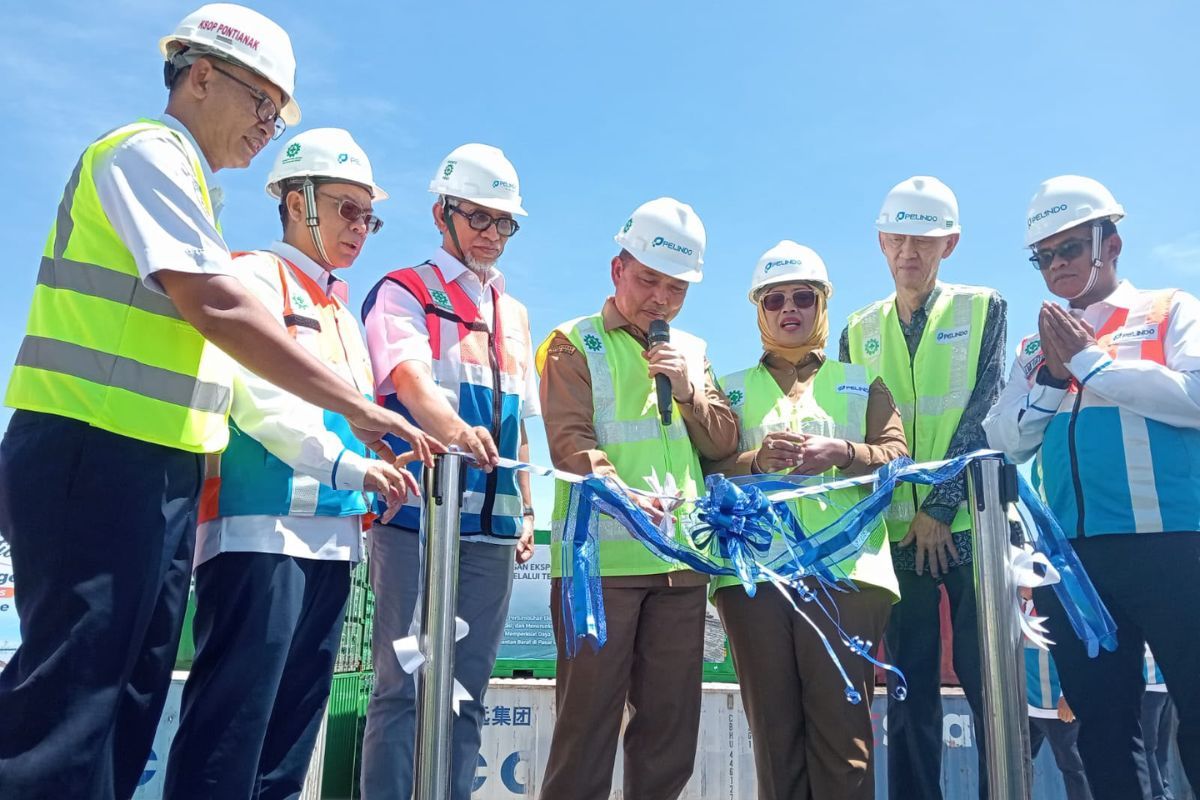
Mempawah, 29 June 2026 – The Kijing Terminal in Mempawah Regency has reached a significant milestone in the development of the international trade and logistics sector. Pelindo officially launched its maiden voyage for container exports on Monday, 29 June, using a vessel owned by PT Pulau Laut Line, destined for international markets via the Kijing Terminal, which is operated by PT Pelabuhan Tanjung Priok (PTP Non-containerised).
This inaugural service serves as a strategic step to strengthen logistics connectivity, increase supply chain efficiency, and bolster the competitiveness of flagship commodities in the global market. It supports government efforts to reduce national logistics costs, attract new investment, and drive economic growth in West Kalimantan.
During this maiden export operation, several exporters from the Kijing and Tayan port areas shipped various premium commodities. From Kijing Port, PT Borneo Alumina Indonesia exported 12 20-foot containers of Alumina Hydroxide to Pasir Gudang, Malaysia. PT Unicable Industries Indonesia also sent two containers of processed coconut products to the same destination, while PT Ferrindo exported 10 containers of whole coconuts to Yangpu, China. Meanwhile, from the Tayan area, PT Indonesia Chemical Alumina dispatched 150 20-foot containers destined for South Korea, Japan, and Taiwan.
The launch was attended by the Governor of West Kalimantan, Ria Norsan; the Regent of Mempawah, Erlina; the Commercial Director of PT Pelabuhan Indonesia (Persero), Farid Padang; and various high-ranking officials from Pelindo, Customs, Immigration, and maritime authorities.
Farid Padang, Commercial Director of PT Pelabuhan Indonesia (Persero), stated that the commencement of exports through Kijing Terminal is a strategic move by Pelindo to strengthen the national logistics network and open economic growth opportunities in West Kalimantan.
“Today at Kijing-Mempawah Port, we are conducting our maiden export with a sea voyage involving 180 containers containing alumina products, coconut products, and processed oils. We will provide larger vessels, new cranes, and extend the pier. We hope this step brings prosperity and drives economic growth for West Kalimantan,” said Farid Padang.
Similarly, the Governor of West Kalimantan, H. Ria Norsan, expressed his appreciation to PT Pelabuhan Indonesia (Persero) for initiating container export services through Kijing Terminal. He expressed hope that Kijing Terminal would develop into an export-import hub for West Kalimantan and reaffirmed the Provincial Government’s commitment to supporting port development through a conducive investment climate, accelerated licensing, and increased local employment.
“The West Kalimantan Provincial Government will continue to accelerate investment ease and encourage the construction of access roads to Kijing Terminal so that logistics activities become smoother and West Kalimantan’s export competitiveness continues to rise,” explained Ria Norsan.
Budi Prasetio, Executive Director 2 of Pelindo Regional 2, noted that the maiden export is the result of synergy between Pelindo, the government, regulators, shipping companies, and exporters. He stated that this event serves as evidence of the increasing confidence of business players in the Kijing Terminal.
Pelindo has also prepared various supporting facilities, including container handling equipment, ensuring the terminal is ready to provide effective, efficient, and competitive services.
Yanto, General Manager of Pelindo Regional 2 Pontianak, added that direct export services through Kijing Terminal provide numerous advantages for exporters, such as reducing logistics costs due to the port’s proximity to industrial zones and warehouses, as well as accelerating delivery times.
“With this service, exporters no longer depend on ports outside West Kalimantan. Land transport costs become more efficient, while delivery times are shorter. For the Pasir Gudang route, a direct call is available, while commodities destined for China can move faster through transshipment in Pasigu Gudang,” he said.
Regarding operational performance, Kijing Terminal has shown significant growth since being operated by PTP Non-containerised. Throughput increased from 1.95 million tonnes in 2023 to 2.75 million tonnes in 2024, reaching 4 million tonnes in 2025. In the first quarter of 2026, Kijing Terminal recorded a throughput of approximately 1.5 million tonnes, dominated by dry bulk at 845,000 tonnes and liquid bulk at 662,000 tonnes.