
Khofifah urges NU Muslimat women to strengthen independence amid global crisis
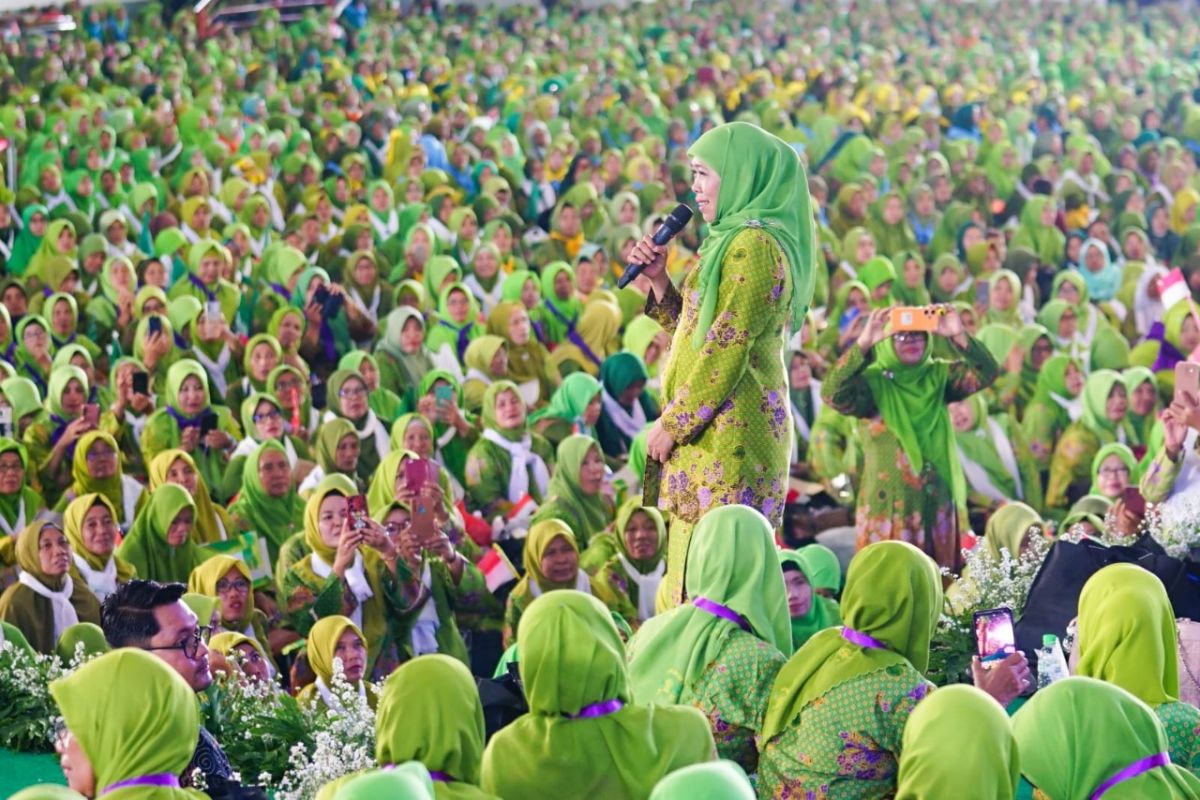
Surabaya - The Chair of the Central Board Supervisory Council of Muslimat Nahdlatul Ulama (NU), Khofifah Indar Parawansa, urged Muslimat NU women to strengthen family independence and resilience in confronting the impacts of the global crisis resulting from wars, energy shortages, and economic threats. “If mothers around the world are good, then the world will be fine. In Islamic teachings, the mother is the most important and fundamental school,” Khofifah said in Surabaya on Sunday. In commemoration of the 80th Anniversary of Muslimat NU, falling on 29 March 2026, Khofifah stressed the importance of women’s role as the main pillar in maintaining family social and economic resilience. She mentioned the theme of the 80th Anniversary of Muslimat NU, namely “Nurturing Traditions, Strengthening Independence, and Sheltering Civilisation”, as an important foundation in building a strong and cultured society amid the turbulent global dynamics. Khofifah, who also serves as the Governor of East Java, asserted that independence is the key to building the ummah and the nation, especially in the midst of a world situation full of uncertainties. According to her, mothers have a strategic role in strengthening family economies, fostering a spirit of simple living, and prioritising mutual cooperation values as the foundation of national resilience. In the context of a global situation coloured by conflicts and the weakening of humanitarian values, Khofifah assessed that families and housewives are the main fortress in maintaining social stability. Khofifah added that Muslimat NU will continue to play an active role through contributions of ideas from academics, preachers, public officials, social workers, and professionals to enhance the dignity and honour of the nation. “In any condition, Muslimat NU will be present to serve, through various programmes to enhance roles for the ummah and the nation. I invite us all to build ourselves,” she stated. She assessed that future challenges will be increasingly complex, thus requiring consistency in strengthening humanitarian, national, and world peace values. “We do not want a world war to happen, we still want peace. We hope that world leaders, as well as the UN and heads of state, will commit to building peace,” she said. Khofifah emphasised that the impacts of global conflicts are most felt by families, especially women, thus requiring toughness and readiness in facing various situations.