
Khofifah stresses knowledge transfer for cultural preservation
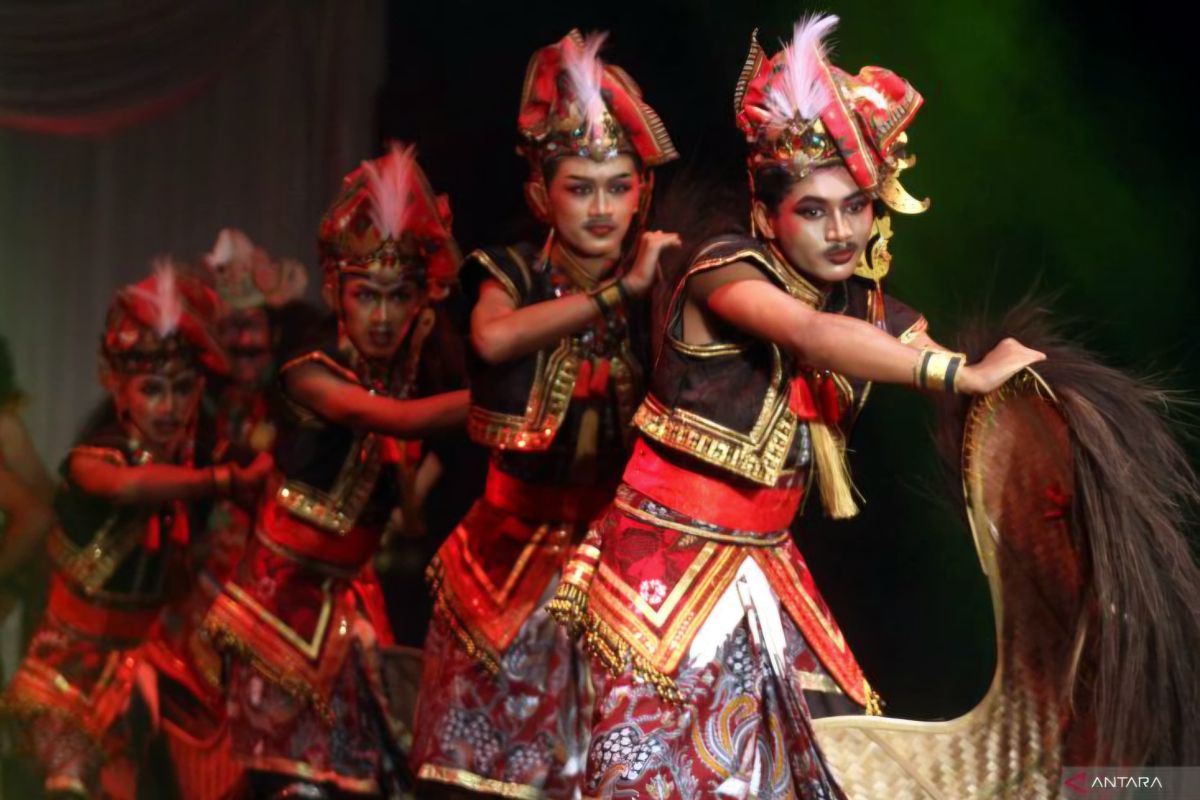
The success of maintaining a culture’s existence along with its values and philosophy does not depend solely on how many performance events are held, but rather on how the regeneration process unfolds.
East Java Governor Khofifah Indar Parawansa has stressed that transferring cultural knowledge to the younger generation is an important part of preservation efforts.
In an official statement received in Malang, East Java, on Sunday, Khofifah said that the more young people who understand the values and philosophy and possess traditional arts skills, the more massively the regeneration of cultural practitioners can proceed.
“The success of cultural preservation is the birth of a new generation capable of carrying it forward. So the key lies in regeneration,” Khofifah said.
She said the younger generation also has an obligation to develop culture, including traditional arts, in line with the times.
She stated that the success of maintaining a culture’s existence along with its values and philosophy should not be measured only by how many performance events are opened, but by how the regeneration process unfolds.
“Never let an art form have a stage but lose its successors,” she said.
Khofifah said the development of the arts and culture ecosystem needs to be expanded, as practitioners in both fields must be guaranteed space to work, develop and gain economic benefits from their activities.
She therefore stressed that cultural preservation requires a balance between preservation, regeneration, strengthening the capacity of cultural practitioners, and opening economic access.
The development of arts and culture needs to be linked to the tourism and creative economy sectors so that it can create added value for the community.
“The culture is preserved, the artists are empowered, the younger generation is proud, the creative economy grows, and the community benefits,” Khofifah said.
Meanwhile, Head of the East Java Culture and Tourism Office Evy Afianasari said one traditional art form receiving attention is Topeng Malangan. Preservation efforts are being intensively carried out by involving artists and studios.
She noted that in 2025 there were 11 dance studios specifically for Topeng Malangan, but over time the number increased to 15 studios in 2026.
Growth is also visible in the number of active artists, with 369 active artists recorded in 2025, while by August 2026 the number had reached 589 artists.
“The growth in the number of studios and active artists shows that the Topeng Malangan ecosystem continues to develop. This is an important asset for strengthening regeneration while ensuring this art form remains alive and close to the younger generation,” Evy said.