
Khofifah states East Java has entered phase of sustainable food sovereignty
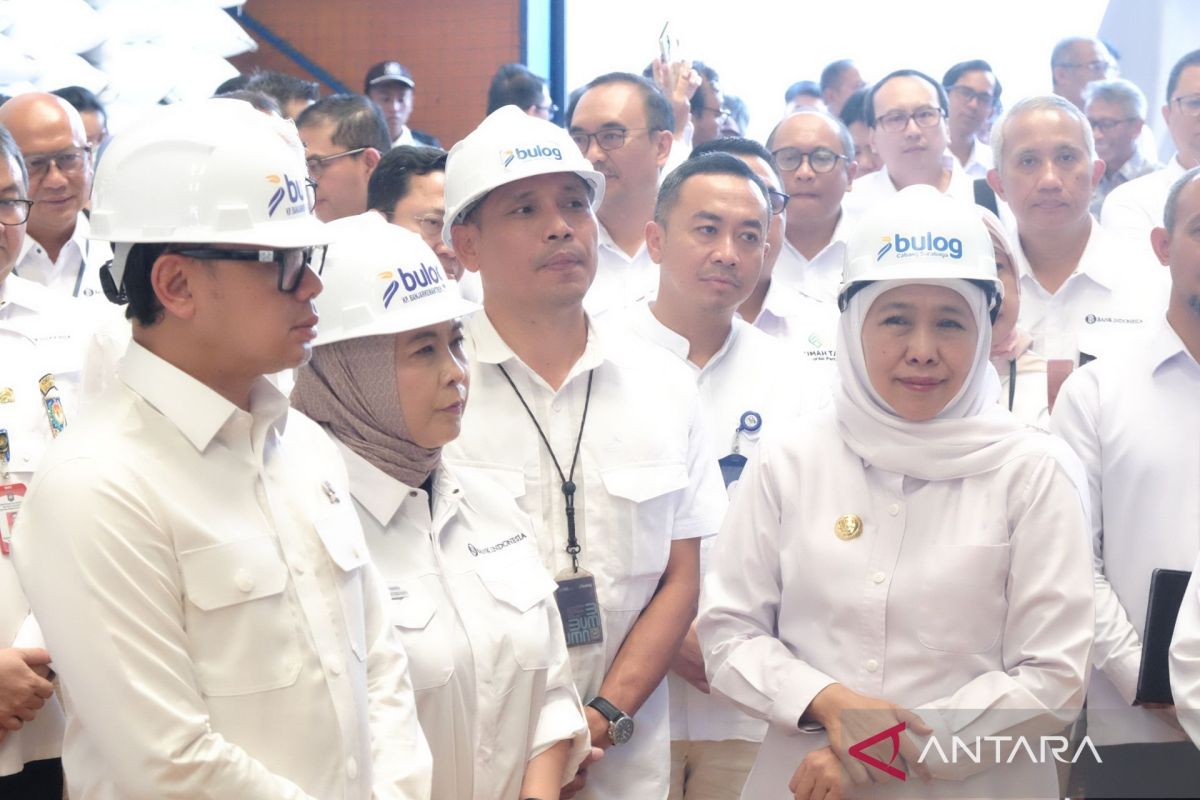
Sidoarjo, East Java (ANTARA) - East Java Governor Khofifah Indar Parawansa stated that East Java has entered the phase of sustainable food sovereignty.
“When the central government builds food security, then, God willing, East Java has already entered sustainable food sovereignty,” said Khofifah during the inauguration of the Java Region Food Security and Prosperity Inflation Control Movement (GPIPS) 2026 in Sidoarjo, East Java, on Wednesday.
According to her, the selection of East Java as the centre for launching the Java Region GPIPS is based on the region’s economic achievements that continue to show a positive trend, where in the first quarter of 2026, East Java’s economy grew by 5.96% year-on-year, the highest on the island of Java and surpassing the national average.
Khofifah added that East Java is also the second largest national economic contributor with a 14.40% contribution to Indonesia’s gross domestic product (GDP) and 25.16% to Java’s economy, with the annual inflation rate in April 2026 recorded at 2.85% and the monthly inflation at 0.02%.
The East Java Provincial Government (Pemprov Jatim), continued Khofifah, continues to strengthen inflation control through the District/City Inflation Control Display (EPIK) Mobile programme, which is expected to enhance inter-regional cooperation in mitigating inflation responsively and ensuring more equitable food distribution.
Khofifah also emphasised the importance of prosperous food development that not only focuses on meeting caloric needs but also animal protein, including through strengthening the population of beef and dairy cattle supported by the Singosari Artificial Insemination Centre in Malang Regency.
In the agricultural sector, the Jatim Provincial Government encourages the use of modern agricultural machinery such as combine harvesters to reduce rice harvest losses by up to 11%, thereby increasing paddy production without the need to expand agricultural land.
“Thus, for example, harvest losses can be reduced to 10%. If we can produce 34 million tons of dry harvested grain (GKP), then we can add 3.4 million tons without having to carry out extensification or intensification of land,” said Khofifah.