
Khofifah Provides Aid to Families of Landslide Victims in Lumajang
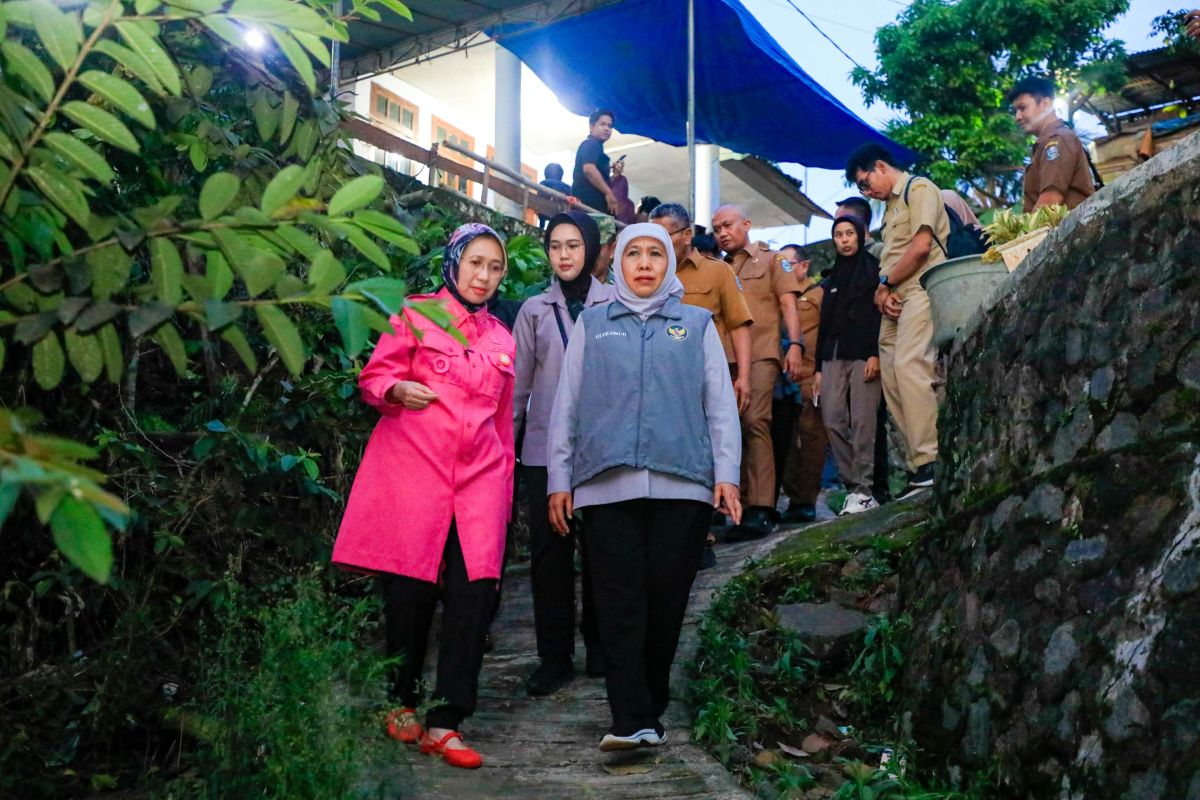
Lumajang, East Java (ANTARA) – East Java Governor Khofifah Indar Parawansa has provided financial assistance and building materials to help renovate the home of the family of two people killed in a landslide in Tamanayu village, Pronojiwo district, Lumajang regency.
In an emotional visit, Khofifah offered her condolences in person to the family of the late Imron Rosadi, 40, and his daughter Hilya, nine, who died after being buried by landslide debris.
“May the deceased be granted the best place by Allah SWT. May all their shortcomings be forgiven, their good deeds accepted, and may they have been called back to Him in a state of husnul khotimah,” Khofifah said in a statement on Tuesday.
Khofifah’s visit to the family’s home was an expression of empathy and moral support for the grieving family. She prayed that the victims would be granted the best place by Allah SWT and that their relatives would be given the strength to face their ordeal.
The governor handed the family financial assistance and distributed basic food supplies to nearby residents. The East Java provincial government also provided building materials: 75 sacks of Portland cement, 5,000 red bricks, 1,500 roof tiles and 60 timber beams.
Khofifah also stressed the need for greater vigilance during the transition from the dry to the rainy season. Changing weather conditions must be taken seriously: some parts of East Java are still experiencing drought, while others are beginning to receive heavy rain.
“Some areas are still experiencing shortages of clean water, and the East Java Regional Disaster Management Agency is continuing to distribute it. The BMKG’s forecast was revised: the peak of the drought in East Java, initially expected in September, is now forecast for November,” she said.
She said rain was predicted from December to February 2027, but welcomed its arrival in several parts of East Java following efforts by different elements of society, including joint prayers and istisqa prayers at mosques and Islamic boarding schools.
“Our hope, of course, is for rain that brings mercy and benefit,” she said.
She added that rainfall must be accompanied by increased preparedness, as heavy rain can trigger hydrometeorological disasters, particularly landslides in hilly and sloping areas.
Khofifah called for vigilance at every level, from the provincial and regency or municipal governments down to districts, villages and neighbourhoods.
She said community-based preparedness was crucial so residents could identify local threats, strengthen communication and evacuate early when signs of disaster appeared.
“Communities, whether at neighbourhood or village level, need to build vigilance together. We must not allow a natural disaster to claim the lives of our fellow citizens,” she said.
She also noted that Indonesia, including East Java, lies in the Pacific Ring of Fire. Given the region’s geography, she said, mitigation and preparedness should become part of everyday practice rather than being undertaken only after a disaster occurs.
“Before the dry season has even fully ended, we must already be preparing for the rainy season, which has begun in some areas,” she said.
Khofifah urged all levels of government, security personnel, disaster-response volunteers and the public to improve coordination and ensure that preventive measures reach local communities.
She said she hoped people would become more alert to potential hazards so that the risks and impacts of disasters, especially loss of life, could be reduced.
“Everyone, at every level, must exercise heightened vigilance,” she said.
Lumajang Regent Indah Amperawati expressed her gratitude for Governor Khofifah’s concern and for visiting the family at the landslide victims’ home.
Source: jawawa.id (https://jawawa.id/newsitem/khofifah-provides-aid-to-families-of-landslide-victims-in-lumajang-1793681690)
Originally published by Antara (Indonesian) (https://www.antaranews.com/berita/5828199/khofifah-beri-santunan-korban-meninggal-terdampak-longsor-di-lumajang), translated from Indonesian