
Khofifah: Pancasila Must Live Through Service, Unity, and Collective Action
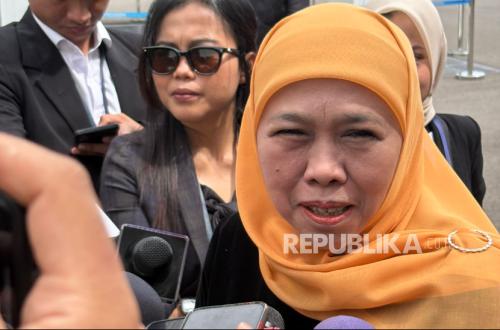
East Java Governor Khofifah Indar Parawansa has urged the public to ensure that Pancasila is not merely a state foundation commemorated ceremonially, but a guide that truly lives within daily life, government services, and collective efforts to build the nation.
This call was made by Khofifah after leading the Pancasila Sanctity Day Commemoration ceremony, themed “Pancasila as the Unifier of the Nation Towards a Sovereign, Just, and Prosperous Indonesia,” at the Grahadi State Building courtyard, Surabaya, on Thursday.
“Pancasila unites us in our diversity. This unity must become a strength to work together, deliver justice, and expand prosperity. From East Java, let us continue to contribute to a sovereign, just, and prosperous Indonesia,” said Khofifah.
According to Khofifah, unity based on Pancasila serves as vital capital for facing various national challenges. She stated that unity must not stop at slogans but must be translated into concrete actions that strengthen togetherness and ensure that the benefits of development are felt more equitably.
She assessed that a pluralistic society requires the ability to continuously maintain spaces for dialogue. Differences in views, backgrounds, or interests should not serve as reasons to widen social gaps.
“Nurturing unity begins with how we treat one another. Respecting differences, listening to opinions, helping those in need, and resolving issues through deliberation are forms of practicing Pancaselle that are close to our lives,” she said.
Khofifah emphasised that the spirit of unity must go hand in hand with efforts to realise a sovereign, just, and prosperous Indonesia. To achieve this goal, strengthening the quality of human resources is one of the essential tasks that must be continuously pursued.
Mastery of science and technology, according to her, holds a strategic position in building national independence. The community’s ability to face changing times must be supported by education, skills, and increasingly open opportunities.
“A sovereign Indonesia requires a society capable of progressing. Independence must be built through education, science, skills, and a strong economy. All of this requires working together,” she noted.
In the context of East Java, this spirit also means strengthening collaboration between the government, the education sector, business actors, communities, and the public. Development cannot rely on a single sector but requires the involvement of various elements according to their respective capacities.
Khofifah believes that the value of gotong royong (mutual cooperation) contained within Pancasila remains relevant to addressing modern development issues. This spirit can be realised through care for vulnerable groups, strengthening the community economy, improving the quality of education, and citizen participation in resolving local issues.
She also emphasised that the practice of Pancasila must be clearly visible in the face of the bureaucracy. Government officials, she said, have a responsibility to provide services that are easily accessible, responsive, transparent, and non-discriminatory.
“For government officials, the practice of Pancasila must be evident in service. Serve the community with respect, listen to their needs, and provide solutions. Every citizen has the right to receive good and equitable service,” she said.
According to Khofifah, the quality of public service is one of the most tangible spaces for the community to feel the presence of the state. Therefore, officials must not only follow procedures but also ensure that the public receives certainty, ease, and fair treatment.
The spirit of social justice, she continued, must also be translated into development that can reach communities in various regions. Development must provide opportunities for as many citizens as possible to grow and improve their quality of life.
Khofifah also highlighted the significant changes occurring in the digital space. According to her, the practice of Pancasila is now required not only in direct interactions but also in how the community communicates on social media and various digital platforms.