
Khofifah Emphasises Precision Planning for Inclusive Welfare
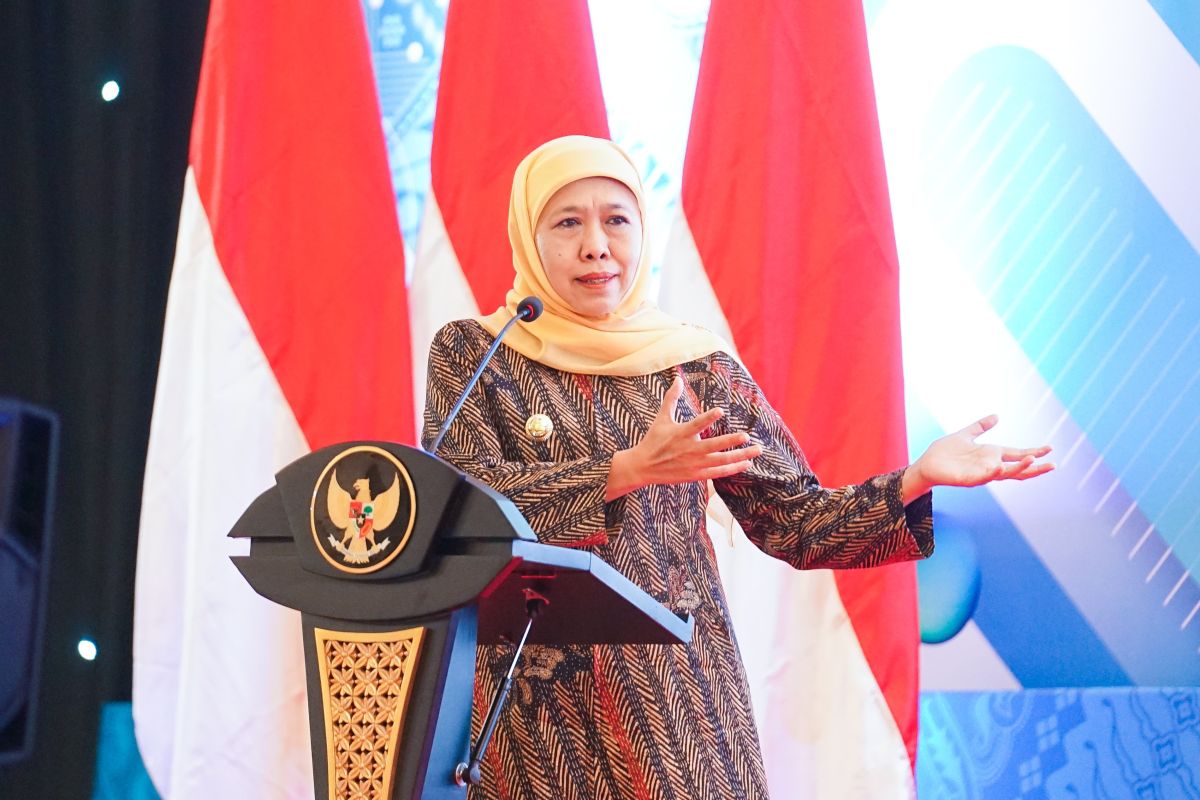
Surabaya - East Java Governor Khofifah Indar Parawansa emphasised the importance of precise, data-based development planning in the Musyawarah Perencanaan Pembangunan (Musrenbang) for the Rencana Kerja Pemerintah Daerah (RKPD) 2027 in Surabaya on Tuesday.
“This Musrenbang is not merely an annual forum, but a strategic momentum to ensure that the direction of East Java’s development becomes increasingly precise, inclusive, and has a real impact on society,” said Khofifah.
She stressed that regional development is an integral part of the national development system oriented towards equitable societal welfare.
“Therefore, regional policies must align with national priorities while being able to address the real needs of the community in the field,” she stated.
Within the framework of Nawa Bhakti Satya Jatim Sejahtera, the East Java Provincial Government focuses development on accelerating poverty alleviation and improving inclusive and sustainable welfare through pentahelix collaboration.
“Pentahelix collaboration not only improves the quality of data-based planning but also encourages cross-sector synchronisation, accelerates innovation, and strengthens transparency and accountability in development,” she said.
Strengthening the data base is also a primary concern, particularly the validity of the National Single Social Economic Data (DTSEN).
“We encourage the acceleration of data submission, updates, and matching so that policy interventions are truly on target,” she added.
In the health sector, the Jaminan Kesehatan Nasional (JKN) participation rate in East Java as of 1 April 2026 reached 97.71 per cent or around 41.13 million souls out of a total population of 42.3 million.
The Free Health Check (CKG) programme also showed positive achievements, ranking second nationally, dominated by the 40–59 age group.
Service strengthening is carried out through Village Health Posts (Ponkesdes) with funding support for 1,001 nurses in 21 regencies/cities.
In the economic sector, the East Java Provincial Government is striving to address inter-regional disparities, where the northern region’s economic contribution reaches 54.57 per cent, the south 20.53 per cent, and Madura 3.81 per cent.
“The Pansela development is expected to become a catalyst for economic growth in the southern region while reducing inter-regional gaps,” she said.
Accelerating the construction of the South Coast Road (Pansela) is a strategic priority, with progress reaching 390.84 kilometres or 62.2 per cent of the total length of 628.39 kilometres.
In addition, support for the Free Nutritious Meal (MBG) programme has reached 8.58 million beneficiaries through 4,235 Nutrition Fulfilment Service Units (SPPG), involving thousands of personnel and hygiene certification support.
In the village economy sector, the Red and White Village/Urban Village Cooperative (KDKMP) programme has formed 8,494 cooperatives or 100 per cent institutional coverage, dominated by new cooperatives with sembako retail business units.
“Going forward, strengthening human resource capacity, access to capital, and partnership ecosystems will be key to the sustainability of KDKMP,” said Khofifah.
In the education sector, East Java records the largest national contribution to the People’s School (SR) programme with 26 units or around 15 per cent of the national total, covering 2,450 students.
“Through financing synergy and target sharpening, we hope that improvements in the quality of religious education can run optimally towards Indonesia Emas 2045,” she stated.
As a form of commitment, the signing of the Musrenbang RKPD 2027 Minutes was carried out by various cross-sector stakeholders as a manifestation of collaborative development towards inclusive welfare.