
Key to Targeted Fuel Subsidy Policy: Data Must Be Accurate!
Jakarta, CNBC Indonesia - The government needs to ensure data accuracy as the primary foundation in formulating targeted Fuel Oil (BBM) subsidy policies. Accurate, verified, and regularly updated data is vital so that subsidies are truly received by the entitled members of the public.
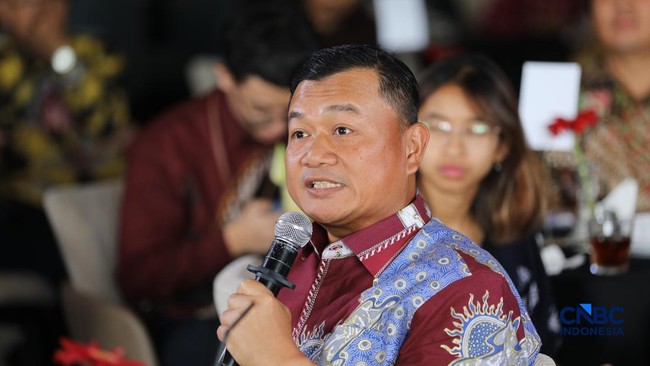
Deputy Director of Commercial at PT Surveyor Indonesia, M. Chairudin, stated that the effectiveness of targeted subsidies must be measured by comparing initial recipient data with factual conditions on the ground. “To determine whether it is targeted correctly or not, it must be compared with the initial data received,” he said during a CNBC Indonesia Coffee Morning event titled “Formulating Correct Subsidy Policies: Can the State Protect the People’s Rights?”, Thursday (24/9/2026).
According to him, the issue of data does not only involve a single identification number, but also the periodic updating and verification of data. Without such a process, subsidy recipient data potentially fails to reflect the actual situation. “It is not just about the single identification number; there could be issues with election data, such as individuals having passed away because there was no update or verification,” he added.
Chairudin assessed that every piece of data serving as the basis for subsidy distribution needs to undergo a verification and validation process. He suggested that this process could involve independent parties to ensure the available data truly aligns with factual conditions. He cited the verification process for families in specific decile groups, noting that field conditions can differ from initial records.
Surveyor Indonesia’s experience in field verification also shows discrepancies between recorded needs and the actual status of beneficiaries. “Our experience in this process often finds that initial data differs; for example, regarding LPG recipients, when we check LPG in the field, we find SMEs need much more than what was initially recorded,” he noted. Therefore, he believes data certainty and verification processes are crucial before the government determines further policies.
Regarding the restructuring of subsidies since 2024, the Director General of Oil and Gas at the Ministry of Energy and Mineral Resources (ESDM), Laode Sulaeman, stated that the government has been restructuring subsidies to ensure more targeted distribution since 2024. The initial stage involved data collection, followed by the restructuring of distribution mechanisms.
In 2025, the government began conducting socialisation and implementing the policy on a trial scale. Subsequently, in 2026, the restructuring continues by utilising digital systems, including the Pertamina Merchant App (MAP). He noted that the experience from the trial of 3kg subsidised LPG distribution in 2025 serves as evaluation material for future subsidy policies.
One of the mechanisms being restructured is the use of barcodes for purchasing subsidised fuel, as well as the utilisation of the National Identity Number (NIK) for purchasing 3kg LPG. For 3kg LPG, the government can utilise purchase data based on consumer identity to observe consumption patterns, including households and micro, small, and medium enterprises (MSMEs).
Currently, he stated that the government is still in the data matching stage and has not yet reached the stage of full sorting or restriction. Laode emphasised that while targeted distribution is the main goal, implementation must be gradual, considering data readiness and social conditions. “We are still in the data matching phase, not yet at the sorting and restriction phase. We must not implement a policy that is well-intentioned but results in chaos,” he warned.
Meanwhile, the Vice Chairman of Commission XII of the House of Representatives (DPR RI), Sugeng Suparwoto, identified three main aspects the government must consider when formulating energy subsidy policies: public purchasing power, the national fiscal condition, and the financial health of State-Owned Enterprises (SOEs) tasked with energy duties.
According to Sugeng, purchasing power is critical because energy prices significantly impact inflation. Therefore, every change in subsidy policy must account for the public’s ability to meet energy needs. “There are three things to consider: first, public purchasing power, as energy is highly sensitive to inflation; second, the national fiscal or financial condition; and third, which is often forgotten, the financial health of SOEs tasked with energy. For example, Pertalite is not a subsidy but a mandate involving compensation; Pertamina covers the cost first, and then the government compensates them,” he explained.
Sugeng believes Pertamina’s financial health requires attention because the company plays a strategic role in national energy supply and distribution. He noted that if compensation payments to Pertamina are delayed, the company’s financial burden could increase, potentially affecting its performance and credibility. “Pertamina bears the cost first, then the government compensates. It is vital to maintain Pertamina’s performance as the sole SOE for oil,” he concluded.