
Key Takeaways from the IMF/World Bank Meetings
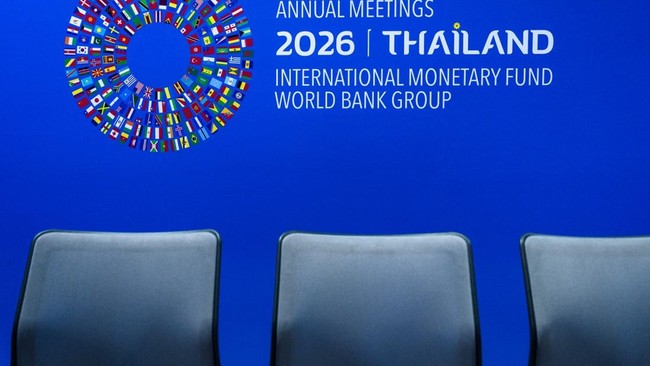
What can be learned from the IMF/World Bank Annual Meetings in Bangkok? How can countries turn the speeches delivered at the gathering into concrete action to address significant economic challenges, particularly the impact of rising energy and food prices caused by the war in the Gulf region?
The main message is that, amid pressure on the global economy, growth is once again becoming the top priority on the economic agenda. Some countries, including Indonesia, have already embarked on this path. Others need to follow.
When discussing growth, I like to use a simple formula that reflects several basic economic principles: Investment + Jobs = Tax Revenue + Development.
Some economic analysis models focus only on tax revenue and development, while overlooking the important contributions of investment and jobs. We saw this several years ago in calls to establish a new international tax architecture. Yet both sides of the equation are necessary to promote poverty reduction and overall economic growth.
This is not, as some have alleged, a “race to the bottom”. On the contrary, it is a “race to the top”, in which countries compete to adopt policies that can drive economic growth. A growth-supporting agenda does not mean lowering standards. It means investing in human resources and creating conditions that attract investment, such as legal certainty, better logistics systems and improved governance.
Tax policy is also vital to promoting sustainable economic growth. There are three basic principles to bear in mind.
First, simplification: broaden the tax base, reduce value-added tax (VAT) exemptions and other distortions, and encourage more businesses to enter the formal sector. Simplification will improve tax compliance and generate the revenue governments need.
Second, technology: modernise tax administration and make payment systems easier. This can improve compliance while helping to prevent tax evasion and corruption.
Third, partnership: build genuine partnerships between investors and tax authorities based on mutual understanding and trust.
These three principles form the foundation of fiscal policy, but they are not enough. Governments must also commit to maintaining fiscal discipline in difficult circumstances and resist the temptation to use subsidies to soften the effects of external economic shocks, such as rising energy and food prices.
As Rodrigo Valdés, Director of the IMF’s Fiscal Affairs Department, said: “Price-suppression measures entail large fiscal costs and often disproportionately burden certain groups.” Such policies consume significant sums of public money when measured against gross domestic product (GDP).
With monetary policy tightening and debt rising, alongside higher risk premiums even in Western countries, the time to act is now.
Valdés said: “We do not know when the tipping point will be reached. But the longer we wait, the greater the risk that we are already at that tipping point. When yields are very low, countries can bear more debt. But when yields rise, that becomes more difficult. Countries therefore need to consolidate their public finances before markets force them to do so.”
For Indonesia, the message from the Bangkok meetings is simple: do not panic, but reaffirm the commitment to economic growth and reducing the budget deficit.
Every country should also remember the equation that drives state revenue and development, supported by appropriate fiscal policies.
Source: jawawa.id (https://jawawa.id/newsitem/key-takeaways-from-the-imf-world-bank-meetings-1792403431)
Originally published by CNBC Indonesia (https://www.cnbcindonesia.com/opini/20261019152747-14-777524/poin-utama-dari-pertemuan-imf-bank-dunia), translated from Indonesian