
Key points of the Agrarian Reform Regulation Bill approved by the House of Representatives
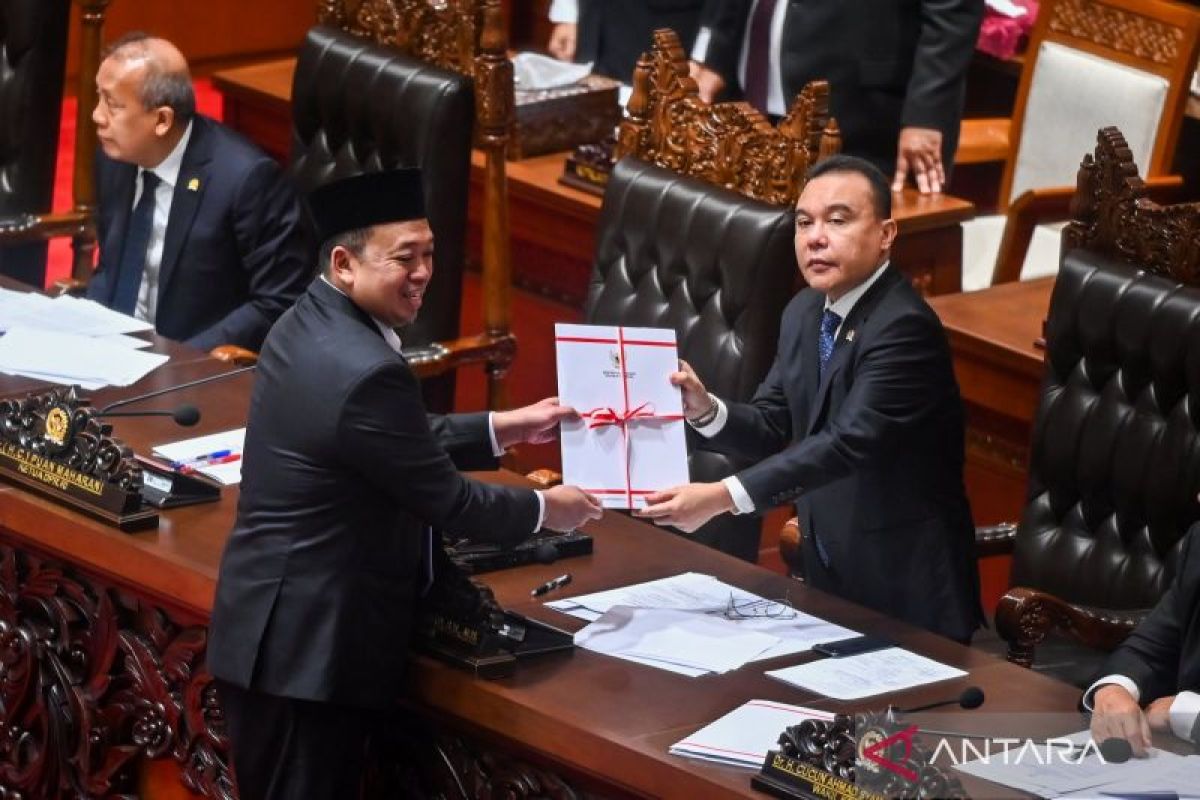
Jakarta (ANTARA) - The House of Representatives (DPR) plenary session in Jakarta on Tuesday has approved the Agrarian Reform Regulation Bill to be enacted into law.
Community delegations present at the plenary session cheered the DPR’s decision. So, what are the key points regulated in this new regulation? Here is a summary.
Establishment of the LPRA
The Agrarian Reform Regulation Bill mandates the formation of the Agrarian Reform Implementation Agency (LPRA). Initially, the agency was named the National Agrarian Reform Agency (BRAN). However, during the bill’s working committee meeting on Monday (21/9), the DPR Legislative Committee announced a change in nomenclature to LPRA.
In addition to the new agency, the Bill also regulates the formation of a supervisory board to ensure transparency, participation, accountability, and effectiveness in the implementation of agrarian reform.
The Chairman of the Agrarian Reform Regulation Bill Working Committee, Ahmad Iman Sukri, stated that the LPRA will operate under and be directly responsible to the President. The LPRA is established with the aim of strengthening the institutions responsible for implementing agrarian reform. The new agency’s authority includes planning, implementation, supervision, and the resolution of agrarian conflicts.
The Minister of Agrarian Affairs and Spatial Planning/Head of the National Land Agency, Nusron Wahid, explained that the LPRA will perform mediation duties for agrarian conflicts, though this will depend on the type of conflict involved.
He stated that communal-scale agrarian conflicts will be mediated within the LPRA, while conflicts involving individuals will continue to be processed through the Ministry of ATR/BPN. “Conflicts involving individuals remain with ATR/BPN due to their administrative nature, but for communal issues—such as those between the people and corporations, the people and State-Owned Enterprises (BUMN), or the people and State-Owned Property (BMN)—mediation may take place within the agency,” Nusron said after the plenary session.
Priority locations for agrarian reform
The implementation of agrarian reform is projected to become more targeted, as the Bill clearly regulates the designation of priority locations for agrarian reform. As the name suggests, these priority locations are defined as ‘areas or regions prioritised for the execution of agrarian reform’.
The designation of these priority locations is based on several criteria, such as inequality in land control and ownership, agrarian conflicts, abandoned land, poverty, absentee land, and land holdings that exceed the maximum limit.
Providing legal certainty
The DPR stated that the Agrarian Reform Regulation Bill contains provisions that can provide legal certainty to the community. The Bill regulates mechanisms for resolving agrarian conflicts to ensure they are effective, transparent, and just, prioritising deliberation, the restoration of social relations, legal certainty, and the restoration of community rights.
Legal protection and the prevention of agrarian conflicts are also strengthened, including protection for subjects of agrarian reform, community advocates, reporters, witnesses, and parties defending land rights. Equally important, the Bill mandates the application of the principle of free, prior, and informed consent. Furthermore, the Bill includes criminal provisions and transitional provisions to ensure the sustainability, compliance, and effectiveness of agrarian reform implementation.
Source: jawawa.id (https://jawawa.id/newsitem/key-points-of-the-agrarian-reform-regulation-bill-approved-by-the-house-of-representatives-1790060857)
Originally published by Antara (Indonesian) (https://www.antaranews.com/berita/5752456/ini-poin-poin-ruu-pengaturan-reforma-agraria-yang-disetujui-dpr), translated from Indonesian