
Key Equipment Arrives, Vale's Sambalagi HPAL Project Enters New Phase
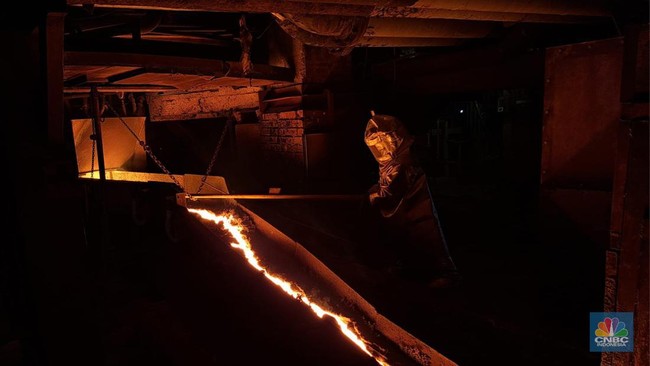
The Sambalagi High Pressure Acid Leaching (HPAL) project has reached a significant construction milestone with the arrival of its main equipment, the autoclave, in Bungku Pesisir, Morowali, Central Sulawesi. The project is a collaboration between PT Vale Indonesia Tbk and its partners, GEM Co. Ltd. and EcoPro. The delivery of the autoclave signals a major step forward in the development of the low-carbon nickel processing facility, which is part of the Indonesia Growth Project (IGP) Morowali. The initiative supports the national mineral downstreaming agenda and the development of the electric vehicle battery supply chain. The HPAL Sambalagi project is designated as a National Strategic Project (PSN) under the Coordinating Ministry for Economic Affairs regulations. It is being developed through PT Bahodopi Nickel Smelting Indonesia (BNSI), a joint venture located in the Indonesia Green Industrial Park (IGIP) in Morowali. The autoclave is the core equipment in the HPAL technology, used to process limonite ore through a combination of high temperature, high pressure, and sulphuric acid to efficiently extract nickel and cobalt. The resulting product, Mixed Hydroxide Precipitate (MHP), is a crucial raw material for the electric vehicle battery supply chain. The Sambalagi HPAL facility is designed with a production capacity of approximately 90,000 tonnes of contained nickel per year in MHP, with a feedstock requirement of around 10.4 million tonnes of limonite ore annually sourced from PT Vale’s mining area in Bahodopi. The plant is being built with three production lines (Line A, B, and C) and is targeting first mechanical completion by the end of 2026. PT Vale Indonesia’s President Director and CEO, Bernardus Irmanto, stated that the arrival of the autoclave represents tangible progress and reinforces the company’s commitment to sustainable mineral downstreaming. He noted that the autoclave is the heart of the HPAL process, enabling the processing of limonite ore into high-value-added products for the global electric vehicle supply chain. The project integrates low-carbon solutions, including a Waste Heat Recovery Power Generation (WHRPG) system to efficiently generate electricity from production process heat. The development also includes plans for a solar power plant to increase clean energy utilisation within the industrial area. Supporting infrastructure such as logistics jetties, utility facilities, worker housing, and social amenities are also being constructed. Minister of Investment and Downstreaming, Rosan Perkasa Roeslani, emphasised that the HPAL Sambalagi project reflects a new direction for Indonesia’s downstreaming policy, setting new standards through international collaboration with South Korea and China while prioritising national interests, job creation, and community welfare. He highlighted that the project is not just about building an industrial facility but about creating an integrated downstream ecosystem to strengthen Indonesia’s future competitiveness. The local government also expressed support for the development of a sustainable industrial area.