
Key Elements of Garuda Pancasila: Feather Count, Shield and Motto
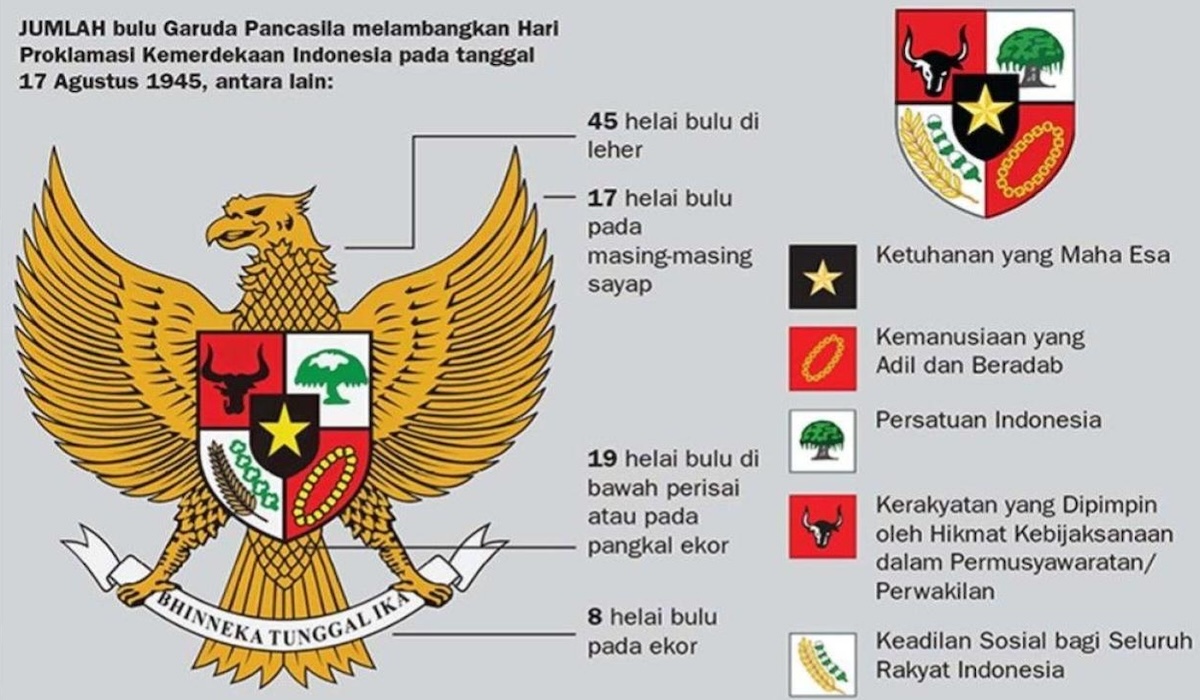
Garuda Pancasila is more than a national symbol; it is a profound representation of Indonesia’s identity and independence history. According to compiled data, each element of the emblem has mathematical and philosophical meanings formally regulated in the constitution.
The following details the key elements of the Garuda Pancasila national emblem:
Each feather on the Garuda’s body is designed to commemorate Indonesia’s independence date. When combined, the numbers form ‘17-8-1945’, marking the sacred moment of the Republic’s proclamation.
A shield resembling a heart on the Garuda’s chest symbolises the nation’s struggle and defence. Within it are five symbols representing the foundational principles of the state.
The Garuda’s claws grip a white ribbon inscribed with ‘Bhinneka Tunggal Ika’, a motto from Mpu Tantular’s Kakawin Sutasoma meaning ‘Unity in Diversity’, underscoring Indonesia’s diverse yet united identity.
Legal Basis:
All regulations concerning the emblem’s form, usage, and respectful treatment are detailed in Law No. 24 of 2009 on the Flag, Language, National Emblem, and National Anthem.
Understanding these elements is part of preserving national values and honouring the Republic’s long history.
A list of design errors in BRIN’s Pancasila Day poster, from feather count to shield shape.
Pancasila, as Indonesia’s state foundation, holds a central role in governance and citizens’ lives.
Five symbols represent each principle, including the Beringin tree for the third principle, ‘Unity of Indonesia’.
The emblem was first officially adopted at the United States of Indonesia Cabinet Session on 11 February 1950.