
Kerinci Coffee Goes Global: From Farmers, Environment, and Women's Empowerment to Gen Z
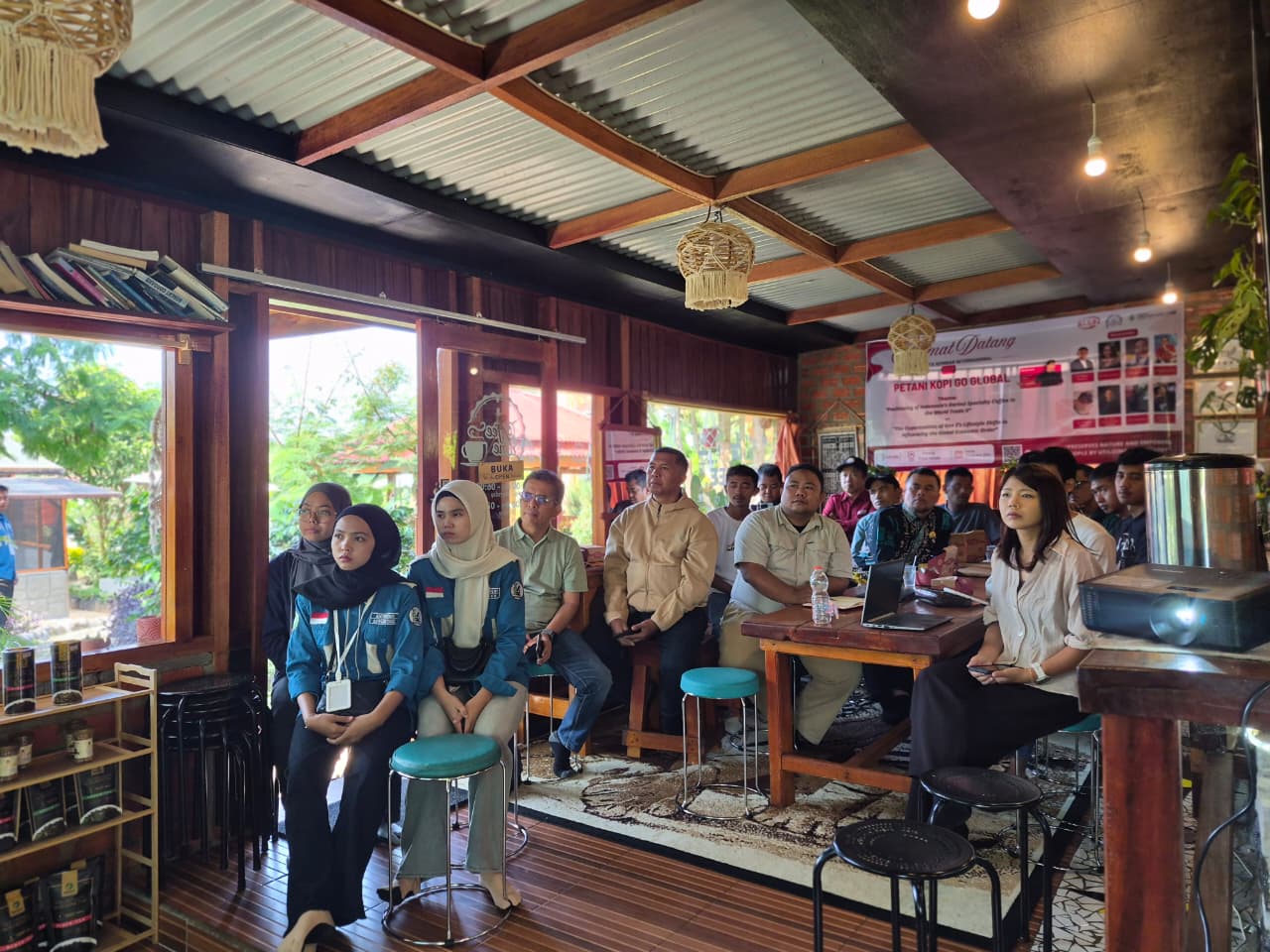
Efforts to bring Kerinci specialty coffee to the global market can no longer rely solely on quality and taste. Behind a cup of coffee lie issues concerning farmers, the environment, women’s empowerment, technology, trade regulations, and shifting lifestyles among the younger generation. These issues were raised during the International Seminar ‘Coffee Farmers Go Global’ Part 10, held by the Alam Korintji Internasional (ALKO) Producers Cooperative on Thursday (13/8). The seminar carried the theme ‘Positioning of Indonesian Kerinci Specialty Coffee in World Trade II’ and ‘The Opportunities of Gen Z’s Lifestyle Shifts in Influencing the Global Economic Order’, with a focus on coffee agroforestry and women’s empowerment. The event was held in a hybrid format, attended by farmers, business players, stakeholders, communities, academics, and coffee enthusiasts, both in person and online.
Several speakers addressed interconnected issues, including Bagas Hasporo on the impact of the European Union’s deforestation policy, Katya Groska on market opportunities for Indonesian coffee in the United Kingdom, Herlina on coffee downstream processing, Agung Wibowo on agroforestry and women’s empowerment, Prayono Atyanto on coffee diplomacy, and Asep Muhammad Awaludin on Gen Z and technology. However, the discussion extended beyond the speakers’ presentations. Questions and responses from participants, including a student named Tumino and community representatives, shifted the conversation from global trade issues to the real problems faced at the plantation level.
One prominent idea was put forward by Agung Wibowo. He reminded attendees that coffee is not merely about beans, roasting, and flavour. ‘Coffee is just a bean that is roasted, ground, and mixed with water. But the story behind it is no less exciting,’ he said. This story includes the farmers who produce the coffee, the environment where it is cultivated, the women involved in the production chain, and how the product is ultimately received by global consumers. Agung also questioned whether ALKO’s vision, ‘Preserves Nature and Empowers People’, was merely a slogan or a genuine direction for the organisation. He argued that the vision must be realised through tangible activities. ‘ALKO’s vision and mission are not just jargon or advertising platitudes written carelessly, but ALKO has seriously tried to translate and articulate them into operational activities,’ he stated.
In his presentation, Agung highlighted the position of women in the coffee ecosystem. Women are involved from planting, maintenance, harvesting, and post-harvest processing to trading, training, and management. However, this involvement is not yet fully proportional to ownership and decision-making power. He noted that women who officially own or manage coffee businesses are still in the range of 20–30 percent. ALKO is therefore working to expand women’s participation by forming women’s groups. According to Agung, these groups are important so that women have a space to express their ideas more freely. By 2026, ALKO had formed five women’s groups, each with about 10 members.
This issue drew a response from a participant who is currently pursuing an undergraduate degree in Plantation Cultivation. She said she was being prepared to become a plantation manager. However, she argued that women need more than just technical production skills. ‘We need not only production skills, but also access to land, capital, technology, and a position in decision-making,’ she said. She then asked what form of empowerment would be most effective to shift the rate of women’s involvement or ownership from the current 20–30 percent towards a 50:50 ratio in plantation ownership. This question moved the discussion on women’s empowerment from merely the number of women working in the coffee sector to more fundamental issues: who owns the assets, who has access to capital, who controls the technology, and who makes the decisions.
Community empowerment within the coffee ecosystem was also linked to environmental conservation. Agung explained one of ALKO’s social activities, which involves cleaning hiking trails using a concept where one kilogram of rubbish can be exchanged for a packet of ground coffee. Beyond collecting waste, ALKO encourages the utilisation of plastic waste into various useful products, such as bags, tissue boxes, hats, and even clothing. This programme is part of ALKO’s effort to translate the concept of preserving nature into activities that directly benefit the community.
Meanwhile, Prayono Atyanto assessed that efforts to build the image of Indonesian coffee in the world market still require strengthening. He noted that while promotion and branding of Indonesian coffee have been carried out, they are not yet sufficient to win the competition. ‘Branding has been done by our colleagues, but it turns out it is not enough,’ said Prayono. Therefore, Indonesian coffee needs a stronger identity, including a narrative about being environmentally friendly and offering health benefits. According to Prayono, the goal of branding is not just for consumers to recognise Indonesian coffee, but to win their hearts and minds. He also positioned coffee as part of Indonesia’s diplomacy, as it has become a widely recognised product and part of the global lifestyle.
The environmental issue then intersected with global trade matters through Bagas Hasporo’s presentation on the impact of the European Union’s deforestation policy on Indonesia. This regulatory change demonstrates that the international market is increasingly concerned with how a commodity is produced, where it comes from, and its impact on the environment. For Kerinci coffee, these demands present both a challenge and an opportunity.
Source: jawawa.id (https://jawawa.id/newsitem/kerinci-coffee-goes-global-from-farmers-environment-and-womens-empowerment-to-gen-z-1786625445)
Originally published by Media Indonesia (https://mediaindonesia.com/nusantara/921522/kopi-kerinci-go-global-dari-petani-perempuan-lingkungan-hingga-gen-z), translated from Indonesian